What Makes a Critical Essay Example Effective?
Before diving into the examples, let's establish what you should look for in a quality critical essay. This will help you evaluate both the samples below and your own work.
A strong critical essay example should have a clear thesis that makes an argument, not just summarizes content. You're not retelling the plot of The Great Gatsby or describing what happened in a film. You're taking a position about meaning, effectiveness, or significance.
| Evidence based analysis is crucial. Every claim you make needs support from the text, source, or work you're analyzing. This means direct quotes, specific scenes, or concrete examples with proper citations. |
Critical evaluation means assessing both strengths and weaknesses. Real critical thinking doesn't just praise or condemn. It examines how well something achieves its purpose, where it succeeds, and where it falls short.
The structure should be logical and clear. Your reader should move smoothly from introduction to analysis to conclusion, with each section building on the previous one.
For help structuring your essay before writing, check out our critical essay outline guide, which breaks down effective organization patterns.
Finally, the best examples demonstrate critical thinking throughout. It's not enough to state opinions. You need to show your reasoning process, explain why evidence matters, and connect ideas to larger contexts.
Critical Essay Example 1: Literary Analysis (High School Level)
Academic Level: High School (Grades 10-11)
Length: 523 words

Subject: The Symbolism of the Green Light in The Great Gatsby
In F. Scott Fitzgerald's The Great Gatsby, the green light at the end of Daisy's dock represents more than just a navigation beacon. It symbolizes Gatsby's impossible dream of recapturing the past and the broader American Dream's corruption in the 1920s. While Fitzgerald uses this symbol effectively throughout the novel, its power comes from how it transforms from a personal hope into a commentary on an entire era's misguided values.
The green light first appears in Chapter 1, when Nick observes Gatsby reaching toward it across the water. Fitzgerald writes, "he stretched out his arms toward the dark water in a curious way... I glanced seaward and distinguished nothing except a single green light" (21). At this point, the light represents Gatsby's longing for Daisy and his belief that he can recreate their past romance. The physical distance between Gatsby and the light mirrors the emotional and temporal distance he's trying to overcome. Fitzgerald makes this yearning tangible through Gatsby's physical gesture, turning an abstract desire into something readers can visualize.
However, Fitzgerald doesn't let the symbol remain simply romantic. In Chapter 5, when Gatsby and Daisy reunite, the light loses some of its power. Nick observes that "the colossal significance of that light had now vanished forever... Now it was again a green light on a dock. His count of enchanted objects had diminished by one" (93). This shift is critical. Fitzgerald shows that dreams are more compelling than reality. The symbol's effectiveness here comes from its transformation. When Daisy is no longer a distant dream but a real person in Gatsby's mansion, the light that represented her becomes ordinary. This reveals a fundamental truth about Gatsby's quest: he's in love with an idealized past, not the present reality.
The symbol's most powerful use comes in the novel's final passage. Nick reflects: "Gatsby believed in the green light, the orgastic future that year by year recedes before us. It eluded us then, but that's no matter tomorrow we will run faster, stretch out our arms farther... So we beat on, boats against the current, borne back ceaselessly into the past" (180). Here, Fitzgerald expands the light's meaning beyond Gatsby's personal dream. It becomes a symbol for all Americans who chase impossible futures while being pulled backward by the past. The light's green color, often associated with money and greed, connects Gatsby's romantic dream to the materialistic corruption of the American Dream itself.
Fitzgerald's use of the green light symbol is effective because it operates on multiple levels. It's concrete enough to visualize (a real light on a real dock) but carries complex meanings about desire, memory, and national identity. The symbol's transformation throughout the novel mirrors Gatsby's trajectory from hope to disillusionment. However, one could argue that Fitzgerald relies too heavily on this single symbol, sometimes at the expense of other potentially meaningful imagery in the text.
The green light ultimately succeeds as a literary device because it makes abstract concepts longing, the passage of time, the American Dream into something readers can picture and understand. It's a reminder that the most effective symbols in literature start as concrete objects but accumulate meaning through careful development and repetition.
Annotations:
[Thesis: Introduction]: "It symbolizes Gatsby's impossible dream of recapturing the past and the broader American Dream's corruption in the 1920s." [Evidence: Body Paragraph 1]: "he stretched out his arms toward the dark water in a curious way... I glanced seaward and distinguished nothing except a single green light" [Analysis: Body Paragraph 1]: "The physical distance between Gatsby and the light mirrors the emotional and temporal distance he's trying to overcome." [Symbol Transformation: Body Paragraph 2]: Discussion of how the light changes meaning in Chapter 5 [Critical Evaluation: Body Paragraph 3]: "However, one could argue that Fitzgerald relies too heavily on this single symbol" [Conclusion Strategy]: "It's a reminder that the most effective symbols in literature start as concrete objects but accumulate meaning through careful development and repetition." |
What Makes This Effective:
|
Critical Essay Example 2: Film Analysis (Undergraduate Level)
Academic Level: Undergraduate (Introductory Film Studies)
Length: 687 words

Subject: Gender Representation in Wonder Woman (2017)
Patty Jenkins' Wonder Woman (2017) marked a significant moment in superhero cinema as the first female led film in the DC Extended Universe. The film attempts to subvert traditional gender representations by presenting Diana as both a powerful warrior and a compassionate leader. While Jenkins succeeds in creating a protagonist who challenges stereotypical feminine weakness, the film ultimately struggles to fully escape the male gaze and Hollywood's tendency to validate female power through male approval. This tension between progressive intentions and conventional execution makes Wonder Woman an instructive case study in how gender representation operates in mainstream blockbusters.
The film's most successful subversion of gender norms occurs in the Themyscira sequences. The all female Amazonian society exists without reference to men, establishing women as complete individuals rather than support characters in male narratives. The training sequences (0:08:30-0:14:20) showcase female physical power without sexualization. The camera frames Antiope's combat skills the same way it would frame male warriors: focusing on technique, strength, and tactical intelligence rather than bodies as spectacle. Director of Photography Matthew Jensen uses wide shots and steady camera work that contrasts sharply with the fragmented, objectifying cinematography often applied to women in action films. This visual approach validates female strength on its own terms.
Diana's character arc initially reinforces this progressive foundation. Her decision to leave Themyscira stems from moral conviction and personal agency, not romantic pursuit. When she enters "Man's World," she consistently demonstrates competence that exceeds that of her male companions. The "No Man's Land" sequence (1:28:40-1:32:15) becomes the film's centerpiece for feminist representation. Diana crosses the battlefield alone after the men deem it impossible, literally and figuratively going where "no man" can go. The sequence's slow-motion cinematography and Wonder Woman theme create a moment of female power that doesn't require male validation or assistance.
However, the film's treatment of Diana's relationship with Steve Trevor reveals tensions in its gender politics. While Steve is positioned as Diana's equal rather than her superior (a notable improvement over typical romantic subplots), the narrative still uses male sacrifice to validate Diana's full power. She doesn't access her complete abilities until Steve's death (1:55:20), suggesting that female rage and power require male trauma as a catalyst. This follows the problematic trope that women need to experience pain through relationships with men to reach their potential. Laura Mulvey's concept of the male gaze is relevant here: even in a film celebrating female power, that power becomes most legitimate when witnessed and validated through male presence or absence.
The film also struggles with Diana's visual presentation. While her costume is more practical than many female superhero designs, the camera still occasionally frames her body in ways that emphasize aesthetics over action. The scene where Diana tries on "proper" London clothing (0:51:30-0:53:00) plays as comedy but reinforces the male gaze. Steve and his associates' reactions to Diana's appearance become the focus rather than her own comfort or agency in choosing clothing. These moments, though brief, undercut the film's broader feminist message by reverting to women as spectacle framing.
The film's resolution also relies on a traditionally masculine approach to power. Diana defeats Ares through physical combat and rage rather than through the "love" philosophy the film claims she represents. This disconnect between stated themes (love conquers hate) and actual resolution (violence conquers violence) suggests the film couldn't fully commit to alternative, potentially more feminine approaches to conflict resolution. It's easier to show Diana punching through walls than to dramatize truly subversive alternatives to male coded power.
Wonder Woman represents genuine progress in mainstream representation while simultaneously revealing how difficult it is to fully escape Hollywood's gendered conventions. The film succeeds when it allows Diana to exist independently, particularly in the Themyscira sequences and the No Man's Land scene. It falters when it falls back on male validation, the male gaze, and traditionally masculine solutions to conflict. For audiences and creators, Wonder Woman serves as both inspiration and cautionary tale: intentions toward progressive representation matter, but execution requires vigilance against deeply embedded industry norms that undermine those intentions. The film's commercial success ($822 million worldwide) proves audiences want female led action films, even when those films haven't fully worked out their gender politics.
Annotations:
[Thesis with Nuance]: "While Jenkins succeeds in creating a protagonist who challenges stereotypical feminine weakness, the film ultimately struggles to fully escape the male gaze and Hollywood's tendency to validate female power through male approval." [Evidence: Specific Scenes]: Multiple specific scene references with timestamps (0:08:30-0:14:20, 1:28:40-1:32:15, etc.) [Theoretical Framework]: Reference to Laura Mulvey's concept of the male gaze [Visual Analysis]: "The camera frames Antiope's combat skills the same way it would frame male warriors: focusing on technique, strength, and tactical intelligence rather than bodies as spectacle." [Critical Evaluation: Strengths AND Weaknesses]: Paragraphs 2-3 discuss what works; paragraphs 4-6 discuss what doesn't [Cultural Context]: Mentions $822 million box office in conclusion |
What Makes This Effective:
|
Critical Essay Example 3: Article Critique (Undergraduate Level)
Academic Level: Undergraduate (Research Methods / Psychology)
Length: 612 words
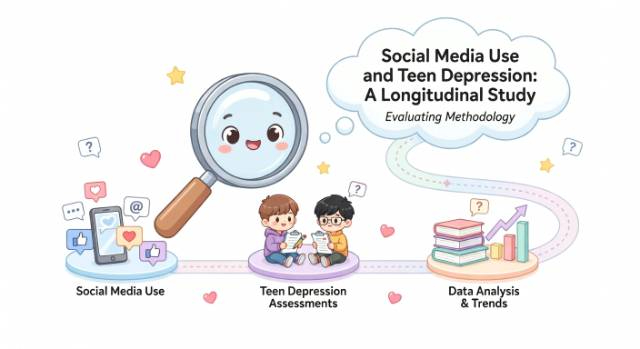
Subject: Evaluating Methodology in "Social Media Use and Teen Depression: A Longitudinal Study"
In their 2023 article "Social Media Use and Teen Depression: A Longitudinal Study," published in the Journal of Adolescent Health, Dr. Sarah Chen and colleagues claim to demonstrate a causal relationship between increased social media use and depression in teenagers. While the study's longitudinal approach and large sample size (n=2,847) represent methodological strengths, significant issues with the measurement instruments, confounding variables, and generalizability limit the study's conclusions. The authors' claim of causation is not adequately supported by their research design, though their data does suggest correlation worthy of further investigation.
The study's primary strength lies in its longitudinal design. Unlike cross sectional studies that only capture a single moment, Chen et al. followed participants over three years with assessments every six months. This temporal component is crucial for any causal claim because it establishes that increased social media use preceded increases in depression scores rather than the reverse. The sample size of 2,847 teenagers across diverse geographic regions also provides statistical power that many similar studies lack. These design elements suggest the research team understood fundamental requirements for investigating causation.
However, the study's measurement of "social media use" reveals concerning oversimplification. Participants self reported "hours per day" spent on social media platforms without distinguishing between passive scrolling, active posting, or social interaction. Research by Verduyn et al. (2021) demonstrates that passive consumption versus active engagement produce different psychological outcomes. By treating all social media use as equivalent, Chen et al.'s measurement instrument conflates behaviors with potentially opposite effects. A teenager spending three hours actively connecting with supportive friends experiences social media differently than one spending three hours comparing themselves to influencers, yet this study's methodology treats these identically.
The depression measurement also raises questions. The study relies exclusively on the Patient Health Questionnaire-9 (PHQ-9), a self report screening tool. While the PHQ-9 is widely used and validated, it measures depressive symptoms, not clinical depression. The authors acknowledge this limitation in a single sentence, but then repeatedly refer to "depression" in their results and conclusions as if diagnosing a clinical condition. This slippage between measured construct (self reported symptoms) and claimed finding (depression as a clinical condition) undermines the precision necessary for strong causal claims. More rigorous studies would include clinical interviews or multiple assessment instruments.
Perhaps most problematic is the study's handling of confounding variables. While Chen et al. control for baseline depression scores, family income, and school performance, they ignore several factors that might explain both increased social media use and depression. Teenagers experiencing social isolation, family conflict, or school bullying might turn to social media as a coping mechanism while also developing depressive symptoms due to these underlying issues. The study's statistical analysis treats social media use as an independent variable without adequately considering that it might be a response to the same factors causing depression. This leaves open alternative explanations that the authors dismiss too quickly.
The generalizability of findings also deserves scrutiny. The study recruited participants from suburban middle schools and high schools in the northeastern United States, predominantly from middle class families. The authors claim their findings apply to "teenagers" generally, but their sample excludes rural teens, urban teens, low income teens, and teens from other cultural contexts where social media use patterns and depression prevalence differ substantially. Extrapolating from this specific population to all teenagers requires justification the authors don't provide.
Despite these methodological concerns, the study does contribute valuable descriptive data about correlations between social media patterns and self reported depressive symptoms in a specific population over time. Rather than establishing causation as claimed, it identifies an association worthy of more rigorous investigation with improved measurement instruments and better control for confounding variables. The study's value lies in raising important questions, not in answering them definitively. Future research should address the methodological gaps identified here while building on the longitudinal approach and large sample that represent this study's genuine contributions. For policymakers and parents, the study suggests correlation but doesn't support strong causal claims that would justify dramatic interventions.
Annotations:
[Thesis: Clear Position]: "While the study's longitudinal approach and large sample size represent methodological strengths, significant issues with the measurement instruments, confounding variables, and generalizability limit the study's conclusions." [Methodology Assessment]: Entire second paragraph devoted to research design strengths [Evidence: Citing Research]: "Research by Verduyn et al. (2021) demonstrates that passive consumption versus active engagement produce different psychological outcomes." [Measurement Critique]: Paragraph 3 discusses problems with how "social media use" was measured [Construct Validity Issue]: "This slippage between measured construct (self reported symptoms) and claimed finding (depression as clinical condition)" [Confounding Variables]: Paragraph 5 identifies factors the study didn't adequately control [Generalizability Concern]: Paragraph 6 questions whether findings apply beyond the specific sample [Balanced Conclusion]: "The study does contribute valuable descriptive data... Rather than establishing causation as claimed, it identifies an association worthy of more rigorous investigation." |
What Makes This Effective:
|
A good critical essay example shows how to think critically, not just what to write about a topic. If you're stuck choosing what to write about, our critical essay topics article provides subjects across literature, film, and current issues.
Critical Essay Example 4: Social Issue Analysis (Undergraduate Level)
Academic Level: Undergraduate (Environmental Studies / Sociology)
Length: 891 words
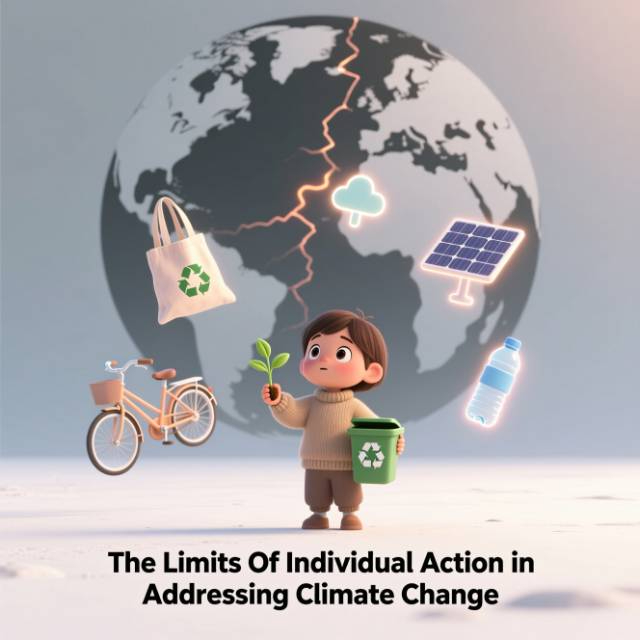
Subject: The Limits of Individual Action in Addressing Climate Change
The narrative that individual consumer choices can solve climate change has become pervasive in Western culture. From reusable straws to meatless Mondays, individuals are constantly told that small personal actions will save the planet. While individual environmental consciousness has value, this framing shifts responsibility away from the industrial and systemic changes necessary to meaningfully address climate change. The emphasis on personal carbon footprints serves corporate and political interests by deflecting attention from the policies and regulations that would actually reduce greenhouse gas emissions at the scale required. This doesn't mean individuals should do nothing, but it means recognizing that personal action without systemic change is insufficient and potentially counterproductive if it creates the illusion that the problem is being adequately addressed.
The concept of the personal carbon footprint itself reveals the limits of individual focused climate action. British Petroleum popularized the carbon footprint calculator in the early 2000s, explicitly framing climate change as a problem of individual consumption rather than corporate production. This rhetorical move was strategic. By getting individuals to calculate and fret over their personal emissions, attention shifted away from the fact that just 100 companies are responsible for 71% of global greenhouse gas emissions since 1988, according to the Carbon Majors Report (2017). When ExxonMobil's emissions dwarf the lifetime carbon footprints of thousands of individuals combined, asking people to feel guilty about their driving habits while Exxon continues extracting and selling fossil fuels represents a fundamental misallocation of moral responsibility.
Individual actions also face severe practical limitations. Even if every person in the United States adopted a vegetarian diet, studies show this would only reduce total U.S. greenhouse gas emissions by approximately 5% (based on EPA agricultural emission data). This isn't because individual diet change is meaningless, but because agriculture represents only a portion of total emissions, and personal consumption represents only a fraction of agricultural demand (much goes to industrial uses). Similarly, while LED light bulbs reduce electricity consumption, they can't address the fact that the electricity grid itself remains dependent on fossil fuels. Individual consumer choices operate within systems that constrain the impact those choices can have. You can't personally choose renewable energy if your local grid doesn't offer it. You can't choose public transit if your city lacks adequate infrastructure. Systemic constraints make many theoretically "good" individual choices either unavailable or insufficient.
The psychological impact of emphasizing individual action also deserves critical examination. Climate psychologist Renée Lertzman argues that the focus on personal responsibility can create paralyzing guilt and anxiety without providing actual agency to create meaningful change. When individuals are told climate change is their fault for not recycling properly or driving too much, but they lack political power to regulate industries or redirect subsidies from fossil fuels to renewables, the result is often despair rather than empowerment. This emotional response can actually decrease political engagement. If people believe they're addressing climate change through personal choices, they may be less likely to demand policy changes from elected officials. The illusion of action through consumption choices substitutes for the genuine political action that could mandate emissions reductions across entire industries.
However, dismissing all individual action would be an overcorrection. Personal choices do matter in specific contexts. Individual actions can build political will when they're collective and visible. When thousands of people in a city start biking to work, this creates political pressure for bike lanes and transforms urban planning priorities. When communities organize to install solar panels, this builds both technological infrastructure and political constituencies for renewable energy policies. The key distinction is between individual actions understood as consumer choices versus individual actions understood as political participation and community building.
Beyond this, some individual choices have genuinely meaningful impacts, particularly for those with significant resources. A wealthy individual who installs residential solar panels, drives an electric vehicle, and uses their investment portfolio to divest from fossil fuels has a larger carbon impact than any middle class person could achieve through lifestyle changes. The problem isn't that individual action can never matter; it's that most discussion of individual action targets those with the least carbon impact while ignoring those with the most. A single private jet flight produces more emissions than most people generate in a year, yet discourse around personal responsibility rarely focuses on regulating private aviation.
The path forward requires reframing individual action within a broader understanding of systemic change. Individuals should adopt sustainable practices that are genuinely available to them, but must simultaneously recognize that personal virtue is not a substitute for political action. The most important individual action is political: voting for candidates who support aggressive climate policy, contacting representatives to demand corporate regulations, supporting unions that can negotiate for just transitions to renewable energy economies, and building community power that can pressure institutions. These political actions don't feel as satisfying as buying a reusable water bottle because they're slower and less certain, but they target the actual systems that determine emissions at scale.
The emphasis on individual carbon footprints represents a deliberate strategy to protect existing power structures from the transformative changes climate science tells us are necessary. While there's nothing wrong with personal environmental consciousness, treating it as the primary solution to climate change is not just insufficient but actively misleading. It allows fossil fuel companies to continue extraction, governments to avoid hard policy decisions, and the economic systems driving emissions to operate unchanged. Real solutions require acknowledging that climate change is fundamentally a political and economic problem, not a problem of individual moral failure. Once we understand this, individual action takes its proper place: not as the solution itself, but as one tool for building the political power necessary to enact actual solutions through policy, regulation, and systemic transformation.
Annotations:
[Thesis: Nuanced Argument]: "The emphasis on personal carbon footprints serves corporate and political interests by deflecting attention from the policies and regulations that would actually reduce greenhouse gas emissions at the scale required." [Historical Context]: "British Petroleum popularized the carbon footprint calculator in the early 2000s." [Quantitative Evidence]: "Just 100 companies are responsible for 71% of global greenhouse gas emissions." [Practical Limitations]: Paragraph 3 discusses systemic constraints on individual choices [Psychological Analysis]: Discussion of Renée Lertzman's work on climate anxiety [Acknowledges Counterarguments]: Paragraphs 5-6 discuss when individual action does matter [Class Analysis]: "A wealthy individual who installs residential solar panels... has a larger carbon impact" [Political Analysis]: Final two paragraphs reframe individual action as political participation |
What Makes This Effective:
|
QUICK CRITICAL ESSAY HELP
Confident Critical Essay Writing Starts Here
Learn how to structure, analyze, and write critical essays that meet academic standards.
Critical Essay Example 5: Poetry Analysis (Undergraduate Level)
Academic Level: Undergraduate (Poetry / Literature)
Length: 618 words

Subject: Form and Meaning in Sylvia Plath's "Lady Lazarus"
Sylvia Plath's "Lady Lazarus" uses fragmented tercets and shocking imagery to create a voice that is simultaneously vulnerable and threatening, victimized and powerful. The poem's formal structure reinforces its thematic concern with cycles of death and rebirth, while its Holocaust imagery raises difficult questions about the appropriation of collective trauma for personal metaphor. Plath's technical mastery is undeniable, yet the poem's effectiveness as art doesn't excuse its potentially exploitative use of historical atrocity. This tension between formal brilliance and ethical concern makes "Lady Lazarus" a poem that demands critical attention not just to what it accomplishes but what it costs.
The poem's stanzaic structure mirrors its content through relentless repetition and fragmentation. Twenty eight tercets (three line stanzas) create a pattern that seems to offer stability but constantly breaks apart, much like the speaker's repeated deaths and resurrections. The short lines and frequent enjambment create a halting, breathless rhythm: "I have done it again. / One year in every ten / I manage it" (lines 1-3). This formal choppiness enacts the speaker's psychological fragmentation. We don't get smooth, flowing verse because the speaker's experience isn't smooth or flowing. The form becomes meaning.
Plath's use of slant rhyme and internal echo creates cohesion without the predictability of perfect rhyme. Words like "again" and "ten," "pearl" and "girl," "charge" and "large" link stanzas without creating sing song regularity. This technical choice prevents the dark subject matter from becoming melodramatic or self pitying. The rhymes are noticeable enough to provide structure but imperfect enough to maintain tension. This demonstrates Plath's understanding that form must serve content. Perfect rhyme might trivialize the speaker's anguish; no rhyme might make the poem feel shapeless. Plath finds the precise middle ground where form contains chaos without denying it.
However, the poem's use of Holocaust imagery to describe personal suffering creates an ethical problem that technical skill doesn't resolve. Lines like "A sort of walking miracle, my skin / Bright as a Nazi lampshade" and "Herr Doktor" and "Herr Enemy" appropriate the systematic murder of millions to describe the speaker's suicide attempts and recovery. One can understand Plath's artistic intent: to convey suffering so extreme that ordinary language fails. The Holocaust imagery communicates the speaker's sense that forces beyond her control have reduced her to an object, a piece of flesh to be examined and exploited. The medical "Herr Doktor" becomes the Nazi doctor, connecting personal medical trauma to historical atrocity.
Yet this metaphoric use of genocide raises the question: does the power of the metaphor justify its source? Jewish scholars and poets like Irving Howe criticized Plath's generation for treating the Holocaust as metaphor bank rather than historical reality with survivors still alive and suffering. When Plath writes "Ash, ash / You poke and stir. / Flesh, bone, there is nothing there," she's invoking crematorium imagery to describe her emotional state. This is effective poetry, communicating devastation through reference to actual devastation. But effectiveness doesn't determine ethics. One might argue that Plath's own suffering was genuine and that she reached for the most extreme historical reference available. One might also argue that personal suffering, however real, doesn't grant license to appropriate collective trauma as personal metaphor.
"Lady Lazarus" succeeds brilliantly as a formal achievement while potentially failing as ethical art. The tercets, the fragmented rhythm, the slant rhymes, the escalating imagery from personal to mythic to historical all demonstrate Plath's technical mastery. The poem makes you feel the speaker's rage and pain viscerally. It accomplishes what poetry attempts: making internal states sharable through language and form. But it also asks readers to accept Holocaust imagery as appropriate metaphor for individual psychological experience. Some readers find this powerful; others find it exploitative. Both responses engage seriously with what the poem does and doesn't earn. The poem's greatness and its problems coexist, neither canceling the other. This makes "Lady Lazarus" not just a poem to admire but a poem to argue about, which might be exactly what makes it important.
Annotations:
[Thesis: Acknowledging Tension]: "Plath's technical mastery is undeniable, yet the poem's effectiveness as art doesn't excuse its potentially exploitative use of historical atrocity." [Form Analysis]: "The poem's stanzaic structure mirrors its content through relentless repetition and fragmentation." [Technical Vocabulary]: Terms like "tercets," "enjambment," "slant rhyme" used correctly [Close Reading]: Analysis of specific line: "I have done it again. / One year in every ten / I manage it" [Ethical Analysis]: Paragraphs 4-5 discuss the Holocaust imagery problem [Multiple Perspectives]: "Some readers find this powerful; others find it exploitative. Both responses engage seriously with what the poem does and doesn't earn." [Critical Evaluation]: "effectiveness doesn't determine ethics" |
What Makes This Effective:
|
Critical Essay Example 6: Historical Document Analysis (Undergraduate Level)
Academic Level: Undergraduate (History / Rhetoric / Women's Studies)
Length: 1,047 words
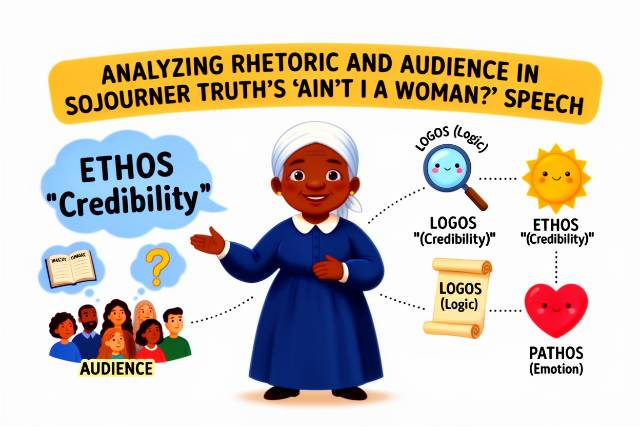
Subject: Analyzing Rhetoric and Audience in Sojourner Truth's "Ain't I a Woman?" Speech
Sojourner Truth's "Ain't I a Woman?" delivered at the 1851 Women's Rights Convention in Akron, Ohio, stands as one of the most powerful pieces of American oratory. However, the speech's power derives not just from Truth's ideas but from the complex relationship between the actual spoken words and the published versions that shaped its historical legacy. The speech we know today comes primarily from Frances Dana Gage's 1863 transcription, written twelve years after the event and heavily edited to include Southern dialect Truth didn't actually use. This gap between historical event and textual record creates a critical challenge: how do we evaluate a speech when our only access comes through a problematic filter? Examining both what Truth likely said and how Gage transformed it reveals important insights about who gets to control historical narratives and how intersectional feminism was being negotiated in the mid 19th century.
The 1851 eyewitness account by Marius Robinson, published in the Anti Slavery Bugle just weeks after the speech, provides our most reliable text. Robinson's version presents Truth arguing that women's capabilities match men's: "I have ploughed and planted and gathered into barns, and no man could head me and ain't I a woman?" This version emphasizes physical strength and work capacity as evidence against claims of female weakness. The rhetorical strategy is logical and direct: men say women are weak, but I (a woman) am strong, therefore the premise is false. The repeated question "ain't I a woman?" forces the audience to confront the contradiction between their definitions of womanhood (fragile, in need of protection) and Truth's embodied reality.
Frances Dana Gage's 1863 version, published in the New York Independent, tells a different story in both content and style. Gage frames the speech with dramatic narrative, describing hostile male preachers and hesitant female organizers. She renders Truth's words in thick Southern dialect despite Truth being from New York and speaking Dutch as her first language: "Dat man ober dar say dat womin needs to be helped into carriages, and lifted ober ditches." Gage adds content not present in earlier accounts, including the striking image: "And ain't I a woman? Look at me! Look at my arm! I have ploughed and planted, and gathered into barns, and no man could head me! And ain't I a woman?" The added stage directions ("Look at me! Look at my arm!") create a more theatrical, embodied performance.
Gage's version became the canonical text for a reason: it's more dramatic, more quotable, and more emotionally powerful than Robinson's straightforward account. The dialect, while inaccurate, made Truth seem more "authentic" to Northern white audiences whose expectations of formerly enslaved people included specific speech patterns. The added physical gestures and emotional intensity transformed the speech from logical argument into testimonial performance. However, this editorial enhancement came at a cost. By imposing dialect Truth didn't use, Gage reinforced stereotypes about African American speech and authenticity. By adding dramatic elements that may not have occurred, she shaped historical memory to fit narrative expectations rather than actual events.
The rhetorical power of both versions lies in Truth's exposure of white feminism's exclusions. The phrase "ain't I a woman?" (or "ar'n't I a woman?" in Robinson's spelling) directly challenges the convention's implicit definition of womanhood. When male opponents argued that women needed special protection and treatment, they were describing middle class white women. Truth's experience of agricultural labor, childbearing under slavery, and physical strength fell outside these narrow boundaries. By asking "ain't I a woman?" Truth forces the audience to either expand their definition of womanhood or admit they're only advocating for some women. This intersectional critique, though we wouldn't call it that until Kimberlé Crenshaw coined the term in 1989, challenged both the women's rights movement to include Black women and the abolitionist movement to address gender alongside race.
The textual variations between Robinson's and Gage's versions matter because they reveal how marginalized voices get mediated through more privileged interpreters. Gage's 1863 publication came during the Civil War, when Northern audiences were primed for dramatic narratives about slavery and freedom. Her version gave them what they wanted: a formerly enslaved woman performing her trauma and strength in ways that confirmed their expectations. This doesn't mean Gage acted maliciously. She was a genuine ally who worked for both abolition and women's rights. But even well meaning allies shape narratives through their own cultural assumptions and audience expectations. The result is that we remember Gage's more theatrical version because it felt more "real" to white audiences, despite being less historically accurate.
This creates a methodological problem for historians and critics: when our only access to a historical speech comes through potentially unreliable transcriptions, how do we analyze it? One approach is to acknowledge the gap between event and text while still examining what the text reveals about its historical moment. Even if we can't know exactly what Truth said, Gage's version tells us what resonated with 1863 audiences and what white abolitionists wanted from formerly enslaved speakers. Robinson's version, being closer to the event and less editorialized, probably gives us better access to Truth's actual rhetorical strategies, which relied more on logical argument than emotional performance.
Both versions share crucial elements that we can reasonably attribute to Truth herself: the repeated rhetorical question exposing contradictions in definitions of womanhood, the invocation of physical labor as evidence of capability, and the implicit critique of both patriarchy and white feminism's racial exclusions. These consistent elements across transcriptions suggest Truth's core rhetorical strategy: using her own embodied experience to expose the inadequacy of abstract arguments about women's nature and capabilities.
The ongoing debate about which version is "authentic" misses a larger point: the speech's power has always come from interpretation and mediation. No historical speech exists in pure form; we always access the past through texts, memories, and reconstructions shaped by those doing the reconstructing. What makes "Ain't I a Woman?" significant isn't just what Truth said in 1851 but how that speech has been remembered, altered, and deployed in subsequent struggles for justice. The speech became a founding text of intersectional feminism not because we have perfect access to Truth's words but because generations of activists recognized in it (even in Gage's embellished version) a challenge to single axis thinking about oppression.
For contemporary readers, the lesson is to approach historical documents with critical awareness of who controlled their transmission and why. Truth's speech reaches us through white women's transcriptions, published in abolitionist newspapers, shaped by genre conventions about how formerly enslaved people should speak and what stories white audiences wanted to hear. Recognizing these mediations doesn't diminish the speech's significance; it enriches our understanding by revealing how ideas travel through history not as pure content but as texts embedded in relationships of power. The speech's power and its textual problems coexist, and both are part of its history.
Annotations:
[Primary Source Problem]: "The speech we know today comes primarily from Frances Dana Gage's 1863 transcription, written twelve years after the event and heavily edited to include Southern dialect Truth didn't actually use." [Comparison of Sources]: Contrasts Robinson's 1851 account with Gage's 1863 version [Rhetorical Analysis]: "The repeated question 'ain't I a woman?' forces the audience to confront the contradiction" [Critical Examination of Mediation]: Discussion of how Gage added dialect and stage directions [Intersectional Analysis]: "By asking 'ain't I a woman?' Truth forces the audience to either expand their definition of womanhood or admit they're only advocating for some women." [Historiographical Awareness]: "When our only access to a historical speech comes through potentially unreliable transcriptions, how do we analyze it?" [Power Analysis]: "Even well meaning allies shape narratives through their own cultural assumptions and audience expectations." [Meta Analysis]: The final two paragraphs discuss how the speech's significance comes partly from its mediation and reception history |
What Makes This Effective:
|
Critical Essay Example 7: Comparative Philosophical Analysis (Graduate Level)
Academic Level: Graduate (Political Philosophy)
Length: 1,184 words

Subject: Examining Consent in Mill's Liberalism and Nozick's Libertarianism
Both John Stuart Mill and Robert Nozick ground their political philosophies in individual liberty, yet they arrive at substantially different conclusions about state power and economic justice. Mill's On Liberty (1859) and Nozick's Anarchy, State, and Utopia (1974) share a commitment to negative liberty, freedom from interference, but diverge sharply on what constitutes legitimate interference and whether distribution of resources requires justification beyond consent. Examining their treatments of consent reveals a fundamental disagreement about whether liberty can be meaningfully exercised within conditions of material inequality. While Nozick's framework treats all voluntary exchanges as legitimate regardless of background conditions, Mill's harm principle and concern for developmental autonomy suggest that consent without meaningful alternatives may not constitute genuine freedom. This difference has profound implications for how we assess economic systems that produce radical inequality through formally voluntary transactions.
Mill's harm principle states that "the only purpose for which power can be rightfully exercised over any member of a civilized community, against his will, is to prevent harm to others" (On Liberty, 13). This appears to establish a strong presumption against state interference. However, Mill's account of what constitutes "harm" and what conditions enable genuine autonomy complicates this simple libertarian reading. In Chapter 3, Mill argues that human flourishing requires "different experiments of living" and that individuality develops only when people have real alternatives from which to choose. This suggests that consent given under conditions of extreme constraint, where one "chooses" dangerous work because the alternative is starvation, may not reflect the kind of autonomous choice Mill's framework requires.
Mill explicitly rejects absolute economic liberty in Principles of Political Economy, arguing that inheritance laws and property rights are social constructions requiring justification through their effects on human welfare and development. While individuals should be free to make choices about their own lives, Mill contends that the background conditions within which choices occur are proper objects of political concern. If someone "consents" to an exploitative labor arrangement because property concentration has eliminated other options, Mill's framework would question whether this represents the kind of self directed autonomy his theory celebrates or merely a coerced choice among constrained options.
Nozick's entitlement theory, by contrast, treats all holdings as if they arise through legitimate acquisition or voluntary transfer from legitimate holdings. In Anarchy, State, and Utopia, Nozick argues that justice consists entirely in respecting property rights: "From each as they choose, to each as they are chosen" (160). Any forced redistribution, even to alleviate poverty, constitutes a rights violation because it treats people as means to others' ends. On this view, the person who inherits millions and the person who inherits nothing have equal liberty; both can dispose of their holdings (however unequal) as they see fit. The outcomes of voluntary exchanges require no separate justification; consent is sufficient.
The Wilt Chamberlain example illustrates Nozick's methodology: if people voluntarily pay to watch Chamberlain play basketball, making him wealthy, any redistribution of his earnings violates rights. The distribution arose through free exchanges between consenting adults, so no further justification is needed and no redistribution is legitimate. This argument rests on treating each transaction in isolation. As long as individual exchanges are voluntary, the cumulative pattern requires no justification.
However, this atomistic approach to consent ignores how background conditions shape the meaningfulness of agreement. G.A. Cohen's response to Nozick observes that the poor person who "agrees" to exploitative terms does so not because this arrangement reflects their authentic preferences but because property concentration has eliminated better options. When someone owns nothing except their labor power, and property owners control access to means of production, the wage laborer's "consent" to employment terms occurs under duress, even if no individual actor directly coerces them. The structure itself constrains choice.
Mill would likely find this structural coercion relevant. His developmental account of autonomy in On Liberty requires not just formal freedom from interference but substantive capacity for self direction. When material conditions reduce someone's options to "accept exploitative work or starve," their choice, though technically voluntary, doesn't reflect the kind of autonomous self development Mill's theory values. This suggests that negative liberty (freedom from direct interference) may be insufficient without positive conditions (real alternatives, material security) that enable genuine autonomous choice.
Nozick's response would be that redistributive efforts to create these positive conditions violate negative liberty by taking from some to give to others without consent. This treats people as means to social ends rather than as ends in themselves. The poor person's unfortunate situation may be regrettable, but if it didn't arise through rights violation (theft, fraud, force), then others have no obligation to remedy it through forced transfers. Nozick accepts radical inequality as the price of respecting individual rights absolutely.
This reveals the deepest divide: whether consent can ground legitimacy when background conditions are themselves unjust. Nozick's historical entitlement theory asks only whether current holdings derive from legitimate past transfers. If so, no further justification is needed regardless of the resulting patterns. Mill's framework, conversely, evaluates social arrangements by their effects on human development and flourishing. A society where most people's "choices" are severely constrained by a lack of resources fails Mill's standard even if no specific transaction violates anyone's rights.
Contemporary debates about gig economy labor, arbitration clauses, and non compete agreements illustrate these competing frameworks. From a Nozickian perspective, if workers "consent" to unfavorable terms, their consent is all that matters. Mill's approach would examine whether that consent reflects genuine autonomy or merely choicelessness. When Uber drivers "agree" to classification as independent contractors without benefits, Nozick sees voluntary exchange. Mill might see consent shaped by the absence of alternatives in an economy where traditional employment has become scarce.
The most significant challenge to Nozick comes from questioning how initial property holdings became legitimate. His entitlement theory requires that original appropriation be just. But given that current property distribution reflects centuries of conquest, slavery, and forced dispossession, current holdings can't be justified through historical entitlement. Nozick briefly addresses this with a "rectification principle" for past injustices but provides no workable account of how to identify or remedy them. If historical injustice taints current holdings, the vast majority of property lacks legitimate title, undermining the entire framework.
Mill's approach avoids this problem by grounding legitimacy not in perfect historical chains of title but in whether current arrangements promote human flourishing and autonomous development. This shifts the question from "did current holdings arise from legitimate transfers?" to "do current arrangements enable the kind of free, self directed lives that justify political authority?" The latter question provides a basis for ongoing critique and reform that Nozick's historical approach forecloses.
The practical stakes of this disagreement are immense. Nozick's framework renders nearly all redistribution illegitimate, implying minimal taxation, no public provision of healthcare or education beyond what charity provides, and vast inequality as acceptable. Mill's framework justifies substantial collective provision of conditions for autonomy education, healthcare, and material security as necessary for meaningful liberty. Both claim to defend freedom, but they fundamentally disagree about what freedom requires. For Mill, liberty without capacity for autonomous self development is hollow; for Nozick, capacity building that requires taking from others violates liberty itself.
Neither framework fully resolves the tension between consent under constrained conditions and forced redistribution. Nozick's absolutist property rights produce outcomes that look deeply unjust when people "consent" to degrading conditions from a lack of alternatives. Mill's concern for positive freedom risks paternalism if the state decides which conditions truly enable autonomy. Yet Mill's approach better captures the intuition that consent under duress may not constitute genuine freedom, while Nozick's unwillingness to examine background conditions makes his conception of consent dangerously formalistic. The debate ultimately concerns whether political philosophy should evaluate only the process of interaction (did consent occur?) or also the conditions within which that process unfolds (were real alternatives available?). No liberal theory has fully reconciled these concerns, but recognizing the tension is essential for clear thinking about economic justice and individual liberty in unequal societies.
Annotations:
[Thesis: Identifying Core Disagreement]: "Examining their treatments of consent reveals a fundamental disagreement about whether liberty can be meaningfully exercised within conditions of material inequality." [Close Textual Analysis]: Quotes and page citations from Mill and Nozick [Reconstruction of Arguments]: Paragraphs explaining Mill's harm principle and Nozick's entitlement theory [Critical Engagement]: Bringing in G.A. Cohen's response to Nozick [Application to Contemporary Issues]: Discussion of gig economy labor [Internal Critique]: Argument about original appropriation and historical injustice [Comparative Framework]: Consistently shows how Mill and Nozick would respond differently to same problems [Acknowledgment of Complexity]: "Neither framework fully resolves the tension" |
What Makes This Effective:
|
Critical Essay Example 8: Multimedia Analysis (Undergraduate Level)
Academic Level: Undergraduate (Media Studies / Journalism)
Length: 789 words

Subject: Truth Telling and Performance in "Serial" Podcast
Sarah Koenig's 2014 podcast Serial revolutionized the true crime genre by foregrounding the investigative process itself rather than presenting a finished narrative. Over twelve episodes examining Adnan Syed's murder conviction, Koenig makes her uncertainty, dead ends, and changing interpretations central to the storytelling. This methodological transparency initially appears to enhance journalistic integrity by admitting the limits of knowledge. However, the podcast's focus on Koenig's subjective experience and her relationship with Syed raises ethical questions about whose story gets told and whether narrative structure can avoid imposing meaning even while claiming uncertainty. Serial succeeds as compelling audio storytelling while potentially failing as ethical journalism, revealing tensions between entertainment values and investigative responsibility.
The podcast's structure enacts its epistemological concerns through form. Rather than the typical true crime arc (crime ? investigation ? resolution), Serial presents a circling, repetitive structure where the same questions get revisited without clear answers. Episode 1 establishes Koenig's uncertainty: "Is Adnan innocent? I don't know. Did he do it? I don't know." This admission could seem like a failure; journalists are supposed to find answers, but Koenig reframes uncertainty as honesty. The meandering structure, with episodes examining different aspects of the case without building toward definitive conclusions, reflects real investigative experience where evidence doesn't neatly resolve ambiguity.
This formal choice creates intimate audience engagement. Listeners become investigators alongside Koenig, experiencing her thought process in real time. The long form serial format allows space for contradiction and reconsideration that daily journalism can't provide. When Koenig describes visiting locations, interviewing witnesses, and reviewing transcripts, listeners hear investigation as a process rather than receiving polished conclusions. The podcast's soundscape reinforces this intimacy. Koenig's voice, conversational, sometimes uncertain, willing to say "I don't know what to make of this," creates a first-person investigation that feels authentic partly because it acknowledges its own limitations.
However, this structural choice has ethical implications. By centering Koenig's experience, Serial potentially reduces Hae Min Lee (the murder victim) to a plot device in Koenig's investigation and Adnan Syed to a character in Koenig's narrative. Rabia Chaudry, who brought the case to Koenig, later criticized how the podcast focused more on Koenig's feelings about Adnan than on Lee's life or the trauma experienced by Lee's family. Episode 1 spends significant time on Koenig's difficulty believing Adnan could be guilty ("He's so personable, likable even") while relatively little time on Lee beyond her role as victim. This imbalance reveals how first person investigative journalism can colonize others' stories.
The podcast's use of Syed's phone calls from prison creates particular ethical problems. Throughout the series, we hear Koenig and Syed develop a relationship across multiple calls. She asks him about the case but also about his daily life in prison. He asks about her work. These conversations feel personal, even friendly. This access creates compelling audio but raises questions about journalistic distance and whether Syed could give meaningful consent to his portrayal. He's incarcerated with limited options; his cooperation depends on Koenig's continued interest. Power dynamics make "consent" complex when one party controls whether the other's story gets told.
Serial's handling of race also deserves critical attention. The case involves a Pakistani American defendant, a Korean American victim, and predominantly white investigation and court personnel, yet the podcast rarely explicitly discusses how race and racism might have shaped the case, investigation, or verdict. Koenig occasionally mentions Adnan's Muslim identity but doesn't deeply analyze how post 9/11 Islamophobia might have influenced perceptions of him. This absence is notable because research on wrongful convictions demonstrates that race significantly affects who gets believed, who gets a thorough investigation, and who gets convicted. By not centering race, Serial risks reproducing the same biases that may have operated in the original trial.
The podcast's massive cultural impact on millions of listeners, countless discussions, and eventual TV adaptation demonstrate its power as storytelling. It helped legitimize podcasting as serious journalism rather than just entertainment. It showed that audiences will engage with complex, ambiguous narratives rather than requiring neat resolutions. These are genuine contributions. The question is whether good storytelling justifies potential ethical problems, or whether journalism has obligations beyond narrative effectiveness.
Serial reveals fundamental tensions in first person investigative journalism. Foregrounding the journalist's subjectivity creates authentic, engaging content but risks centering the wrong story of the investigation rather than the event being investigated. Admitting uncertainty avoids false certainty but leaves victims' families without closure and potentially retraumatizes them by reopening wounds without resolution. Using personal relationships with sources creates access and intimacy but raises consent issues when power imbalances exist.
The podcast succeeds remarkably as an audio narrative while raising questions it doesn't fully answer about whose perspective matters, what journalism owes to subjects versus audiences, and whether entertainment values can coexist with investigative ethics. These tensions aren't unique to Serial; all first person journalism navigates them, but the podcast's influence makes its choices particularly important to examine. It's possible to appreciate Serial's narrative innovation while questioning whether innovation always serves justice. The podcast taught us new ways to tell true crime stories; it's less clear that those ways always serve the people whose lives become our stories.
Annotations:
[Thesis: Identifying Tension]: "Serial succeeds as compelling audio storytelling while potentially failing as ethical journalism" [Form Analysis]: Discussion of the circling, non linear structure [Audio Specific Analysis]: "The podcast's soundscape reinforces this intimacy. Koenig's voice is conversational, sometimes uncertain." [Ethical Critique]: Rabia Chaudry's criticism of centering Koenig's experience [Power Analysis]: Discussion of Syed's ability to consent from prison [Race and Intersectionality]: Critique of the podcast's failure to center race [Acknowledges Positive Contributions]: Paragraph 6 discusses the podcast's genuine achievements [Cultural Impact]: "millions of listeners, countless discussions, eventual TV adaptation" |
What Makes This Effective:
|
Critical Essay Introduction Example
Here is a critical essay introduction example:
Critical Essay Introduction Example: In today’s digital age, social media platforms have become central to our daily lives, influencing everything from how we communicate to how we perceive the world around us. While these platforms offer unprecedented opportunities for connection and expression, they also raise concerns about their impact on interpersonal relationships and mental health. In her article, "The Social Media Paradox: Connectivity vs. Isolation," Jane Smith explores this duality, arguing that while social media fosters greater connectivity, it also contributes to a growing sense of isolation among users. This critical essay will analyze Smith’s argument by examining the evidence she presents, evaluating her use of sources, and considering alternative perspectives on the issue. By assessing the strengths and weaknesses of Smith’s analysis, this essay will provide a deeper understanding of the complex role social media plays in modern society. |
Critical Essay Body Paragraph Examples
Here is how you present body paragraphs in critical essays:
Body Paragraph 1: One of the key aspects of Jane Smith’s article is her examination of the positive effects of social media on connectivity. Smith argues that platforms like Facebook and Twitter have revolutionized the way we maintain relationships, allowing people to stay in touch with friends and family across long distances. For instance, she cites a study from the Pew Research Center showing that 72% of users report feeling more connected to their loved ones because of social media. While this evidence supports Smith’s claim, it is essential to consider whether these connections are as meaningful as face-to-face interactions. Research by Sherry Turkle, in her book Alone Together, suggests that digital connections often lack the depth of in-person relationships, potentially leading to a superficial sense of connection rather than genuine intimacy. Thus, while Smith effectively highlights the connectivity benefits of social media, her analysis could benefit from a more nuanced discussion of the quality of these connections. Body Paragraph 2: In addition to discussing connectivity, Smith addresses the negative consequences of social media, particularly its role in fostering isolation. She presents data from a recent survey indicating that 30% of social media users report feeling more isolated despite their online interactions. Smith attributes this paradox to the tendency for online interactions to replace rather than supplement real-life social experiences. However, this argument overlooks other factors contributing to social isolation, such as the increasing demands of modern life and the rise of remote work. By incorporating broader research on social isolation, Smith’s analysis could provide a more comprehensive view of how social media fits into the larger context of contemporary social dynamics. This would strengthen her argument by acknowledging the multifaceted nature of isolation in the digital age. Body Paragraph 3: Smith’s article also discusses the psychological impact of social media, focusing on its influence on self-esteem. She refers to studies showing that frequent social media use can lead to negative self-perception due to constant comparisons with others’ curated images and lifestyles. While this is a valid concern, Smith’s reliance on correlational data might not fully capture the complexities of these psychological effects. For example, a longitudinal study by psychologist Jean Twenge suggests that while there is a correlation between social media use and decreased self-esteem, other factors such as pre-existing mental health issues and personal insecurities also play a significant role. Thus, a more detailed examination of the interplay between social media use and individual psychological factors could enhance Smith’s argument by providing a more nuanced understanding of these effects. |
Critical Essay Conclusion Example
Here is a critical essay conclusion example:
In conclusion, Jane Smith’s article "The Social Media Paradox: Connectivity vs. Isolation" offers valuable insights into the effects of social media on relationships and mental health. She effectively highlights both its benefits for staying connected and its potential to cause isolation. However, her analysis could be strengthened by exploring the quality of online connections and considering broader factors affecting social isolation. Overall, Smith’s article provides a good foundation for understanding social media’s impact, though further research could deepen our understanding of its effects. |
Examples of a Critical Essay For You
If you’re wondering how to write a critical essay, looking at examples can be helpful. They show you how to use the steps and structure you’ve learned. Here are some examples to guide you and give you ideas for your essay.
Use Critical Essay Examples Smartly
These eight examples serve different purposes depending on where you are in your writing process.
If you are just starting:
- Read the example closest to your subject and academic level.
- Use it to understand structure, tone, and expectations.
- Observe how strong essays balance description with analysis.
- Notice that effective examples do not summarize, but evaluate effectiveness, meaning, or significance.
If you have already drafted your essay:
- Compare your thesis with the examples.
- Ask yourself whether your thesis makes an argument or only states a topic.
- Review how evidence is used strong essays explain why quotes matter, not just include them.
- Notice how examples integrate quotations smoothly into sentences rather than letting them stand alone.
Pay attention to the annotations in each example:
- [Analysis] tags show where the writer explains the meaning of evidence.
- [Critical Evaluation] tags demonstrate how writers assess both strengths and weaknesses.
- This evaluative approach is what makes an essay truly critical, not merely descriptive.
Consider academic level expectations:
- Examples progress from high school simplicity to graduate-level complexity.
- High school examples focus on one clear thesis and a single element.
- Graduate examples engage with multiple theories and broader implications.
- Your essay should match your course level, not aim for unnecessary complexity.
Common Mistakes in Critical Essay That These Examples Avoid
Here are some of the most common mistakes that can happen when writing a critical essay that our examples don't make:
Confusing summary with analysis
- Examples minimize plot or content summary.
- They move quickly into interpretation and argument.
- If more than ~20% of an essay is summary, it’s not truly critical.
Making claims without evidence
- Every claim is supported with specific textual evidence.
- Quotes, scenes, data, or historical details are explained, not just inserted.
- General statements without proof are avoided.
Describing instead of evaluating
- Examples assess effectiveness, strengths, weaknesses, and implications.
- Analysis goes beyond “what it is” to “how well it works” and “why it matters.”
- Critical thinking is shown through judgment, not just explanation.
Ignoring counterarguments or alternative views
- Strong examples acknowledge complexity and nuance.
- Multiple interpretations or perspectives are discussed.
- Addressing opposing views increases credibility, not weakness.
If you're working with analytical essays more broadly, our analytical essay guide discusses techniques that apply across critical and analytical writing.
Conclusion
The eight examples show what good critical analysis essay looks like at different academic levels and subjects.
The key lesson is simple: critical thinking means evaluating, not just describing. Your job is to explain how well something works, why it matters, and where it succeeds or fails. Use these examples to learn how to think critically, not to copy their structure or ideas.
For comprehensive guidance on the writing process itself, read our how to write a critical essay guide that covers everything from thesis development to revision.
Your essay will be different because you're analyzing different material and bringing your own perspective. That's exactly what critical thinking requires.
These examples show you how others have done that. Now it's your turn.
Professional Support for High Quality Critical Essays From thesis to conclusion, we help you get it right. Let experts strengthen your critical argument and save your time.