What Makes a Good History Essay Topic?
Before you dive into our topic lists, you should know what separates a strong topic from a weak one. A good history essay topic needs to be specific but not too narrow, researchable with available sources, and interesting enough to hold your attention through hours of research and writing.
The sweet spot is a topic that lets you make a clear argument within your word count. "The Civil War" is too broad for a 2,000-word essay. You could write entire books about the Civil War. But "How did Sherman's March to the Sea affect civilian support for the Confederacy in Georgia?" gives you a specific event, a clear timeframe, and room for analysis.
Your topic also needs enough available sources. Before you commit, do a quick search in your school's library database. If you can't find at least 5-6 scholarly sources, that's a red flag. Either broaden your topic slightly or choose something else.
Here's the reality: you'll spend weeks with this topic. Choose something that genuinely interests you, not just what sounds impressive. If you're bored by economic history, don't pick a topic about trade policies just because it seems academic. You'll struggle through every sentence.
Finally, can you make an argument about it? Topics that are just summaries or descriptions don't work for essays. "The life of Abraham Lincoln" is a biography, not an argument. "How did Lincoln's cabinet influence his decision to issue the Emancipation Proclamation?" lets you analyze, argue, and support a thesis.
Let's look at some examples:
Bad Topic | Why It's Bad | Good Topic |
World War II | Far too broad for any essay | How did propaganda influence American public support for entering World War II? |
The life of Cleopatra | Just biography, no argument | How did Cleopatra's political alliances shape Egypt's final years of independence? |
Causes of World War I | Overdone and too general | How could the assassination of Archduke Franz Ferdinand have been prevented? |
What Napoleon ate for breakfast | Too narrow, can't research inner thoughts | How did Napoleon's exile to Elba affect European politics? |
Already have a topic and want to get on with writing? We have created a guide on how to write a history essay just for you.
Topics to Avoid (And Why)
Some topics sound good until you actually try to write about them. Here are the most common topic traps students fall into, and how to avoid them.
- Overdone topics everyone writes about. "The causes of World War I" has been written a million times. Your professor has read countless versions. These topics are harder to make original, and you're competing with decades of student essays. Instead, find a specific angle no one else has explored. Try "How did the assassination of Archduke Franz Ferdinand expose existing tensions between Austria-Hungary and Serbia?" instead.
- Topics without enough sources. "What Cleopatra thought about during her final days" sounds intriguing, but you can't research someone's private thoughts from 2,000 years ago. Stick to topics where historical evidence exists. "How did Cleopatra's political alliances shape Egypt's final years of independence?" uses the same figure but focuses on documented actions.
- Topics that aren't really arguments. "Why Hitler was evil" isn't analytical. It's just stating the obvious. History essays need to make arguments, not just describe bad people or events. "How did Hitler's use of propaganda consolidate power in 1930s Germany?" gives you something to analyze and argue.
- Topics too current for historical analysis. Events from last week aren't history yet. They lack the historical perspective, scholarly analysis, and distance needed for good essays. Topics need at least 5-10 years of historical distance. You can write about the 2008 financial crisis, but probably not about events from last month.
Want alternatives? Here's how to fix common mistakes:
| Instead of "Causes of WWI" write "How the assassination of Archduke Franz Ferdinand could have been prevented" Instead of "Life of Cleopatra" write "How Cleopatra's political alliances shaped Egypt's final years of independence" Instead of "Why Hitler was evil" write "How did Nazi propaganda influence German public opinion in the 1930s?" Instead of "Recent political events" write Choose events from at least 5-10 years ago |
150+ History Essay Topics by Era and Theme
Below, we've organized 150+ history essay topics by historical era and theme. Each category includes topics at different difficulty levels, so you'll find options whether you're in high school or college. Topics are phrased as questions to help you think about the argument you'll make, but you can adapt them to statement form if your assignment requires it.
Ancient History Topics
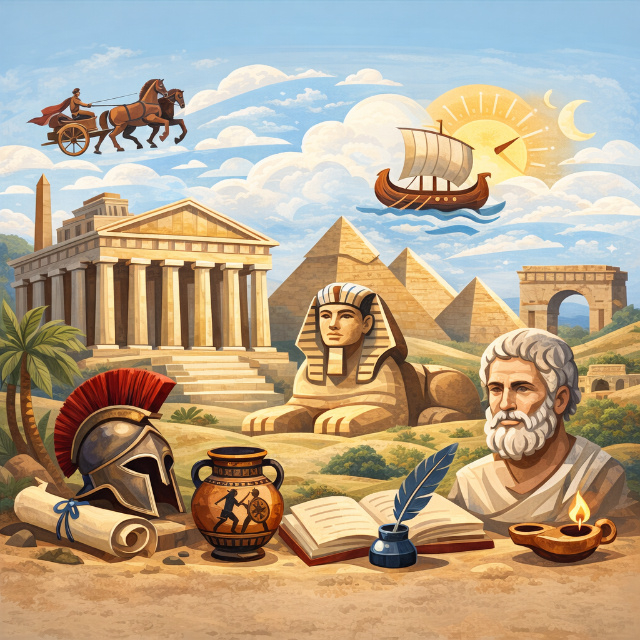
These topics cover civilizations and events before 500 CE. Ancient history offers fascinating insights into how early societies shaped our modern world, from legal systems to political structures.
- How did the Code of Hammurabi influence modern legal systems?
- What role did women play in ancient Egyptian society?
- How did the Silk Road facilitate cultural exchange between East and West?
- The fall of the Roman Empire: Inevitable decline or preventable collapse?
- How did democracy function in ancient Athens, and what were its limitations?
- The significance of the Library of Alexandria in ancient scholarship
- How did the caste system shape social structure in ancient India?
- What military strategies made Alexander the Great so successful?
- The role of mythology in ancient Greek politics and society
- How did the Phoenicians influence Mediterranean trade and culture?
- The architectural achievements of the Roman Empire and their lasting impact
- What caused the decline of the Mayan civilization?
- How did Confucianism shape Chinese governance and society?
- The significance of the Dead Sea Scrolls in understanding ancient Judaism
- How did ancient Sparta's military society differ from other Greek city-states?
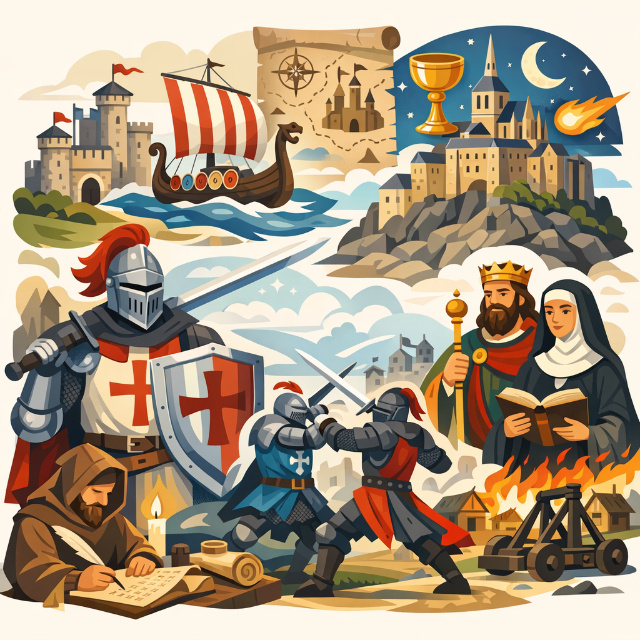
Medieval History Topics
The period from 500 CE to 1500 CE saw dramatic changes in European and global societies. These topics explore feudalism, religious conflicts, and the foundations of modern nation-states.
- How did the Black Death reshape European society and economy?
- The Crusades: Religious mission or political expansion?
- What role did monasteries play in preserving knowledge during the Middle Ages?
- How did feudalism structure medieval European society?
- The significance of the Magna Carta in limiting royal power
- How did the Viking invasions influence European development?
- The role of women in medieval courts and political intrigue
- How did the fall of Constantinople affect European trade routes?
- The architectural and engineering achievements of Gothic cathedrals
- How did the Hundred Years' War change warfare and national identity?
- The significance of guilds in medieval economic life
- How did Islam's Golden Age contribute to science and mathematics?
- The role of knights and chivalry in medieval culture
- How did the printing press transform European society?
- The significance of the Reconquista in Spanish history
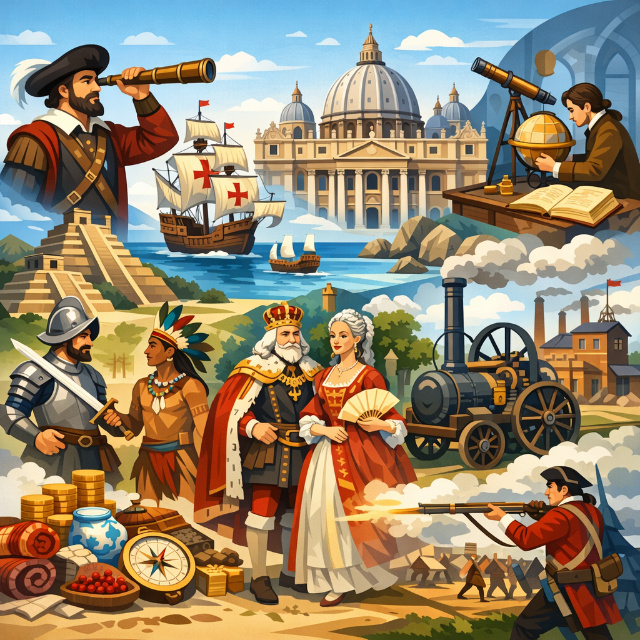
Early Modern History Topics (1500-1800)
This era includes the Renaissance, Reformation, Enlightenment, and the birth of modern science. Topics here explore how early modern societies laid the groundwork for contemporary politics and culture.
- How did the Protestant Reformation reshape European politics?
- The impact of the Columbian Exchange on global populations
- What motivated European powers to explore and colonize the Americas?
- The Salem Witch Trials: Mass hysteria or political manipulation?
- How did the Enlightenment influence revolutionary movements?
- The significance of the Treaty of Westphalia in shaping nation-states
- How did mercantilism drive European colonial policies?
- The role of the printing press in spreading Reformation ideas
- How did the Thirty Years' War affect European religious tolerance?
- The impact of the transatlantic slave trade on African societies
- How did the Scientific Revolution challenge religious authority?
- The significance of the Glorious Revolution in English governance
- How did Catherine the Great modernize Russia?
- The role of coffeehouses in Enlightenment intellectual culture
- How did the Seven Years' War reshape global colonial empires?
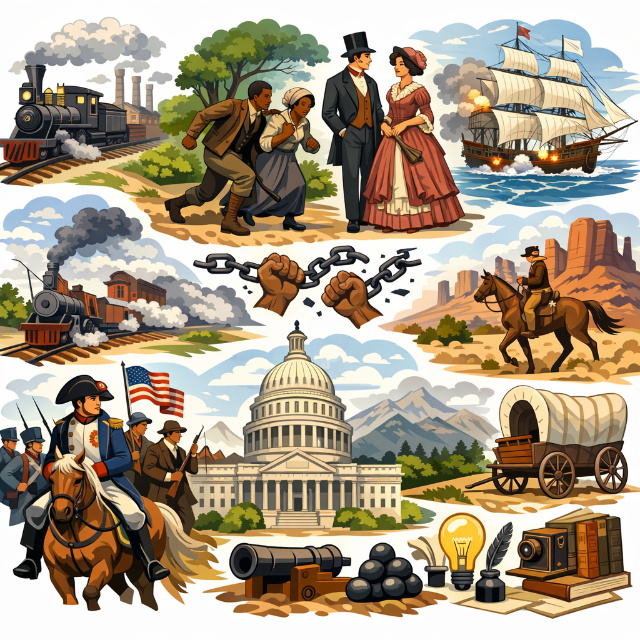
19th Century History Topics
The 1800s brought industrialization, nationalism, and dramatic social change. These topics cover everything from political revolutions to technological transformations.
- How did the Industrial Revolution transform urban life?
- The impact of Napoleon's conquests on European nationalism
- How did the abolition movement challenge slavery in the Americas?
- The significance of the Opium Wars in Chinese-Western relations
- How did the California Gold Rush affect American expansion?
- The role of railroads in uniting and dividing nations
- How did Charles Darwin's theories influence social and political thought?
- The significance of the Crimean War in modern warfare
- How did women's suffrage movements gain momentum?
- The impact of European imperialism on African societies
- How did the Meiji Restoration modernize Japan?
- The significance of the Seneca Falls Convention for women's rights
- How did Irish immigration shape American cities?
- The role of photography in documenting the Civil War
- How did the Scramble for Africa reshape the continent?
Interested in what these essays will look like? Check out our history essay examples for some guidance.
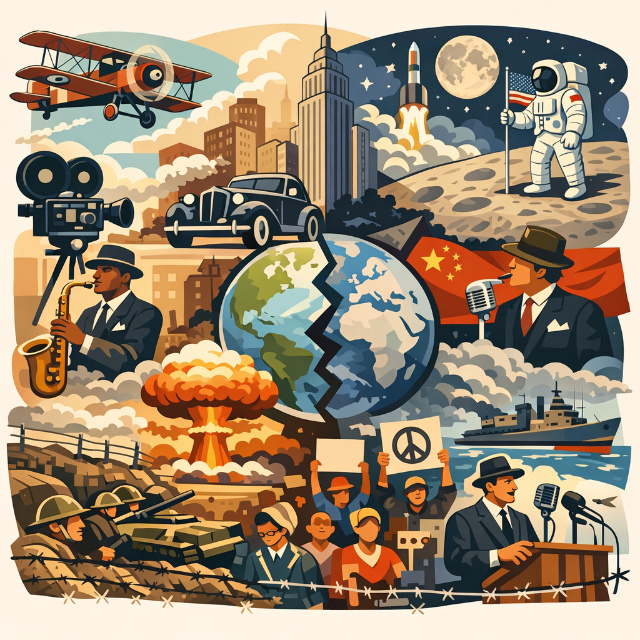
20th Century History Topics
The 20th century saw two world wars, the Cold War, decolonization, and rapid technological change. These topics offer rich material for analysis and argument.
- What role did propaganda play in mobilizing WWI support?
- How did the Treaty of Versailles set the stage for WWII?
- The impact of the Great Depression on global politics
- How did the Manhattan Project change warfare and international relations?
- The significance of D-Day in the outcome of World War II
- How did the Marshall Plan rebuild Europe and contain communism?
- The role of women in WWII: Beyond Rosie the Riveter
- How did the Berlin Airlift demonstrate Cold War tensions?
- The impact of Brown v. Board of Education on American society
- How did the Cuban Missile Crisis bring the world to the brink?
- The significance of the Vietnam War on American foreign policy
- How did the Civil Rights Act of 1964 transform American society?
- The role of television in shaping the Vietnam War's public perception
- How did Watergate affect American trust in government?
- The significance of the fall of the Berlin Wall
- How did the Iranian Revolution reshape Middle Eastern politics?
- The impact of Tiananmen Square on Chinese governance
- How did the Rwandan genocide expose failures of international intervention?
- The significance of Nelson Mandela's presidency in post-apartheid South Africa
- How did 9/11 reshape global security policies?
21st Century History Topics
Contemporary history presents unique challenges, but these recent events now have enough distance for historical analysis. These topics explore how recent changes continue to shape our world.

- How did the 2008 financial crisis reshape global economic policies?
- The significance of the Arab Spring in Middle Eastern politics
- How has social media influenced modern political movements?
- The impact of the COVID-19 pandemic on global health policies
- How did the Black Lives Matter movement reshape conversations about race?
- The significance of Brexit in European integration
- How has climate change activism evolved in the 21st century?
- The role of technology in modern warfare and surveillance
- How did the #MeToo movement address systemic harassment?
- The impact of cryptocurrency on global financial systems
Struggling to Turn Your Topic into an Essay?
Let our expert historians do the heavy lifting for you.
Choose a topic, and we'll write an A+ essay you can submit with confidence.
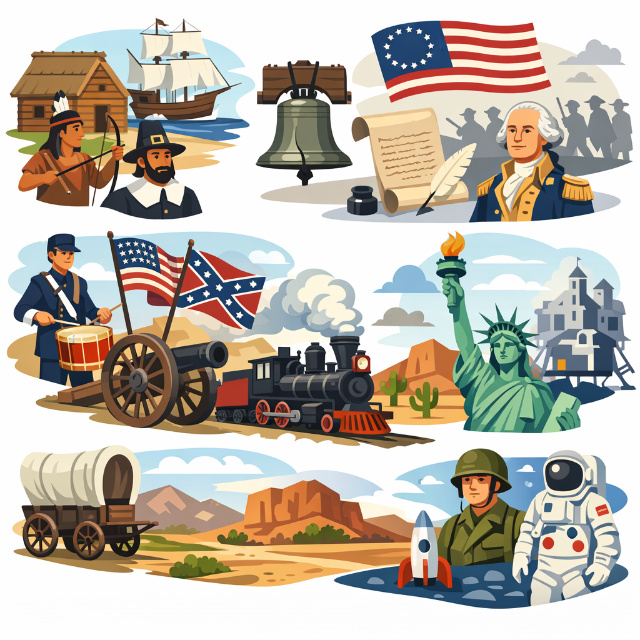
American History Topics
These topics focus specifically on United States history, from colonial times through the present. They cover political, social, and cultural developments that shaped the nation.
- How did the Declaration of Independence influence global independence movements?
- The significance of the Louisiana Purchase in American expansion
- How did Andrew Jackson's presidency shape American democracy?
- The role of women in the American Revolution
- How did the Erie Canal transform American commerce?
- The impact of Manifest Destiny on Native American populations
- How did the Emancipation Proclamation change the Civil War's purpose?
- The significance of Reconstruction in reshaping the South
- How did the Transcontinental Railroad unite the nation?
- The role of yellow journalism in the Spanish-American War
- How did the Scopes Trial reveal tensions between science and religion?
- The impact of the New Deal on American government's role
- How did Japanese internment reflect wartime racial tensions?
- The significance of the G.I. Bill in creating the middle class
- How did rock and roll challenge 1950s social norms?
- The role of television in the 1960 Kennedy-Nixon debate
- How did the Gulf of Tonkin Resolution expand presidential war powers?
- The impact of Roe v. Wade on American political divides
- How did the Reagan Revolution reshape American conservatism?
- The significance of Hurricane Katrina in exposing inequality
- How did the Homestead Act shape American westward expansion?
- The impact of Prohibition on American society and organized crime
- How did the Manhattan Project change America's role in global affairs?
- The significance of the Interstate Highway System in American development
- How did Title IX transform women's participation in education and sports?
World History Topics
These topics take a global perspective, exploring events and movements that crossed national boundaries or comparing developments across cultures.
- How did the Mongol Empire facilitate cultural exchange?
- The impact of colonialism on indigenous languages
- How did the Haitian Revolution challenge slavery worldwide?
- The significance of the Suez Canal in global trade
- How did WWI's aftermath create modern Middle Eastern borders?
- The role of decolonization movements in reshaping Africa
- How did the Non-Aligned Movement challenge Cold War divisions?
- The impact of the Cultural Revolution on Chinese society
- How did the Iranian hostage crisis affect US-Middle East relations?
- The significance of the Good Friday Agreement in Northern Ireland
- How did the genocide in Bosnia reveal failures of international law?
- The role of the International Criminal Court in global justice
- How did China's one-child policy affect its demographics?
- The impact of the European Union on national sovereignty
- How has globalization reshaped cultural identities?
Don't know what to write in such an essay? Do not fret. Have a look at our history essay structure guide.
Thematic History Topics
These topics cut across historical eras, examining themes that developed over centuries. They're perfect if your assignment asks you to trace developments over time.
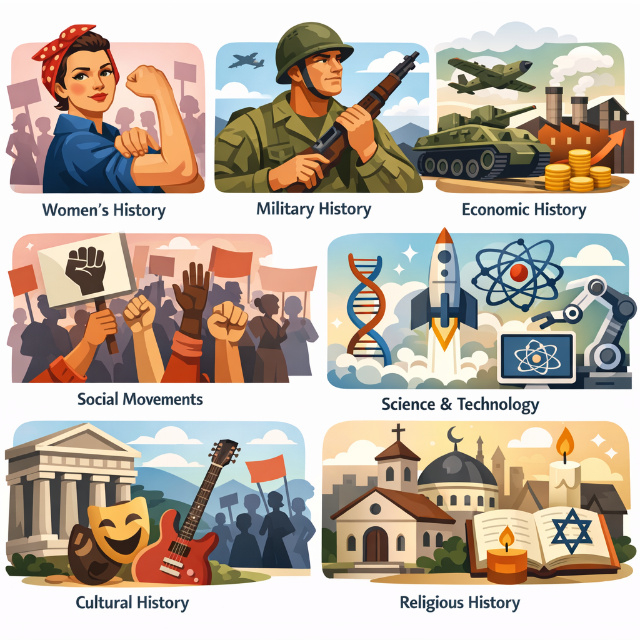
Women's History:
- How have women's property rights evolved from ancient to modern times?
- The role of women in revolutionary movements across history
- How did the birth control movement change women's autonomy?
Military History:
- How has military technology shaped the outcome of major wars?
- The evolution of guerrilla warfare from the American Revolution to modern conflicts
- How did the development of nuclear weapons change international relations?
Economic History:
- The role of currency in the rise and fall of empires
- How have economic depressions sparked political revolutions?
- The impact of trade routes on cultural exchange throughout history
Social Movements:
- How have labor movements shaped worker rights across centuries?
- The evolution of environmental activism from conservation to climate change
- How did LGBTQ+ rights movements gain momentum in the 20th century?
Science & Technology:
- How has medical innovation extended human life expectancy?
- The role of the Space Race in advancing technology
- How did the internet revolution transform global communication?
Cultural History:
- How did the Renaissance change European attitudes toward art and learning?
- The impact of jazz music on American racial integration in the 20th century
- How did Hollywood shape global perceptions of American culture?
Religious History:
- How have religious reformations shaped political power throughout history?
- The role of religion in justifying or opposing colonialism
Selected a topic? Now you need to go build an outline. We can help with our history essay outline guide.
How to Narrow Down Broad Topics
You've found a topic that interests you, but it still feels too big. Here's how to narrow it down to something you can actually write about in your word count.
Start with the "5 W's" method: Who, What, When, Where, Why. Apply each question to your broad topic, and you'll find natural ways to narrow it down.
Let's say you start with "The Civil War." That's way too broad for any essay under 10,000 words. Apply the 5 W's:
WHO? Specific generals (Grant, Lee, Sherman), politicians (Lincoln, Davis), soldiers, enslaved people, civilians?
WHAT? Specific battles, policies, social changes, economic impacts, military strategies?
WHEN? Specific year, month, battle, before/during/after a key event?
WHERE? Specific state, region, battlefield, border area?
WHY? What argument am I making about cause, effect, or significance?
| Now narrow it: "How did Sherman's March to the Sea affect civilian support for the Confederacy in Georgia?" |
This topic has a specific general (Sherman), a specific military action (March to the Sea), a specific timeframe (late 1864), a specific place (Georgia), and a specific argument to make (impact on civilian support). That's manageable in 2,000-3,000 words.
Let's try another example. Start with "Women's rights" which is impossibly broad:
WHO? Which women? Which countries? Which movements or leaders?
WHAT? Voting rights, property rights, reproductive rights, workplace equality?
WHEN? Which decade or century? Before or after a key event?
WHERE? Which country or region?
WHY? What caused change? What were the effects?
| Narrowed: "How did the Seneca Falls Convention influence the women's suffrage movement in New York State?" |
One more example. Start with "World War II":
WHO? Which country? Which leaders? Military or civilian perspective?
WHAT? Battles, home front, technology, diplomacy, propaganda?
WHEN? Which year? Before or after a turning point?
WHERE? Which theater of war? Which region?
WHY? What's your argument about cause or effect?
| Narrowed: "How did the Battle of Midway shift momentum in the Pacific Theater?" |
Notice the pattern. You go from an enormous topic to something specific enough to argue thoroughly. After narrowing your topic, you'll want to create an outline to organize your ideas and ensure you have enough to say.
Tips for Choosing the Right Topic for Your Assignment
Not all topics work for all assignments. Here's how to match your topic to your specific requirements.
- Check your assignment guidelines first. Does your professor want a specific time period? A particular geographic focus? A certain number of primary sources? Read the assignment carefully before you commit to a topic. Don't pick an ancient history topic if your assignment specifically asks for 20th-century American history.
- Consider your word count. A 1,000-word essay needs a much narrower topic than a 3,000-word essay. If you're writing 1,000 words, you need something very specific like "How did the invention of barbed wire change cattle ranching in Texas?" If you're writing 5,000 words, you can handle something broader like "The economic transformation of the American West, 1860-1890."
- Assess your available resources. Do you have access to the sources you'll need? University libraries have more resources than high school libraries. Online databases vary by institution. Before you commit to a topic, spend 15 minutes searching for sources. If you can't find at least 5-6 scholarly sources quickly, reconsider.
- Match your expertise level. If you've never studied ancient Rome, maybe don't pick a topic about Roman Senate politics for your first history essay. Start with an era or region you've at least encountered in class. You'll write faster and better when you have some context.
- Choose something that interests you. This sounds obvious, but it matters more than you think. You'll spend hours researching, outlining, writing, and revising this essay. If you're bored by your topic, those hours will feel endless. Pick something that makes you curious, even if it's not the most "impressive" topic. A passionate essay about a modest topic beats a bored essay about an impressive topic every time.
Here's a quick decision checklist:
- [ ] Does this topic fit my assignment requirements?
- [ ] Can I cover this thoroughly in my word count?
- [ ] Can I find 5-6+ scholarly sources easily?
- [ ] Do I have enough background knowledge to start?
- [ ] Am I actually interested in this?
- [ ] Can I make an argument (not just summarize)?
If you answered no to any of these, reconsider your topic. If choosing feels overwhelming, professional historians can help you not just choose a topic but write the entire essay. Once you've chosen your topic, learn how to write your history essay.
Common Topic Mistakes Students Make
Even experienced students fall into these traps. Here's what to avoid and how to fix it.
Mistake 1: Choosing a topic that's just a summary
Example: "The life of Martin Luther King Jr."
| Why it's bad: This is just biography. There's no argument, no analysis, just a summary of events. Fix: "How did MLK's philosophy of nonviolence influence the Civil Rights Movement's success?" |
Mistake 2: Picking a topic with no available sources
Example: "What Napoleon thought about while in exile"
| Why it's bad: You can't research someone's private thoughts. No primary sources exist for this. Fix: "How did Napoleon's exile to Elba affect European politics?" |
Mistake 3: Choosing a topic you're not interested in
Example: "Tax policy in colonial America" (if you hate economics)
| Why it's bad: You'll struggle through every sentence. Your essay will feel forced and boring. Fix: Choose something that genuinely fascinates you, even if it seems less "academic." |
Mistake 4: Going too current without enough analysis
Example: "Events of last week"
| Why it's bad: No historical perspective yet. Limited scholarly analysis. No distance to evaluate impact. Fix: Topics need at least 5-10 years of historical distance. |
Mistake 5: Picking an overdone topic without a new angle
Example: "Causes of the American Revolution"
| Why it's bad: Your professor has read this essay a hundred times. Hard to be original. Fix: Find a specific angle: "How did colonial newspapers shape public opinion before the Revolution?" |
Mistake 6: Choosing a topic that's too narrow
Example: "What Abraham Lincoln did on April 3, 1863"
| Why it's bad: You can't write 2,000 words about one day. Not enough to analyze. Fix: Broaden slightly: "How did Lincoln's cabinet debates in early 1863 influence the Emancipation Proclamation?" |
The pattern here? Good topics are specific enough to argue thoroughly but broad enough to have substance. They're researchable, interesting, and analytical rather than just descriptive.
Conclusion
You now have 150+ history essay topics organized by era, theme, and difficulty. Whether you're writing about ancient civilizations, medieval societies, or modern events, you'll find topics that match your assignment requirements and spark your curiosity.
Remember, choosing the right topic is just the first step. A great topic won't write the essay for you, but it makes the entire process easier. Pick something specific enough to argue, broad enough to research, and interesting enough to sustain your attention.
After you've chosen your topic, you'll need to plan your essay structure and start writing. Learn how to write a history essay to understand the process from start to finish. Need inspiration from finished essays? Check out these history essay examples to see strong topics in action. Want to organize your ideas before writing? Create an outline to structure your argument effectively.
The right topic makes all the difference between an essay that's a chore to write and one that's genuinely engaging. Take your time, choose wisely, and you'll set yourself up for success. If you need help beyond choosing a topic, our team of professional historians is ready to write your essay from scratch, delivering original research and analysis in as fast as 3 hours.
Ready to Write, But Short on Time? Let MyPerfectWords historians craft your essay from start to finish. We've helped countless students ace their history essays. You're next.