How to Choose the Right Sociology Essay Topic
Before diving into the topic lists, here's a quick decision framework to help you choose wisely.
Match your assignment type. Different essay types need different topics. Analytical essays work best with topics that examine causes and effects. Comparative essays need topics that contrast two phenomena. Research papers require topics with available data. If you're not sure what type of essay you're writing, check out our guide on types of sociology essays. Consider your available sources. Recent topics from the past five years typically have more current research and fresh perspectives. Classic topics like deviance and stratification have tons of established theory but might feel overdone. The sweet spot? Pick something with ENOUGH research to support your argument but not so much that your professor has read the same analysis 200 times. Run the passion plus feasibility test. Will you stay interested for 10-15 hours of research? Can you form a clear thesis statement (not just describe the issue)? Is it specific enough to cover in your word count? If you can't answer yes to all three, keep looking. Run it by your professor (seriously). One sentence is all you need: "I'm thinking of analyzing [topic] through [theoretical lens]. Would that work for this assignment?" This saves you from investing hours in the wrong direction. Most professors appreciate students who ask early rather than submit off-target essays. |
Now let's dive into the topics. We've organized them by theme, so you can jump to what interests you most.
Sociology Essay Topics by Theme
Family and Marriage Topics
The family unit is sociology's foundational institution. These topics explore how family structures evolve, what holds them together, and how societal forces shape domestic life.

- How social media changes modern dating and courtship rituals
- The rise of multigenerational households in the U.S.: economic necessity or cultural shift?
- Divorce rates and economic inequality: examining the class divide in marriage stability
- Single-parent households and child outcomes: moving beyond deficit narratives
- Same-sex marriage legalization: shifts in public attitudes 2015-2026
- Chosen families vs. biological families: redefining kinship in LGBTQ+ communities
- Parenting styles across cultures: authoritarian vs. permissive approaches
- "Helicopter parenting" and its impact on Gen Z independence
- Reproductive technologies and the commodification of parenthood
- Stay-at-home dads: changing gender roles in American families
- Interracial marriages and social acceptance across generations
- Polyamory and consensual non-monogamy: challenging traditional relationship structures
- The sociology of wedding traditions: why do we throw rice?
- Grandparents as primary caregivers: the "grandfamilies" phenomenon
- How economic recessions affect marriage and birth rates
Already selected your topic? Check out our complete guide on how to write a sociology essay for step-by-step instructions on crafting strong arguments.
Race and Ethnicity Topics
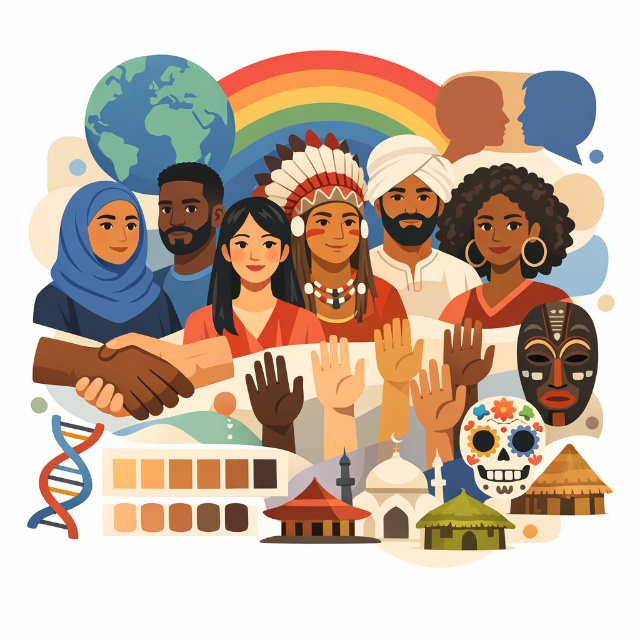
Race is a social construction, but its effects are undeniably real. These topics examine how racial categories are created, maintained, and challenged.
- Colorism within Black and Latino communities: intraracial discrimination
- The model minority myth: how it harms Asian Americans
- Racialization of immigrants: how ethnic groups "become" white over time
- Police violence and racial disparities: analyzing data from 2020-2026
- Environmental racism: why toxic waste sites are located in communities of color
- Intersectionality: race, class, and gender in Black women's lived experiences
- Cultural appropriation vs. cultural appreciation: drawing the line
- Microaggressions in workplace settings: subtle forms of discrimination
- The Black Lives Matter movement: from protest to policy change
- Critical race theory debates: what's really being taught in schools?
- Affirmative action policies: sociological arguments for and against
- Interracial friendships: what factors predict cross-racial social bonds?
- Immigration policy and family separation: sociological consequences
- Whiteness as a racial category: making the invisible visible
- Hate crimes in the U.S.: trends and contributing social factors
Gender and Sexuality Topics
Gender shapes everything from career choices to emotional expression. These topics explore how society constructs and enforces gender norms, and how people resist them.

- The gender pay gap: sociology beyond "women earn 82 cents"
- Toxic masculinity: how traditional male gender roles harm men
- Gender performativity (Judith Butler): analyzing gender as social performance
- Title IX and women's sports: equality or separate but unequal?
- Transgender rights and bathroom laws: the politics of public space
- Women in STEM fields: barriers and solutions
- Sexuality as a social construct: historical shifts in sexual categories
- Hookup culture on college campuses: empowerment or exploitation?
- The #MeToo movement: changing workplace dynamics post-2017
- Gender socialization in childhood: toys, colors, and expectations
- Non-binary and genderqueer identities: challenging the binary system
- Domestic labor division: who does the household chores and why?
- Reproductive rights and bodily autonomy: post-Dobbs landscape
- Media representation of LGBTQ+ characters: progress and limitations
- Compulsory heterosexuality: examining heteronormativity in institutions
Education and Schooling Topics
Schools do more than teach subjects, they reproduce social hierarchies. These topics examine education as a sorting mechanism and site of social conflict.

- School-to-prison pipeline: how discipline policies push students out
- Tracking and ability grouping: does it help or harm students?
- Hidden curriculum: what schools teach beyond the textbook
- College admissions scandals: Operation Varsity Blues and inequality
- Teacher expectations and the Pygmalion effect: self-fulfilling prophecies
- Student loan debt: the sociology of educational financing
- Credentialism: why do we need degrees for jobs that don't require them?
- School choice and vouchers: do they increase or decrease inequality?
- Bullying in schools: social dynamics and intervention strategies
- Homeschooling trends: who opts out and why?
- Social reproduction theory (Bourdieu): how schools preserve class privilege
- College campus activism: from Vietnam protests to DEI debates
- The achievement gap: race, class, and test scores
- Online learning post-COVID: lasting changes in education delivery
- Grade inflation: causes and consequences across universities
Crime and Deviance Topics
One person's crime is another's civil disobedience. These topics explore who gets to define deviance and what purposes social control serves.

- Labeling theory: how being called "deviant" creates deviant behavior
- White-collar crime vs. street crime: why do CEOs avoid prison?
- The social construction of deviance: marijuana legalization as a case study
- Mass incarceration in the U.S.: causes and sociological consequences
- Recidivism rates: why do ex-convicts return to prison?
- Juvenile delinquency and peer influence: the sociology of teenage crime
- Broken windows theory: does policing small crimes prevent larger ones?
- Drug courts vs. traditional criminal justice: treatment or punishment?
- Serial killers and the sociology of extreme deviance
- Restorative justice programs: can offenders repair harm?
- Moral panics: examining satanic ritual abuse or vaping "epidemics"
- Cybercrime and identity theft: deviance in the digital age
- The death penalty: does it deter crime or reinforce class bias?
- Shoplifting and retail theft: who steals and why?
- Anomie theory (Durkheim/Merton): crime as a response to social strain
Media and Technology Topics
Media doesn't just reflect society; it shapes it. These topics analyze how technology transforms social relationships, identities, and power structures.

- Social media and mental health: correlation or causation?
- Filter bubbles and echo chambers: how algorithms shape political beliefs
- Surveillance capitalism: the commodification of personal data
- Influencer culture: the professionalization of authenticity
- Cyberbullying vs. traditional bullying: are they different?
- Fake news and misinformation: the sociology of post-truth politics
- Digital divide: inequality in internet access and digital literacy
- Online dating apps: how technology changes mate selection
- TikTok trends and viral challenges: collective behavior online
- Privacy in the age of smartphones: do young people care?
- Artificial intelligence and job displacement: sociological impacts
- YouTube as a career: content creation as work
- Video game culture and gender: examining toxicity and exclusion
- Cancel culture: public shaming as social control
- Panopticism in social media: Foucault's surveillance theory updated
Wanna move on? Why don't you check out our guide on creating a sociology essay outline?
Social Class and Inequality Topics
Class shapes life chances more than Americans like to admit. These topics examine economic stratification and its ripple effects.

- The shrinking middle class: data and causes
- Food deserts and nutritional inequality in urban areas
- Cultural capital (Bourdieu): how the upper class reproduces privilege
- Minimum wage debates: can workers live on $7.25/hour?
- Gentrification: who benefits and who gets displaced?
- The working poor: full-time jobs that don't pay living wages
- Social mobility myths: is the American Dream achievable?
- Luxury goods and conspicuous consumption (Veblen): status signaling
- Wealth inequality: the top 1% vs. everyone else
- Affordable housing crisis: causes and potential solutions
- Class consciousness: why don't Americans identify by class?
- Poverty and health outcomes: the social determinants of health
- Occupational prestige: why do we respect some jobs more than others?
- Universal basic income: sociology of guaranteed payments
- Meritocracy vs. structural inequality: competing explanations for success
Done with topics? Have a look at some of our sociology essay examples for more inspiration.
Religion and Belief Systems Topics
Religion binds communities together and tears them apart. These topics explore faith as both personal meaning-making and social force.

- The rise of the "nones": why are Americans leaving organized religion?
- Megachurches and prosperity gospel: religion as business model
- Secularization theory: is religion declining or transforming?
- Religious fundamentalism: social conditions that produce it
- Islam in America post-9/11: discrimination and community resilience
- Atheist communities: creating meaning without religion
- Civil religion in the U.S.: patriotism as quasi-religious practice
- New Age spirituality: yoga, crystals, and consumerist faith
- Religious freedom laws: discrimination or protection?
- Cults and charismatic leaders: the sociology of extreme devotion
- Sacred and profane (Durkheim): how societies draw boundaries
- Religion and LGBTQ+ acceptance: examining progressive congregations
Health and Medicine Topics
Medicine seems objective, but health outcomes are deeply social. These topics examine how inequality shapes who gets sick and who gets healed.

- COVID-19 pandemic: disparities in infection and mortality rates
- Medicalization: when does a condition become a medical diagnosis?
- Medical racism: how implicit bias affects patient care
- Mental health stigma: barriers to seeking treatment
- Obesity and the body positivity movement: reclaiming fat identity
- Healthcare access in rural vs. urban areas
- Doctor-patient power dynamics: medical authority and compliance
- Pharmaceutical advertising: the marketing of illness
- Vaccine hesitancy: social factors beyond misinformation
- Disability rights and the social model of disability
- Biomedicalization: technology, enhancement, and the optimal body
- Mental illness and homelessness: addressing the overlap
- Reproductive healthcare access post-Dobbs decision
- Opioid epidemic: sociological causes and responses
- Alternative medicine: when do patients reject mainstream care?
Work and Economy Topics
Work defines identity in capitalist societies. These topics examine labor, power, and the changing nature of employment.

- The gig economy: Uber, DoorDash, and precarious labor
- Emotional labor: service workers and "the customer is always right"
- Alienation (Marx): why do workers feel disconnected from their work?
- Remote work post-pandemic: who benefits and who loses?
- Union decline in the U.S.: causes and consequences
- Automation and artificial intelligence: will robots take our jobs?
- Occupational segregation: why are some jobs "women's work"?
- Work-life balance: do Europeans have it figured out?
- Burnout culture: the glorification of overwork
- Unpaid internships: exploitation or opportunity?
- McDonaldization (Ritzer): efficiency, calculability, and dehumanization
- Workplace discrimination: age, race, and gender in hiring
- The four-day work week: productivity vs. tradition
- "Essential workers" during COVID: who kept society running?
- Labor process theory: control and resistance in the workplace
Found Your Topic? Now Let's Write It Turn that topic into a finished essay, researched, written, and polished. Deadlines approaching? We handle 6-hour rush orders.
Globalization and Migration Topics
Borders are porous, capital flows freely, but people don't. These topics examine how globalization reshapes identities, economies, and conflicts.

- Immigration and national identity: who gets to be "American"?
- Remittances: how migrant money shapes home countries
- Global cities (Sassen): New York, London, Tokyo as command centers
- Fast fashion and sweatshop labor: the hidden costs of cheap clothes
- Brain drain: skilled workers leaving developing countries
- Refugees vs. economic migrants: why the distinction matters
- McDonaldization globally: cultural homogenization or hybridization?
- English as a global language: linguistic imperialism or practical tool?
- Tourism and cultural commodification: who profits?
- Transnational families: maintaining ties across borders
- World systems theory (Wallerstein): core, periphery, and exploitation
- Climate migration: environmental refugees in the 21st century
Environment and Society Topics
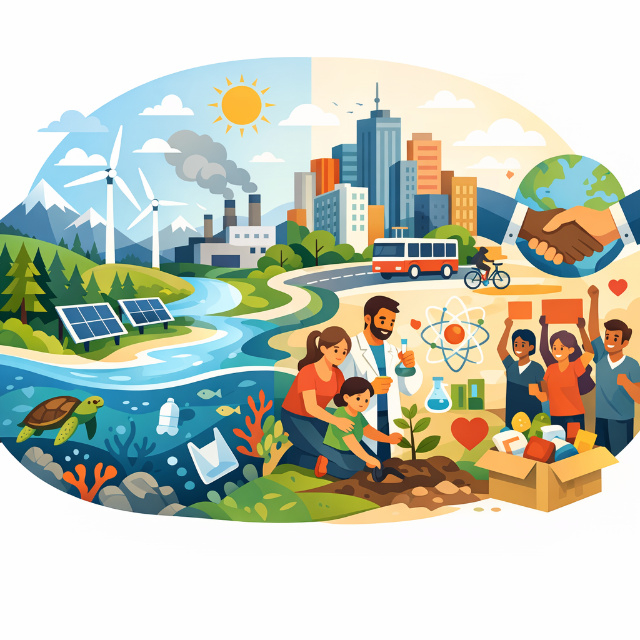
Climate change is sociology, not just science. These topics examine how environmental crises are distributed unequally and resisted collectively.
- Climate change denial: sociological explanations beyond ignorance
- Environmental justice: why are communities of color targeted?
- Treadmill of production theory: capitalism's ecological contradictions
- The anti-plastic movement: individual action vs. systemic change
- Eco-anxiety among Gen Z: mental health and environmental catastrophe
- Fast fashion's environmental impact: sociology of overconsumption
- Risk society (Beck): living with manufactured uncertainties
- Green consumerism: can we shop our way to sustainability?
- Water scarcity and conflict: the sociology of resource wars
- Urban sprawl vs. dense cities: which is more sustainable?
- Environmental movements: from conservation to climate justice
- Factory farming and meat consumption: culture vs. ethics
Culture and Identity Topics
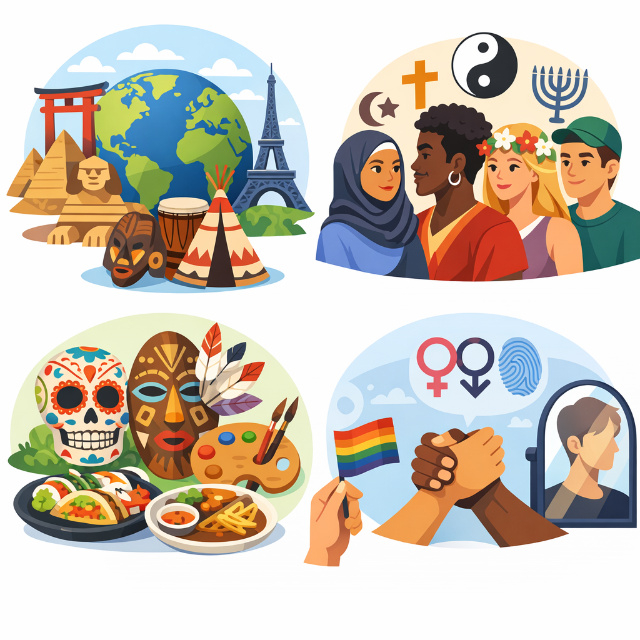
Culture is the water we swim in, invisible until you compare it to another tank. These topics make the familiar strange.
- Cancel culture: accountability or mob mentality?
- Cultural relativism vs. universal human rights: where's the line?
- Symbolic interactionism: how meaning is created in interaction
- Subcultures: punk, goth, hip-hop as identity and resistance
- Cultural appropriation in fashion and music: who gets to borrow?
- Patriotism vs. nationalism: defining healthy national identity
- Habitus (Bourdieu): how class shapes taste and behavior
- Individualism in American culture: costs and benefits
- Generational differences: are Millennials and Gen Z really that different?
- High culture vs. low culture: who decides what's "classy"?
- Postmodernism and identity: the fragmented self
- Code-switching: navigating multiple cultural contexts
- Cultural assimilation vs. multiculturalism: immigrant integration
- Memes as modern folklore: the sociology of internet culture
- The sociology of tattoos: from deviance to mainstream
Aging and Life Course Topics
Age is a biological fact and a social category. These topics examine how societies treat people differently based on when they were born.

- Ageism in the workplace: barriers to hiring older workers
- The "graying of America": implications of an aging population
- Life course perspective: how historical events shape cohorts
- Retirement crisis: can Social Security survive?
- Elder abuse and neglect: family dynamics and institutional failures
- Grandparents raising grandchildren: the "grandfamilies" trend
- Youth culture: why do societies fear teenagers?
- Successful aging: medicalization or new social expectation?
- Assisted living vs. aging in place: cultural preferences
- Millennials and delayed adulthood: boomerang kids and late marriage
Do you want to learn something a bit more interesting? Well, we have created a sociology essay format guide to make things fun for you.
Sociology Essay Topics by Difficulty Level
Still not sure which topic to pick? Here's the same list reorganized by difficulty level. Choose based on your experience with sociology and the depth required for your assignment.
What makes a topic "beginner" vs "advanced"? Beginner topics have clear concepts, abundant research, and straightforward arguments. Intermediate topics require connecting multiple concepts and nuanced analysis. Advanced topics involve abstract theory, original arguments, and less obvious connections.
Beginner-Friendly Topics
- How social media changes modern dating and courtship rituals (Family & Marriage)
- Police violence and racial disparities: analyzing data from 2020-2026 (Race & Ethnicity)
- The gender pay gap: sociology beyond "women earn 82 cents" (Gender & Sexuality)
- School-to-prison pipeline: how discipline policies push students out (Education)
- Labeling theory: how being called "deviant" creates deviant behavior (Crime & Deviance)
- Social media and mental health: correlation or causation? (Media & Technology)
- The shrinking middle class: data and causes (Social Class)
- The rise of the "nones": why are Americans leaving organized religion? (Religion)
- COVID-19 pandemic: disparities in infection and mortality rates (Health & Medicine)
- The gig economy: Uber, DoorDash, and precarious labor (Work & Economy)
- Immigration and national identity: who gets to be "American"? (Globalization)
- Climate change denial: sociological explanations beyond ignorance (Environment)
- Cancel culture: accountability or mob mentality? (Culture & Identity)
- Ageism in the workplace: barriers to hiring older workers (Aging)
- Parenting styles across cultures: authoritarian vs. permissive approaches (Family)
- Cultural appropriation vs. cultural appreciation: drawing the line (Race & Ethnicity)
- Title IX and women's sports: equality or separate but unequal? (Gender)
- Mass incarceration in the U.S.: causes and sociological consequences (Crime)
- Influencer culture: the professionalization of authenticity (Media)
- Minimum wage debates: can workers live on $7.25/hour? (Social Class)
Intermediate Topics
- Divorce rates and economic inequality: examining the class divide in marriage stability (Family)
- The model minority myth: how it harms Asian Americans (Race & Ethnicity)
- Toxic masculinity: how traditional male gender roles harm men (Gender)
- Tracking and ability grouping: does it help or harm students? (Education)
- White-collar crime vs. street crime: why do CEOs avoid prison? (Crime)
- Filter bubbles and echo chambers: how algorithms shape political beliefs (Media)
- Food deserts and nutritional inequality in urban areas (Social Class)
- Megachurches and prosperity gospel: religion as business model (Religion)
- Medicalization: when does a condition become a medical diagnosis? (Health)
- Emotional labor: service workers and "the customer is always right" (Work)
- Remittances: how migrant money shapes home countries (Globalization)
- Environmental justice: why are communities of color targeted? (Environment)
- Cultural relativism vs. universal human rights: where's the line? (Culture)
- The "graying of America": implications of an aging population (Aging)
- "Helicopter parenting" and its impact on Gen Z independence (Family)
- Microaggressions in workplace settings: subtle forms of discrimination (Race)
- Hookup culture on college campuses: empowerment or exploitation? (Gender)
- Recidivism rates: why do ex-convicts return to prison? (Crime)
- Online dating apps: how technology changes mate selection (Media)
- Gentrification: who benefits and who gets displaced? (Social Class)
Advanced Topics
- Chosen families vs. biological families: redefining kinship in LGBTQ+ communities (Family)
- Intersectionality: race, class, and gender in Black women's lived experiences (Race)
- Gender performativity (Judith Butler): analyzing gender as social performance (Gender)
- Hidden curriculum: what schools teach beyond the textbook (Education)
- The social construction of deviance: marijuana legalization as a case study (Crime)
- Surveillance capitalism: the commodification of personal data (Media)
- Cultural capital (Bourdieu): how the upper class reproduces privilege (Social Class)
- Secularization theory: is religion declining or transforming? (Religion)
- Medical racism: how implicit bias affects patient care (Health)
- Alienation (Marx): why do workers feel disconnected from their work? (Work)
- World systems theory (Wallerstein): core, periphery, and exploitation (Globalization)
- Treadmill of production theory: capitalism's ecological contradictions (Environment)
- Symbolic interactionism: how meaning is created in interaction (Culture)
- Life course perspective: how historical events shape cohorts (Aging)
- Reproductive technologies and the commodification of parenthood (Family)
How to Turn a Topic Into a Strong Thesis
You've picked a topic. Great. But "gender pay gap" isn't a thesis, it's just a subject area.
The formula is simple: Topic + Specific angle + Argument = Thesis.
Here's what that looks like in practice.
Example 1:
Weak: "This essay is about the gender pay gap." |
This is a topic announcement, not a thesis. It tells your professor what you'll discuss but not what you'll argue.
Strong: "The gender pay gap persists not because women choose lower-paying careers, but because female-dominated occupations are systematically devalued in capitalist economies." |
This is an argument backed by a theoretical lens. Someone could disagree with it, and you'd need evidence to defend it.
Example 2:
Weak: "Social media affects mental health." |
Too vague. Which platforms? Which populations? Affects how?
Strong: "Instagram's algorithm amplifies appearance-based social comparison, which disproportionately harms adolescent girls' mental health through internalized beauty standards." |
Now you've got a specific platform, mechanism, population, and outcome. That's a thesis you can prove.
Quick thesis test:
- Can someone disagree with your thesis? (If no, it's just a fact)
- Does your thesis require evidence to support it? (If no, it's an opinion)
- Can you explain HOW or WHY your claim is true? (If no, it's too vague)
Tips for Researching Your Chosen Topic
Once you've picked your topic, you need sources. Here's where to start.
Start with sociology textbooks. They provide theoretical frameworks and give you the vocabulary sociology professors expect. Use their reference lists as a roadmap to primary sources. Just don't cite the textbook directly in your essay; go find those primary sources instead.
Use academic databases. Google Scholar is free and broad, which makes it a good starting point. JSTOR requires library access but has a deep archive of sociology journals. Sociological Abstracts is the most comprehensive database specifically for sociology. If your topic involves health or medicine, PubMed is essential.
Look for recent empirical studies. Published in the last five years means you're working with current data. Check the methodology section to see HOW researchers measured things; this matters for evaluating their claims. Don't just read abstracts. Skim the discussion section for analysis and interpretation.
Follow citation trails. Good sources cite other good sources. Work backwards from recent studies to foundational works. If 10 different papers cite the same 1990 study, you should probably read it. That's how you find the "classic" texts in your topic area.
Use sociological theory as a lens. Don't just describe the problem, journalists do that. Apply Durkheim, Weber, Marx, Bourdieu, Goffman, or whoever fits your topic. Theory is what separates sociology from opinion.
Common Mistakes to Avoid When Choosing Topics
Mistake #1: Choosing a Topic that's Too Broad
Wrong: "Gender inequality" Right: "Gender pay gap in tech industry" |
Broad topics lead to surface-level essays that say nothing new. Your professor wants depth, not a Wikipedia summary. Narrow down until you've got something you can actually analyze in 10-15 pages.
Mistake #2: Picking Something with No Available Research
If you Google your topic and find three blog posts, you're in trouble. Sociology essays need peer-reviewed sources. Test your topic by searching it in Google Scholar. If you find fewer than 10 recent studies, choose something else.
Mistake #3: Choosing a Topic you Can't be Objective bout.
Strong opinions are fine. But if you can't fairly represent opposing views, you'll write a rant instead of analysis. Sociology requires you to understand social patterns, not just express your feelings about them.
Mistake #4: Waiting Until the Last Minute to Choose
If you pick your topic the night before it's due, you'll end up with the first idea that pops into your head, and so will 12 other students in your class. Your professor will read essentially the same essay 13 times. Don't be one of them.
Browse this list BEFORE you need it. Save three to five topics that interest you. When the assignment drops, you're ready to go.
Mistake #5: Ignoring your Professor's Guidelines
Some professors want current events. Others want classical theory application. Some ban certain overused topics (like "effects of social media"). Read the assignment carefully. If you're not sure what your professor wants, ask.
Conclusion
Choosing a sociology essay topic doesn't have to feel like paralysis by analysis. With 150+ options organized by theme and difficulty, you've got more than enough to work with.
Remember these key points. Pick something that genuinely interests you, you'll be researching it for hours. Make sure there's enough scholarly research available to support your argument. Narrow broad topics down to something specific you can analyze in depth. Run your final choice by your professor before diving in.
The hardest part is choosing. Once you have your topic, the rest is research, outlining, and writing, all skills you can learn.
Can't decide between multiple topics? Start with whichever one makes you think, "I'd actually want to read an essay about that." If YOU'RE bored by your topic, your professor definitely will be.
Need help turning your topic into a polished essay? Our sociology writers have handled everything from Durkheim's anomie theory to TikTok's impact on Gen Z identity. Let us know how we can help.
Picked Your Topic, Now Let Us Handle the Rest From research to final draft, our sociology writers deliver essays that earn high grades. Join countless students who trust MyPerfectWords for their sociology essays.