What Actually Is Quantum Physics? (Classical vs. Quantum)
Before quantum physics clicks, it helps to understand what it replaced.
Classical physics, think Newton, gravity, and motion work brilliantly for the world you can see. It tells you where a thrown ball lands, how fast a car accelerates, and why planets orbit the sun. The rules are predictable, cause-and-effect, and they've been reliable for centuries.
Quantum physics kicks in when you zoom all the way down to atoms, electrons, and photons. At that scale, the classical rules stop working. Energy doesn't flow in smooth, continuous waves it comes in discrete packets called quanta (that's where the name comes from). Particles don't have definite positions until you actually measure them. Things can exist in multiple states at once.
| Think of it this way: classical physics is like predicting where a bowling ball goes. Quantum physics is like predicting where a single grain of sand might end up and discovering it can technically be in two places at once until you check. |
"In quantum physics, the rules that govern your car don't apply to the electrons powering its battery."
Wave-Particle Duality: Light Is Both (and That's Okay)
Here's one of the first concepts that genuinely breaks people's brains: light and other particles like electrons behave like a wave AND like a particle, depending on how you look at it.
The famous double-slit experiment shows this clearly. When scientists shoot electrons through two narrow slits without measuring them, the electrons create an interference pattern on a screen, the kind of pattern you'd expect from waves. But when they add a detector to observe which slit each electron passes through, the interference pattern disappears, and the electrons behave like particles.
The act of observing changes what you see. The particle "decides" what it is based on whether it's being measured.
| A helpful way to picture it: imagine a coin spinning in the air. While it's spinning, it's technically neither heads nor tails. It only "picks" one when it lands when you look. That's not a perfect analogy, but it gives you the flavor of what's happening at the quantum scale. |
"Wave-particle duality means a photon of light isn't truly a wave or a particle, it's both, until the moment it interacts with something."
Particles exist as waves of probability until they're observed or measured, at which point they "collapse" into a definite state.
Superposition: Being Two Things at Once
Superposition takes the wave-particle idea one step further. A particle doesn't just have an uncertain position it can exist in multiple states simultaneously until something forces it to "choose."
Schrödinger's cat is the most famous illustration of this. Imagine a cat sealed in a box with a tiny bit of radioactive material. Whether the atom decays a quantum event that determines whether the cat lives or dies. Until you open the box and look, the cat is, according to quantum mechanics, both alive and dead at the same time. It's in a superposition of both states.
Yes, that sounds absurd. But at the subatomic level, it's not just a thought experiment it's how particles actually behave.
| Think of a dice mid-roll. While it's in the air, it isn't a 3 or a 5 yet. It's in some sense "all numbers at once" until it stops. Superposition is something like that, except nature isn't just uncertain about the outcome both outcomes are genuinely co-existing until measurement forces one to be real. |
"Superposition isn't a trick it's why quantum computers can process millions of possibilities at the same time instead of one at a time."
Before measurement, a quantum particle doesn't have a single fixed state. It holds multiple possibilities at once, and measurement collapses it to one.
The Uncertainty Principle: Why You Can't Know Everything
Werner Heisenberg figured out something that still feels deeply uncomfortable: you can't simultaneously know a particle's exact position and its exact momentum. The more precisely you pin down one, the less precisely you can know the other.
This isn't a problem with our instruments or technology. It's not that our detectors aren't sensitive enough. It's a fundamental feature of reality itself. The universe, at the quantum level, doesn't allow both values to exist precisely at the same time.
| Here's an analogy that makes this tangible: try photographing a hummingbird's wings. To capture its position sharply, you need a fast shutter speed, but then blurring the image means you lose information about how fast the wings were moving. Slow the shutter down to track the motion, and the position gets blurry. Nature forces you to trade one kind of precision for another. |
"The uncertainty principle isn't saying our instruments aren't good enough it's saying the universe itself doesn't allow both values to exist precisely at the same time."
At the quantum level, precision has limits built into reality. Measuring one property disturbs another. This isn't a limitation of science, it's a law of nature.
Quantum Entanglement: Spooky Action at a Distance
Entanglement is where quantum physics starts to sound like science fiction. When two particles become entangled, they share a connection that persists no matter how far apart they are. Measure a property of one particle, and you instantly know something about the other even if it's on the other side of the planet.
Einstein famously called this "spooky action at a distance," and he hated it. He thought it suggested some kind of hidden information traveling between particles. But decades of experiments have confirmed: entanglement is real, and it's genuinely strange.
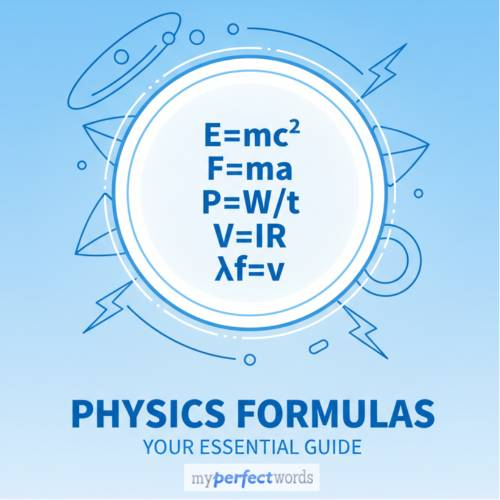
One thing it doesn't do, though, and this is a common misconception, is allow you to send information faster than light. You can't use entanglement to communicate, because you can't control what outcome you get when you measure. You just know that whatever you have, the entangled partner reflects. Look over the physics formulas you'll need once you've got the conceptual foundation down.
| The magic coin analogy: imagine two magic coins. Flip one in New York, and no matter where the other coin is London, Tokyo, or Mars, it instantly shows the opposite face. Every single time. |
"Entanglement means two particles can share a connection across any distance what happens to one instantly tells you something about the other."
Entangled particles influence each other instantly, regardless of distance. It's one of the most experimentally verified and philosophically baffling phenomena in all of physics.
Need Help With Quantum Physics?
Expert support for complex theories and calculations
Tackle quantum physics topics with confidence.
Where Quantum Physics Shows Up in Real Life
Quantum mechanics isn't just theoretical, it's behind some of the most important technology you use every day.
Lasers work because of quantum transitions: electrons drop from higher to lower energy levels and release photons of a precise wavelength. Transistors the building blocks of every computer chip and smartphone, function because of quantum tunneling, where electrons pass through barriers they classically shouldn't be able to cross. MRI machines rely on nuclear magnetic resonance, a quantum property of atomic nuclei.
Quantum computing takes superposition and entanglement and turns them into computational power. A regular computer bit is a 0 or a 1. A quantum bit (qubit) can be both at the same time, letting quantum computers process vast numbers of possibilities simultaneously.
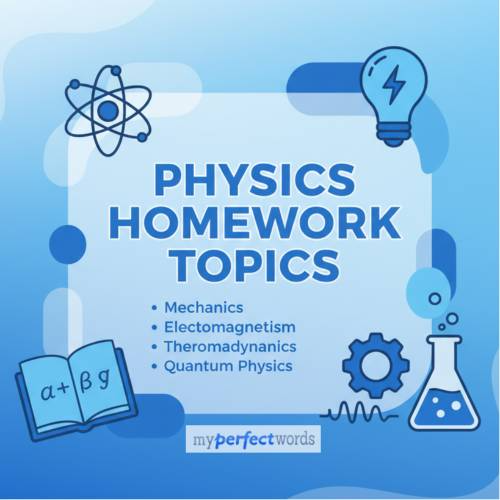
| You'll likely encounter some of these in your homework. Check out the common physics homework topics that show up most often in assignments. |
"Every time you use a smartphone, you're relying on quantum physics; the transistors inside it only work because of quantum tunneling."
Quantum Physics vs. Classical Physics: The Key Differences
Here's a quick side-by-side to help it all stick:
Feature | Classical Physics | Quantum Physics |
Scale | Everyday objects | Atoms, electrons, photons |
Outcomes | Deterministic (predictable) | Probabilistic (likely, not certain) |
Energy | Continuous | Discrete packets (quanta) |
Measurement | Doesn't disturb the system | Changes what you're measuring |
Particle behavior | Fixed position, fixed momentum | Uncertain until measured |
"Classical physics tells you where the ball will land. Quantum physics tells you where it probably will and that's not a weakness, it's just how nature works at small scales."
Both are true. Both are useful. Quantum physics doesn't "disprove" classical physics it reveals what happens when you push down to scales where classical rules break down.
Common Mistakes to Avoid in Quantum Physics Homework
Quantum physics can be challenging because it combines complex mathematics with abstract concepts. Many students struggle not because they don’t understand the topic, but because they make small conceptual or calculation errors while solving problems. Being aware of these common mistakes can help you avoid losing marks and improve your overall understanding of quantum mechanics.
Misinterpreting the Wave Function
One common mistake is misunderstanding what the wave function represents. Some students assume it directly gives the position of a particle, when in reality, the square of the wave function represents the probability density of finding the particle at a certain position.
| Always remember to interpret the wave function correctly and focus on probability distributions rather than definite positions. |
Ignoring Boundary Conditions
Quantum problems often require applying boundary conditions, especially in models like the particle in a box or quantum wells. Students sometimes forget to check whether the wave function satisfies the required conditions at the boundaries.
| For example, in many systems, the wave function must be zero at certain points or remain continuous across regions. Ignoring these conditions can lead to incorrect solutions. |
Using Incorrect Mathematical Steps
Quantum mechanics relies heavily on calculus, differential equations, and linear algebra. A common error occurs when students make mistakes while differentiating wave functions, solving Schrödinger’s equation, or simplifying mathematical expressions.
| Carefully work through each step and double-check derivatives, integrals, and algebraic simplifications. |
Forgetting Normalization of the Wave Function
A valid wave function must be normalized, meaning the total probability of finding the particle somewhere in space equals 1. Many students forget to include the normalization constant when solving problems.
| Whenever you determine a wave function, check whether normalization is required and calculate the constant if necessary. |
Confusing Quantum Concepts with Classical Physics
Quantum behavior is very different from classical physics. Students sometimes apply classical reasoning to quantum systems, which leads to incorrect conclusions.
| For instance, particles in quantum systems do not have definite paths like classical objects. Instead, their behavior is described through probability distributions and wave functions. |
Ignoring Units and Physical Meaning
While solving equations, students often focus only on the mathematical solution and forget to check the units or the physical meaning of the answer.
| Always confirm that your final result has the correct units and that it makes sense physically within the context of the quantum system. |
Skipping Conceptual Understanding
Another mistake is trying to memorize formulas without understanding the underlying concepts, such as superposition, quantization, and uncertainty.
| Spending time understanding the theory behind the equations will make it much easier to solve complex quantum physics problems. |
Avoiding these common mistakes can significantly improve the accuracy of your quantum physics homework and help you build stronger problem-solving skills in advanced physics topics.
Final Thought,
Quantum physics homework can be challenging because it combines complex mathematics with abstract concepts, but many mistakes can be avoided with a careful approach. By paying attention to key details such as correct formulas, boundary conditions, normalization, and the physical meaning of results, you can reduce errors and improve your understanding of quantum mechanics.
Taking the time to review your steps and focus on the underlying concepts will help you solve problems more accurately and build stronger skills in advanced physics topics.
Improve Your Physics Grades
Professional academic help to strengthen your physics knowledge.
- Personalized physics homework help
- Step-by-step concept clarification
- Assistance with quantum physics topics
- unlimited revisions
Better guidance leads to better physics results.
Get Started Now