Understanding Analytical Essay Thesis Statement
An analytical essay thesis statement is a sentence that breaks down a topic into its components and explains what those components reveal.
The keyword here is "analytical." You're not arguing that something is good or bad. You're not trying to persuade anyone. You're examining how something works and what that examination shows us.
Here's a basic example:
The weak version says: "The song is about loss." That's just observation. The analytical version says: "Through metaphor and personal experience, the artist explores loss to connect with listeners facing grief." See the difference? The second version shows what you're analyzing (the song), how you're analyzing it (metaphor and personal experience), and what it means (connecting with grieving listeners). |
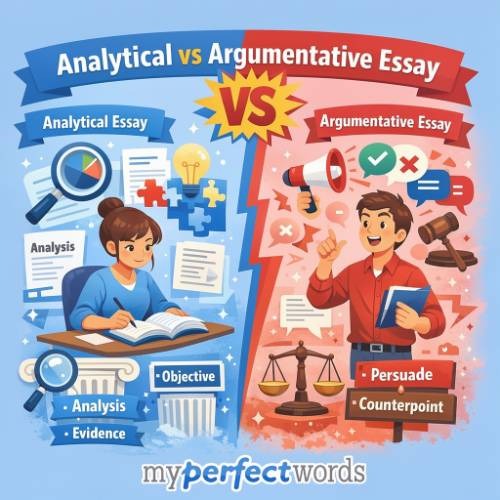
An analytical thesis doesn't argue a position. It reveals insight through examination. That's what makes it different from an argumentative thesis, which takes a stand and defends it.
The "What, How, So What" Framework
The easiest way to build a strong analytical thesis is to answer three questions in order. Think of it like building blocks.
- Start with "what." What did you discover through your analysis? What's the claim you're making about the subject? This is your main insight. For example: "The character's journey represents the immigrant experience."
- Next comes "how." How will you prove this? What methods, evidence, or analytical tools will you use? Maybe you'll examine dialogue patterns, recurring imagery, or structural choices. This is where you get specific about your approach.
- Finally, answer "so what." Why does this matter? What's the significance of your discovery? This moves beyond observation into meaning. Your "so what" connects your analysis to larger themes or implications.
Here's a template you can use: "Through _____ (how?), we can see that _____ (what?), which matters because _____ (so what?)."
Let's walk through an example using a film analysis.
Weak version: "The movie uses color." That's just stating a fact. Now let's build it up. What: "The film's color palette shifts from warm to cool tones." How: "Through deliberate color grading in each act." So what: "This visual progression mirrors the protagonist's emotional descent." Put it together: "Through deliberate color grading in each act, the film's palette shifts from warm to cool tones, mirroring the protagonist's emotional descent." |
Step by Step: How to Write Your Analytical Thesis
Writing a strong thesis isn't about getting it perfect on the first try. It's a process. Here's how to work through it.
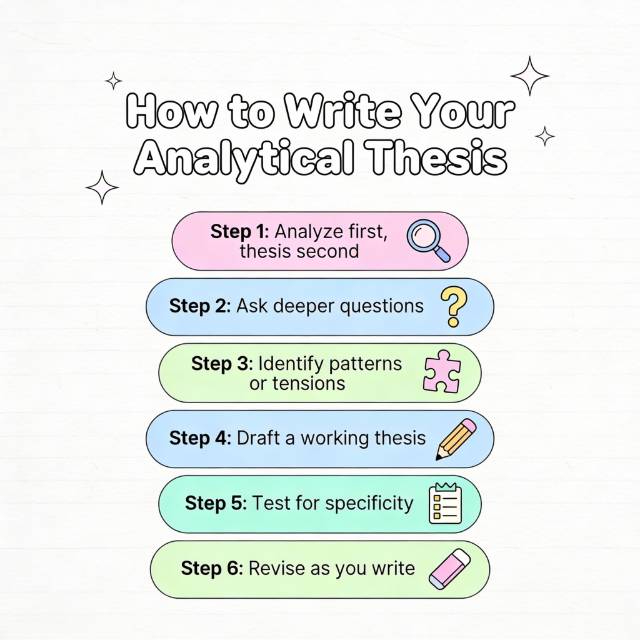
Step 1: Analyze first, thesis second
Don't start by trying to write your thesis. Start by actually examining your subject. Read closely, take notes, mark patterns. Your thesis emerges from analysis, not before it. You can't write about insights you haven't discovered yet.
If you're still deciding what to analyze, check out our analytical essay topics guide for subject ideas across different courses and levels.
Step 2: Ask deeper questions
Move past surface level observations. Don't stop at "what happens." Push into "why does this happen" and "how does it create meaning." If you're analyzing a text, don't just list literary devices. Ask what those devices accomplish.
Step 3: Identify patterns or tensions
What connections did you notice? What contradictions? What surprised you? Strong analysis often comes from spotting something that doesn't quite fit or noticing how different elements work together. These discoveries become the foundation of your thesis.
Step 4: Draft a working thesis
Get something down on paper. It doesn't have to be perfect. In fact, it won't be. Think of this as a starting point that will evolve. Write what you think you're arguing, even if it feels rough.
Step 5: Test for specificity
Look at your draft. Is it arguable, or is it just a fact? Does it need evidence to support it? Is it narrow enough to prove in your essay length? If you can't answer "yes" to these questions, narrow your focus.
Step 6: Revise as you write
Here's the real talk: your thesis doesn't have to be perfect on the first try. The strongest analytical theses emerge after you've started writing and digging into evidence. As you write your body paragraphs, you'll understand your argument better. Go back and refine your thesis. That's normal and expected.
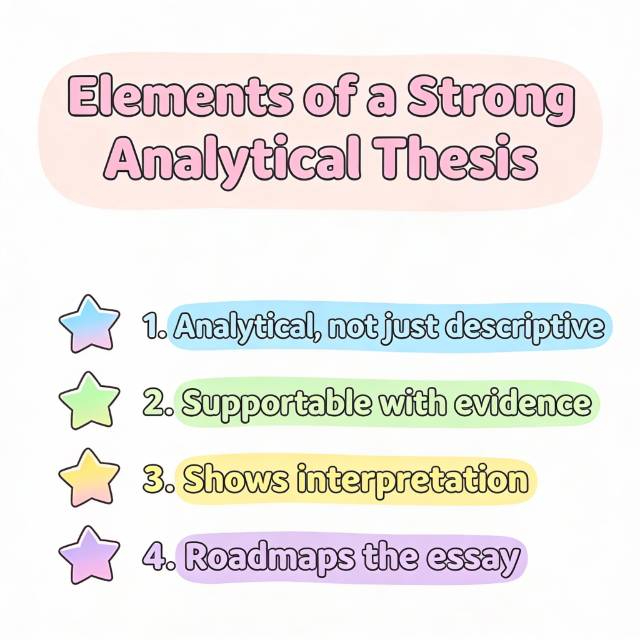
Elements of a Strong Analytical Thesis
A strong analytical thesis has a few key characteristics. Here's what to aim for.
Specific, not vague. Your thesis should name actual subjects and methods. "The author uses symbolism" is vague. "Morrison connects personal and cultural memory through recurring water imagery in Beloved" is specific. See the difference? The second version tells us what's being analyzed, what tool is being used, and what the analysis reveals. |
1. Analytical, not just descriptive
Your thesis should go beyond summary. "The story is about a family" describes plot. "The family's geographic separation mirrors their emotional distance" analyzes meaning. See how the second version interprets rather than just reports?
2. Supportable with evidence
Can you actually prove this with quotes, examples, or data from your subject? Your thesis makes a claim that your essay body will support. If you can't point to specific evidence, your thesis is probably too broad or speculative.
3. Shows interpretation
Your thesis should reveal your unique insight. Two people can analyze the same text and come up with different analytical theses. That's fine. Your job is to show what you discovered through your particular examination. The insight is yours.
4. Roadmaps the essay
Your thesis should hint at how your essay will unfold. You don't need to list every point, but readers should get a sense of your analytical approach. This helps organize your own thinking, too.
Need help structuring your essay? Our analytical essay outline guide breaks down the essay format section by section.
NEED WRITING HELP
Stop stressing over thesis statements and let professionals handle your analytical essay.
Join thousands of students who've succeeded with our help.
Here are some before and after examples:
| Weak Thesis Statement | Strong Thesis Statement |
| "The author uses symbolism." | "Through recurring water imagery, Morrison connects personal and cultural memory in Beloved." |
| "Social media affects teenagers." | "Instagram's visual culture reshapes teenage self perception by prioritizing curated moments over authentic experience." |
| "The play has political themes." | "Miller uses the Salem witch trials as an allegory to critique 1950s McCarthyism, showing how fear enables authoritarianism." |
Common Mistakes of Analytical Thesis (And How to Fix Them)
Let's talk about what goes wrong and how to fix it.
1. Too obvious
The mistake: "The book is about friendship." Everyone can see that. It's not analysis.
| The fix: dig deeper. What kind of friendship? What does it reveal? |
Try: "The novel explores how childhood friendship becomes a moral anchor when facing adult compromise."
2. Too broad
The mistake: "Shakespeare used many literary devices." Okay, but which ones? To what effect?
| The fix: pick one device and its specific purpose. |
Try: "Shakespeare's use of soliloquies in Hamlet reveals the gap between thought and action, showing how overthinking paralyzes decision making."
3. Just summary
The mistake: stating what happens instead of analyzing why or how it matters. "The character goes on a journey and learns lessons" is plot summary.
| The fix: add interpretation. "The character's physical journey through increasingly hostile landscapes reflects his internal struggle to accept vulnerability." |
4. Lists without connection
The mistake: "The character is brave, smart, and kind." That's a list of traits, not analysis.
| The fix: show how these traits create meaning or tension. "The protagonist's intelligence conflicts with her bravery, creating decisions that prioritize others' safety over strategic thinking." |
5. Missing the "so what."
The mistake: stopping at observation. "The film uses long takes." Okay, but why does that matter?
| The fix: add significance. "The film's long takes create real time tension, forcing viewers to experience the protagonist's anxiety without relief." |
Analytical Thesis Statement Examples
Here are examples across different subjects to show you the range.
Literature Examples:
"In The Great Gatsby, Fitzgerald uses geography and color symbolism to critique the illusion of the American Dream." Why it works: Identifies specific analytical tools (geography, color), names what's being analyzed (American Dream), implies the insight (critique/illusion). "Toni Morrison's fragmented narrative structure in Beloved mirrors the traumatic nature of memory, showing how the past refuses linear understanding." Why it works: Connects formal choice (structure) to thematic meaning (trauma), reveals interpretation. |
Film/Media Examples:
"Through contrast between diegetic and non diegetic sound, Get Out uses audio cues to signal when the protagonist loses control of his narrative." Why it works: Specific technical element (sound types), clear effect (control/narrative), analytical rather than evaluative. "The Marvel Cinematic Universe's post credit scenes transform narrative closure into commercial strategy, training audiences to stay engaged beyond traditional endpoints." Why it works: Analyzes function (commercial strategy), connects to larger pattern (audience training). |
History Examples:
"The New Deal's federal art programs reveal how the government used cultural production to construct a unified national identity during economic crisis." Why it works: Historical analysis with clear interpretation (identity construction), connects policy to cultural effect. "Lincoln's Gettysburg Address reframes the Civil War's purpose by invoking the Declaration of Independence, shifting justification from union preservation to equality." Why it works: Analyzes rhetorical strategy (reframing), identifies specific effect (shift in justification). |
Other Academic Subjects:
"Darwin's use of domestic breeding examples in Origin of Species made evolutionary theory accessible by connecting abstract processes to familiar practices." Why it works: Examines rhetorical strategy in scientific writing, shows how form affects reception. "Impressionist painters' broken brushwork doesn't just represent light differently but challenges the idea that painting should create illusionistic depth." Why it works: Moves from technique to larger implication about artistic purpose. |
Want to see complete examples? Visit our analytical essay examples for full sample essays with annotations.
Tips for Different Academic Levels
Your instructor's expectations will shift depending on your academic level. Here's what changes.
High school: Your instructor wants to see you can identify literary elements and basic analysis. Focus on showing how specific techniques create effects. "The author uses first person narration to create intimacy with the reader" is solid high school work. You're identifying the technique and explaining its basic function.
College: You'll need to add deeper cultural or theoretical context. The same topic might become: "First person narration in slave narratives authenticated experiences for white readers who controlled publishing, revealing how audience expectations shaped form." See how college level work connects to larger contexts?
Advanced/Graduate: More complex, nuanced arguments that engage with scholarly conversations. You're not just analyzing the primary source but positioning your reading against other interpretations or theoretical frameworks.
The core skill stays the same at every level: identify what you're analyzing, show how you're analyzing it, and explain what it means. The sophistication of the "what it means" part grows as you advance.
If you're in high school, your instructor wants to see that you can identify and explain how elements work. In college, you'll need to connect those elements to larger themes or contexts. Don't stress about being at ga raduate level when you're in high school. Meet the expectations for where you are.
From Thesis to Essay
Your thesis is the foundation, not the whole house. Once you have it, you need to build the rest of your essay around it.
Think of it this way: your thesis makes a claim. Your body paragraphs prove that claim. Each body paragraph should tackle one part of your analysis. If your thesis says you'll examine three specific elements, you'll likely have three body paragraphs, one for each element.
This roadmap guides everything. It determines what evidence you include, what you emphasize, and how you structure your argument. If something doesn't support your thesis, it probably doesn't belong in your essay.
Once you have your thesis, you'll need to build the full essay around it. Check out our complete guide to how to write an analytical essay for step by step instructions on structure, evidence, and analysis
Ready to Submit a Standout Analytical Essay?
Our expert writers will create a custom analytical essay with a thesis statement that impresses your professor.
- Share your requirements and deadline
- Ensure correct structure, citations, and layout
- Stay informed throughout the writing process
- Receive a polished, error-free work on time
Get started in less than 60 seconds.
Place Your Order