Why Create a Process Analysis Essay Outline?
You might be tempted to skip outlining and jump straight into writing. After all, you already know the process you're explaining, right? Here's why that's a mistake.
An outline forces you to organize your thoughts before committing words to paper. When you're explaining how solar panels convert sunlight to electricity, you can't afford to mention step four before step two; your readers will be completely lost. The outline catches these sequencing issues before they become paragraph-level problems.
Creating an outline also helps you spot gaps in your knowledge. You might think you understand how bread rises until you start outlining the steps and realize you're fuzzy on the yeast activation phase. Better to discover that during outlining than halfway through your essay.
Fifteen minutes outlining saves you an hour of confused drafting and another hour of frustrated revision. You'll write faster, think more clearly, and produce a stronger essay because you're following a map instead of wandering around hoping you'll end up somewhere coherent.
| Before outlining, you will need a focused topic for your process analysis essay. Check out our 200+ process analysis essay topics and choose one that is perfect for you. |
Process Analysis Essay Outline Template
Here's your master template that works for any process analysis essay. Copy this structure and fill in the brackets with your specific content.
I. Introduction
A. Hook [attention-grabbing opening statement or question]
B. Brief overview of process [1-2 sentences explaining what you'll cover]
C. Thesis statement [clearly state the goal or outcome]
D. Significance [why this process matters or when readers need this]
II. Body Paragraph 1 - [First Major Step or Stage]
A. Topic sentence [introduce this step clearly]
B. Materials/tools needed for this step [if applicable]
C. Detailed instructions or explanation
1. Sub-step if the action is complex
2. Additional sub-step if needed
D. Transition statement [connect to next step]
III. Body Paragraph 2 - [Second Major Step or Stage]
A. Topic sentence [introduce this step]
B. Materials/tools needed [if applicable]
C. Detailed instructions or explanation
1. Sub-step if needed
2. Additional sub-step if needed
D. Transition statement [connect to next step]
IV. Body Paragraph 3 - [Third Major Step or Stage]
A. Topic sentence [introduce this step]
B. Detailed instructions or explanation
C. Results or indicators of correct completion
D. Transition statement [connect to conclusion]
[Continue with additional body paragraphs as needed - most processes have 3-7 major steps]
V. Conclusion
A. Summary of main steps [brief overview, not detailed repetition]
B. Importance of sequence [why order matters]
C. Final outcome achieved [what reader can do or understand now]
D. Closing thought [encouragement, common mistake warning, or practical tip]
Most process analysis essays need three to seven body paragraphs depending on your topic's complexity. When you're deciding whether to group steps or separate them, ask yourself: "Could someone complete this step in one paragraph's worth of instructions?" If yes, keep it together. If no, split it up.
| Remember: chronological order is non-negotiable in process essays. Unlike other essay types where you can strategically order your points, process analysis demands you explain things in the exact sequence they happen. Check out our comprehensive process analysis essay examples for a better understanding. |
Directive Process Essay Outline Template
Directive essays tell readers how to DO something themselves. You're giving instructions they'll follow, so your outline needs to emphasize actionable steps and clarity.
I. Introduction
A. Hook [engaging question or scenario where reader needs this skill]
B. What you'll learn to do [clear promise of outcome]
C. Thesis statement [specific goal reader will accomplish]
D. Why this skill is useful [practical benefits]
II. Materials and Preparation
A. Complete list of materials/tools needed
B. Preparation steps before starting main process
C. Safety considerations or warnings [if applicable]
D. Time estimate [how long this will take]
III. Step 1 - [First Action]
A. What to do [clear command in second person]
B. How to do it [specific instructions]
C. What it should look like [success indicators]
D. Common mistakes to avoid
IV. Step 2 - [Second Action]
A. What to do next
B. How to execute this step
C. Tips for success
D. Transition to next action
V. Step 3 - [Third Action]
A. What to do
B. Detailed instructions
C. How to verify you did it correctly
[Continue for all major steps]
VI. Conclusion
A. Quick review of the process
B. Expected result or product
C. Troubleshooting tip or common mistake warning
The key difference in directive outlines is the emphasis on reader action. Notice how each body paragraph centers on "what to do" rather than "what happens." You're coaching someone through a process they'll perform, so your language should be direct and confidence-building.
Informational Process Essay Outline Template
Informational essays explain how something works rather than instructing readers to do it themselves. Your outline should emphasize explanation and understanding over action.
I. Introduction
A. Hook [interesting fact or question about the process]
B. What process you'll explain [clear statement]
C. Thesis statement [what readers will understand by the end]
D. Context or significance [why this process matters]
II. Background/Context [if needed for complex processes]
A. Necessary background information
B. Key terms to understand
C. Why this process exists or developed
III. Stage 1 - [First Phase of the Process]
A. Topic sentence [introduce this stage]
B. What happens during this stage
C. Why this stage is necessary
D. Transition to next stage
IV. Stage 2 - [Second Phase]
A. What occurs at this point
B. How it connects to previous stage
C. Explanation of mechanisms involved
D. Transition statement
V. Stage 3 - [Third Phase]
A. What happens in this stage
B. Key changes or transformations
C. Connection to final outcome
[Continue for all stages]
VI. Conclusion
A. Summary of the complete process
B. Final result or outcome explained
C. Significance or applications of understanding this process
Informational outlines use the third person perspective ("the system processes" not "you process") and focus on explanation rather than instruction. You're teaching understanding, not building a skill.
Struggling to organize your process essay?
Professional Writers Create Custom Outlines
Ready to get started with a professional outline?
Directive Process Essay Outline Structure
Here's a complete directive outline showing exactly how all the pieces fit together:
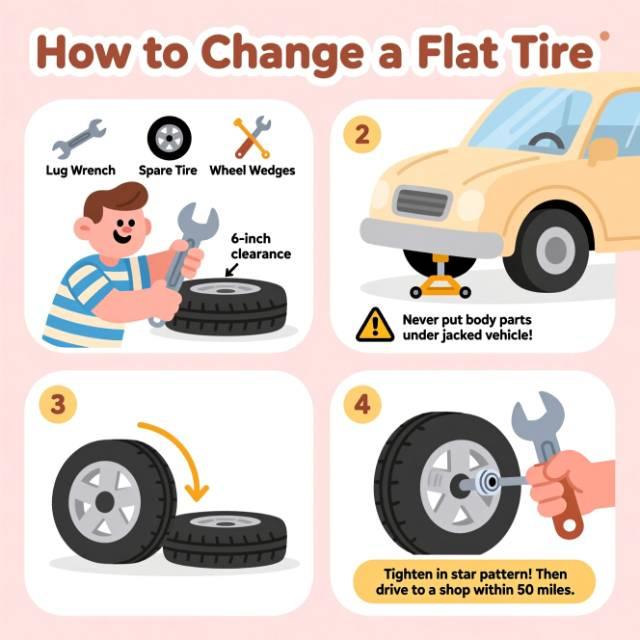
How to Change a Flat Tire
I. Introduction
A. Hook: Getting a flat tire is one of the most common roadside emergencies, happening to millions of drivers each year
B. Overview: Changing a tire involves removing the flat, installing the spare, and securing it properly
C. Thesis: By following five straightforward steps, you can safely change a flat tire in about 15-20 minutes
D. Significance: This essential skill saves you time, money, and the stress of waiting for roadside assistance
II. Materials and Preparation
A. Materials needed:
1. Spare tire (properly inflated)
2. Jack
3. Lug wrench
4. Wheel wedges
5. Flashlight (if needed)
B. Preparation steps:
1. Pull vehicle completely off road onto flat, stable ground
2. Turn on hazard lights
3. Apply parking brake
4. Place wheel wedges
C. Safety warning: Never change a tire on a slope or in traffic
D. Time estimate: 15-20 minutes once materials are gathered
III. Step 1 - Loosen Lug Nuts
A. Use lug wrench to turn nuts counterclockwise
B. Turn each nut about one-quarter to one-half turn (don't remove completely)
C. Nuts should break free but remain on bolts
D. Common mistake: Don't try loosening after jacking you'll knock the car off the jack
IV. Step 2 - Raise the Vehicle
A. Position jack under vehicle's designated jack point
B. Raise vehicle until flat tire is about six inches off ground
C. Success indicator: Tire should spin freely without touching ground
D. Never put any body part under a jacked vehicle
V. Step 3 - Remove Flat and Install Spare
A. Remove the loosened lug nuts completely
B. Pull flat tire straight toward you to remove
C. Lift spare tire onto hub, aligning holes with bolts
D. Push spare tire on until it won't go any farther
VI. Step 4 - Tighten Lug Nuts
A. Hand-tighten lug nuts in star pattern
B. Lower vehicle completely to ground
C. Use wrench to fully tighten nuts in same star pattern
D. Tip: Use full body weight on wrench for proper tightness
VII. Conclusion
A. Process summary: Loosen nuts, raise vehicle, swap tires, tighten nuts
B. Expected result: Spare tire securely attached, vehicle safe to drive
C. Important reminder: Spare tires are temporary visit tire shop within 50 miles
Notice how each step builds logically on the previous one. The outline's chronological structure prevents the common mistake of trying to loosen nuts after jacking the vehicle.
Informational Process Essay Outline Structure
Here's a complete informational outline explaining a process:
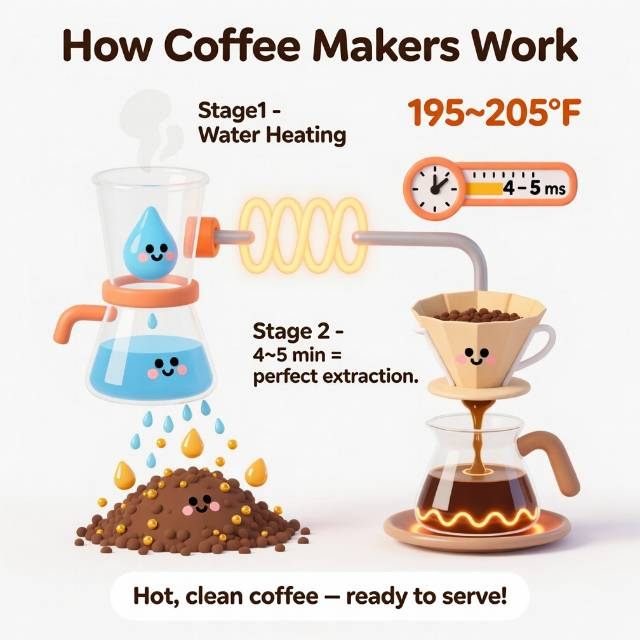
How Coffee Makers Work
I. Introduction
A. Hook: Over 400 million cups of coffee are consumed daily in the U.S., most brewed by automatic coffee makers
B. Overview: Drip coffee makers transform cold water and ground beans into hot coffee through heating, brewing, and filtering
C. Thesis: Understanding the three-stage process inside your coffee maker reveals why timing and temperature matter for perfect coffee
D. Significance: This knowledge helps troubleshoot problems and brew better coffee
II. Background Context
A. Basic components of drip coffee makers
B. Why water temperature matters (195-205°F ideal)
C. Role of coffee grounds and paper filters
III. Stage 1 - Water Heating
A. Cold water enters reservoir and travels to heating element
B. Heating element brings water to optimal temperature (195-205°F)
C. This temperature extracts coffee flavors without burning grounds
D. Heated water creates pressure that moves it to drip area
IV. Stage 2 - Brewing Process
A. Hot water drips onto coffee grounds in filter basket
B. Water saturates grounds and extracts soluble compounds
C. Proper saturation time (4-5 minutes total) ensures full extraction
D. Water passes through filter, separating grounds from liquid
V. Stage 3 - Collection and Warming
A. Brewed coffee drips into carafe below
B. Hot plate beneath carafe maintains serving temperature
C. Complete brewing takes 5-10 minutes depending on machine size
D. Final product contains extracted flavors without grounds
VI. Conclusion
A. Process summary: Water heats, saturates grounds, filters into carafe
B. Result: Hot, filtered coffee ready to drink
C. Application: Temperature and timing control affect coffee quality that's why premium machines offer precise controls
This informational outline explains what happens without telling readers to do anything. The focus stays on understanding the process rather than performing it.
What Makes a Good Process Analysis Outline?
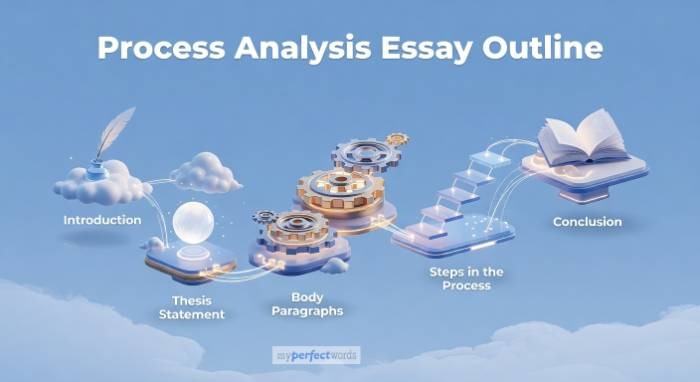
Every process analysis essay follows the same basic blueprint. Understanding this standard structure makes outlining way easier.
Your introduction needs four components: a hook that grabs attention, a brief overview of what you'll explain (one or two sentences), your thesis statement that clearly states the process goal, and why this process matters.
The body presents steps in strict chronological order, no exceptions. Each major step typically gets its own paragraph, though you can group simple related steps together or split complex steps into multiple paragraphs. Don't forget transition statements between steps so readers know you're moving forward.
Your conclusion summarizes the main steps without repeating every detail, reinforces why following the correct order matters, and states the final outcome the reader achieves by completing the process.
Create Your Own Process Essay Outline
List all steps: Jot down every step in your process on scratch paper without worrying about order or completeness.
Organize stages: Number steps chronologically and group related actions into 3–5 main stages. Example: “Topic Selection” for choosing a research paper topic.
Format outline: Use Roman numerals for main sections, capital letters for major points, and numbers for sub-points to keep hierarchy clear.
Add details: Specify exactly what each section covers (e.g., “position jack under designated jack point and raise vehicle six inches”).
Plan transitions: Note how paragraphs connect to ensure smooth flow and avoid abrupt endings.
Avoid Common Process Essay Outlining Mistakes
Be specific: Avoid vague points like “discuss materials.” Instead, list exact items and details, e.g., “jack, lug wrench, spare tire, wheel wedges, flashlight.”
Maintain chronological order: Ensure steps follow the actual sequence of the process; don’t group by theme or difficulty.
Plan transitions: Include notes for smooth flow between steps, e.g., “After positioning the jack, raise the vehicle.”
Stay focused: Only include steps relevant to the process; avoid unrelated sections like “choosing the right car.”