Why Your Conclusion Matters in an Argumentative Essay
Your conclusion is the last thing your reader sees. Think about it: they might forget your second body paragraph, but they'll remember how you ended.
Professors often flip to the conclusion first when grading. Why? It tells them whether you understood your own argument. A weak conclusion makes them wonder if you actually knew what you were talking about. A strong conclusion shows you're confident and in control.
Your conclusion isn't a throw-away paragraph. It's where you "close the deal" on your argument. You've spent the entire essay building your case. Now you need to bring it home and show why it matters. That final impression can be the difference between a B and an A.
For a perfect ending, there should be a perfect start, which is not possible without a good topic. Check out our list of 350+ argumentative essay topics and choose the one that suits you the most.
What an Argumentative Conclusion Should Do (vs. Shouldn't Do)
Let's clear up what makes a conclusion effective. Here's what you should include and what you should definitely avoid.
Your conclusion SHOULD:
- Restate your thesis (but not word-for-word from the intro)
- Summarize your main points (briefly, not everything)
- Show the bigger picture (why your argument matters)
- Leave a lasting impression (something they'll remember)
- Feel complete (no loose ends, no sudden stops)
Your conclusion SHOULD NOT:
- Introduce new arguments (you're out of real estate for that)
- Use tired phrases (like "In conclusion" or "To sum up")
- Copy your intro (your professor will notice)
- Apologize or backtrack ("This is just my opinion" undermines everything)
- End abruptly (don't leave readers hanging)
Think of your conclusion like the final scene of a movie. It should feel satisfying, not rushed or incomplete.
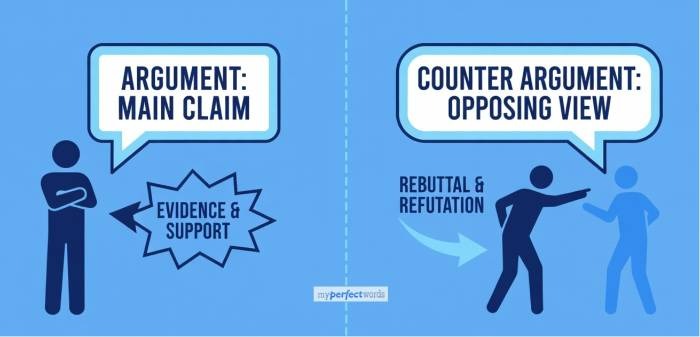
Don't introduce new counterarguments in your conclusion. If you addressed counterarguments in your body paragraphs (which you should), you can briefly reference them. Your conclusion shouldn't rehash the counterargument debate.
For more on effectively addressing counterarguments, check out our guide on counter arguments in argumentative essays.
The 3-Part Conclusion Formula for an Argumentative Essay
Want a simple framework you can follow every time? Use this three-part formula: Restate, Reinforce, Resonate.
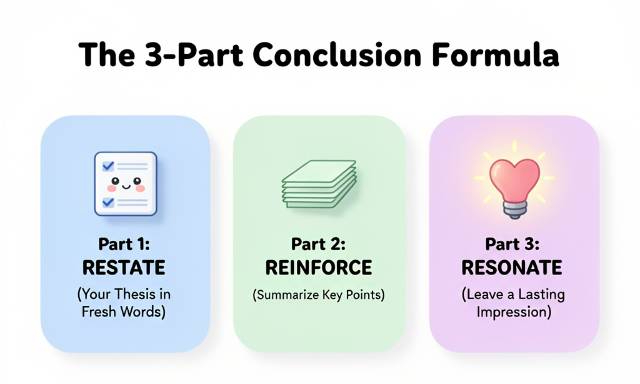
Part 1: RESTATE (Your Thesis in Fresh Words)
Why this matters: Your thesis is your main argument. Restating it reminds readers what you've been arguing all along.
How to do it: Don't copy your original thesis word-for-word. That's lazy and your professor will spot it. Instead, use fresh language that says the same thing differently. (More on restatement techniques in the next section.)
Example:
See the difference? Same argument, different words. |
For more help with your argumentative essay, check out our guide on crafting a strong argumentative essay thesis statement.
Part 2: REINFORCE (Summarize Key Points)
Why this matters: You've made several arguments in your body paragraphs. The conclusion is where you connect them and show how they work together.
How to do it: Pick your 2-3 strongest points (not all of them) and weave them into a sentence or two. Keep it brief. You're not rewriting your body paragraphs.
Example:
| "The evidence is clear. From the 8 million tons of plastic entering oceans annually, to the $11 billion spent on plastic waste management, to the behavioral impact on young people, single-use plastics in schools have consequences we can't ignore. Each of these factors supports the same conclusion: it's time for a change." |
Notice how this doesn't rehash every detail. It hits the highlights and shows they all point to the same thing. Therefore, be careful with the types of argument while choosing one for yourself.
Part 3: RESONATE (Leave a Lasting Impression)
Why this matters: This is what readers will remember after they finish. Make it count.
How to do it: You have a few options here:
- Show significance: Why does this argument matter beyond your essay?
- Call to action: What should happen next?
- Thought-provoking question: Leave them thinking
- Zoom out: Connect to a bigger issue
Example:
| "The question isn't whether schools can afford to eliminate plastic. It's whether they can afford not to. Every lunch period is an opportunity to teach the next generation about responsibility, or to reinforce the disposability mindset that got us into this mess. The choice seems obvious." |
That last line sticks with you, right? That's what Part 3 should do.
How to Restate Your Thesis in an Argumentative Conclusion
Here's the part most students struggle with: how do you restate your thesis without just repeating it? Use these four techniques from The Restatement Toolbox.
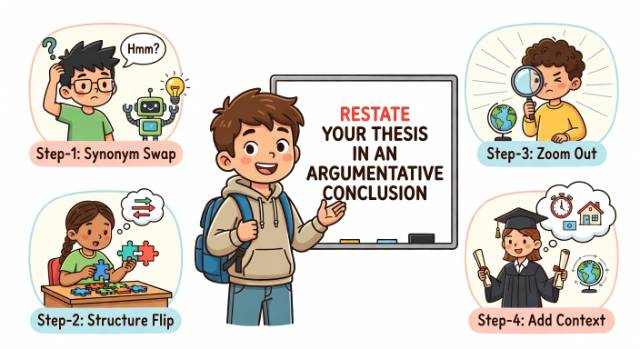
Step-1: Synonym Swap
What it is: Keep the same sentence structure but swap key words with synonyms.
When to use it: When your original thesis is well-structured and just needs fresh vocabulary.
Example:
|
Notice: "held accountable" = "take responsibility," "spreading" = "circulating," "profits" = "revenue"
Step-2: Structure Flip
What it is: Reverse the order of your thesis or rearrange the parts.
When to use it: When you want the conclusion to feel fresh without changing the meaning.
Example:
|
The supporting points came first this time, building up to the main claim.
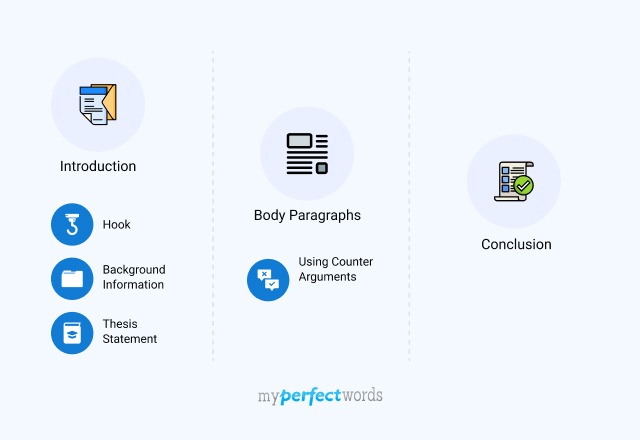
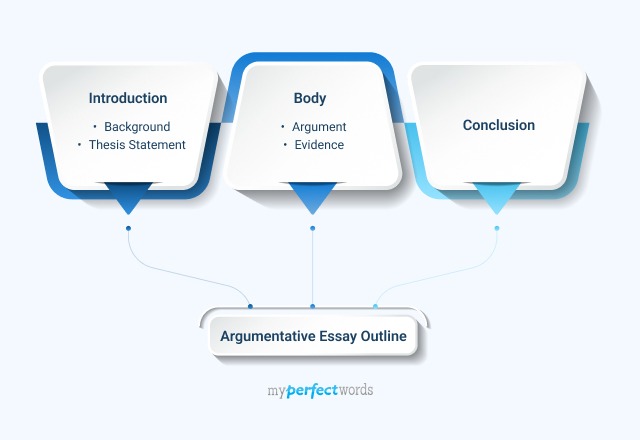
If you're working on your overall essay structure, our argumentative essay outline guide can help you organize your thoughts.
Step-3: Zoom Out
What it is: Make your thesis broader or more general.
When to use it: When you want to connect your argument to a bigger issue.
Example:
|
This version doesn't mention "courses" specifically. It's the same idea, but wider in scope.
Step-4: Add Context
What it is: Frame your thesis with "Now that we've examined..." or "Given the evidence..."
When to use it: When you want to connect the conclusion back to the journey you took readers on.
Example:
|
This technique acknowledges the work you did in the body paragraphs.
Feeling Overwhelmed by Your Essay? Get the grade you deserve without the stress. Professional argumentative essay writers
Common Conclusion Mistakes in an Argumentative Essay to Avoid
Here are the five ways students tank their conclusions (and how to avoid them).
Conclusion Killer #1: The New Argument
What it is: Bringing up points or evidence you didn't discuss in the body paragraphs.
Why it's bad: You're out of space. New information confuses readers and makes them wonder why you didn't include it earlier. It weakens your argument because you're essentially saying, "Oh, and here's another thing I forgot."
Example of the mistake: "Climate action is essential. And by the way, pollution also affects mental health, which scientists are just starting to understand."
Wait, what? Mental health? You didn't mention that before.
| How to fix it: If you think of new evidence while writing your conclusion, either add it to a body paragraph (if you have time) or save it for another essay. Your conclusion should only reference arguments you already made. |
Conclusion Killer #2: The Copy-Paste
What it is: Repeating your intro word-for-word.
Why it's bad: It's lazy. Your professor will notice. You've just spent the entire essay building an argument. Your conclusion should reflect that journey, not just repeat where you started.
Example of the mistake:
- Intro: "Schools should ban single-use plastics because they harm the environment, waste money, and teach bad habits."
- Conclusion: "Schools should ban single-use plastics because they harm the environment, waste money, and teach bad habits."
See the problem? It's the exact same sentence.
| How to fix it: Use The Restatement Toolbox. Pick any of the four techniques and rewrite your thesis with fresh language. Your readers shouldn't feel like they're experiencing déjà vu. |
Conclusion Killer #3: The Cliché Opener
What it is: Starting with "In conclusion," "To sum up," "In summary," or similar phrases.
Why it's bad: It's weak writing. Your reader already knows they're at the conclusion because they can see it's the last paragraph. These phrases don't add anything except filler words that make your writing sound amateur.
Better alternatives:
- Just start with your restated thesis (no announcement needed)
- Use a transition that connects to your last body paragraph
- Open with a powerful statement or question
Example: "The evidence leaves no room for debate: climate change requires immediate action."
Conclusion Killer #4: The Wimpy Ending
What it is: Phrases like "This is just my opinion," "I could be wrong," or "Maybe this will work."
Why it's bad: You just spent your entire essay building a case. Don't undermine it at the finish line. Confidence in your conclusion reinforces confidence in your argument. Doubt makes your reader doubt everything you just said.
Example of the mistake: "So that's why I think schools should ban plastics, but this is just my opinion and others might disagree."
You just gave your reader permission to ignore everything you wrote.
| How to stay confident: Trust the evidence you presented. You're not saying "I'm 100% right." You're saying "Based on the evidence, this is the logical conclusion." That's not arrogance. That's good argumentation. |
Conclusion Killer #5: The Abrupt Stop
What it is: Ending your essay mid-thought, like you just ran out of steam.
Why it's bad: It leaves your reader confused. They're expecting closure, and you just... stopped. It makes your whole essay feel unfinished.
Example of the mistake: "Schools should ban plastics. This would help the environment."
That's it? What about all those other points you made?
| How to create closure: Use Part 3 of The 3-Part Formula (RESONATE). Give your reader something to think about. Connect your argument to a bigger picture. Ask a thought-provoking question. Make them feel like they've reached a destination, not just hit a dead end. |
Strong Argumentative Conclusion Examples (Analyzed)
Let's look at actual conclusions and break down what makes them work.
Example 1: Strong Conclusion (Social Media & Teens)
"Given the research on anxiety, depression, and sleep disruption, the path forward is clear: social media companies must implement age restrictions and parental controls. The current self-regulation approach has failed. From Instagram's algorithmic recommendations to TikTok's addictive scroll mechanisms, these platforms prioritize engagement over adolescent wellbeing. Parents can't fight billion-dollar algorithms alone. We need policy change, and we need it now. The question isn't whether to regulate social media for teens. It's whether we can afford not to."
Why this works:
|
Example 2: Strong Conclusion (College Tuition)
"Free college tuition isn't a radical idea. It's an investment in economic mobility, workforce development, and social equity. Countries with tuition-free models consistently outperform the US in degree completion and job placement. We've seen the burden of student debt crush a generation's ability to buy homes, start businesses, and build wealth. The evidence isn't ambiguous. If we want a stronger economy and a fairer society, we already know what works. The only question is whether we have the political will to do it."
Why this works:
|
Example 3: Before/After Transformation
| BEFORE (Weak Conclusion): "In conclusion, schools should ban single-use plastics. They are bad for the environment. Also, they cost money. In summary, this is an important issue." |
Problems:
- Uses cliché opener ("In conclusion")
- Just lists points without connecting them
- No fresh language (repeats thesis word-for-word)
- Weak ending ("this is an important issue" - says nothing)
- No bigger picture or lasting impression
AFTER (Strong Conclusion):
"By eliminating disposable plastics from school cafeterias, districts can protect ecosystems, save millions in waste management, and model environmental responsibility for the next generation. The evidence is overwhelming. The choice is simple. Every lunch period is either an opportunity to teach sustainability or a reinforcement of the disposability mindset that created the climate crisis. Schools have a chance to lead. The question is whether they'll take it."
Improvements:
- No cliché opener (starts with restated thesis)
- Fresh language ("eliminating disposable plastics" vs. "ban single-use plastics")
- Connects the points (shows they work together)
- Adds significance (connects to climate crisis, leadership)
- Ends with thought-provoking question
- Uses short sentences for impact ("The evidence is overwhelming. The choice is simple.")
This is the difference between a C-grade conclusion and an A-grade conclusion. Browse our collection of argumentative essay examples for inspiration.
Quick Conclusion for Your Argumentative Essay
Let's be real: sometimes you're writing your conclusion at 11:47 PM and it's due at midnight. Here's how to write a solid conclusion fast.
Step 1: Copy your thesis into a new doc (you're going to rewrite it, but start there)
Step 2: Use Synonym Swap (easiest Restatement Toolbox method)
Step 3: Write one sentence summarizing your main points (literally just list them: "From X to Y to Z...")
Step 4: Add one final sentence (ask yourself: "So what? Why does this matter?")
Step 5: Delete any clichés (search for "In conclusion" and replace with nothing)
Done. That's a functional conclusion in under 5 minutes. It won't win awards, but it'll do the job.
When you have more time, go back and improve it using The 3-Part Formula. But if you're in crisis mode, the quick version works.
Do crosscheck your conclusion before final submission. You can use our downloadable checlist for this purpose.
Final Thoughts
Writing a strong conclusion doesn't have to be complicated. Remember The 3-Part Formula: Restate your thesis (with fresh words), Reinforce your key points (briefly), and Resonate (leave them with something memorable).
Use the Restatement Toolbox when you're stuck. Avoid The 5 Conclusion Killers. And run through the checklist before you submit.
Your conclusion is your last chance to make an impression. Make it count. You've put in the work on your argument. Now finish strong.
Master Essay Writing Without the Confusion Get expert writing support trusted by students worldwide. Make every essay insightful and stress free.

-20402.jpg)


-20437.png)