Argumentative vs Persuasive Basic Information

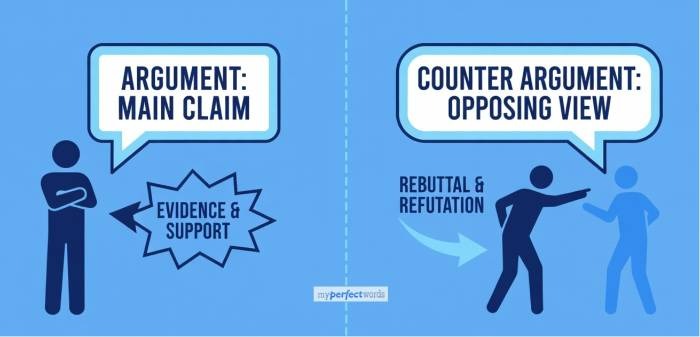
Your goal isn't just to state your opinion. You're building a case like a lawyer in court. You present facts, cite credible sources, acknowledge what the other side says, and explain why they're wrong. The whole thing stays objective and formal no "I think" or emotional appeals.
Here's what makes it argumentative:
Evidence-based. Every claim needs backup. Statistics, research studies, expert quotes, and data. If you can't cite it, don't say it.
Acknowledges opposing views. You don't ignore counterarguments. You bring them up yourself and refute them with stronger evidence.
Objective tone. Third-person perspective. No personal stories or appeals to emotion. Just logic and facts.
What does this look like in practice? Let's say you're arguing that college should be free. An argumentative approach would cite studies on student debt, compare education systems in other countries, acknowledge concerns about cost, and use data to refute those concerns.
If you're learning the basics of an argumentative essay, you'll find this structure everywhere. It's the foundation of academic writing.
An argumentative essay wins through logic, not emotion your goal is to make your reader think, not feel.
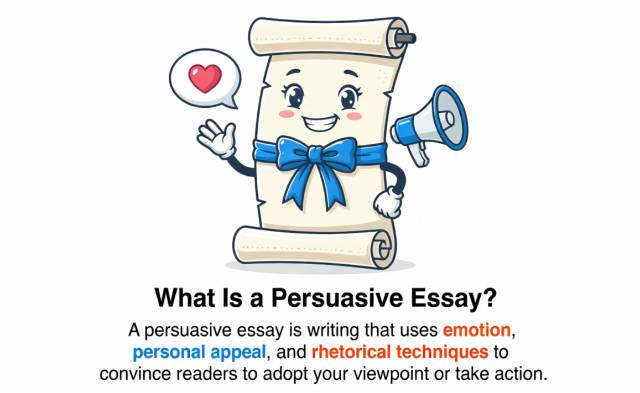
You're not building a court case here. You're giving a rallying speech. Your goal is to make readers care so much that they agree with you and do something about it. Facts can help, but the real power comes from connecting with what your readers value and feel.
Here's what makes it persuasive:
Emotion-based. Stories, vivid language, appeals to values. You want readers to feel something anger, hope, urgency, compassion.
One-sided. You present your perspective. Counterarguments? You can mention them briefly, but you're not required to dig deep or refute them systematically.
Call to action. Your conclusion doesn't just summarize. It tells readers what to do next: vote, donate, change their behavior, sign a petition.
Passionate tone. First-person ("I believe") and second-person ("you should") are both fine. You're connecting person-to-person.
Same free college topic, persuasive approach: You'd tell the story of a student drowning in debt, describe the emotional toll of choosing between education and financial stability, and end with a call for readers to support policy changes.
A persuasive essay moves readers to action by connecting with their values. Your goal is to inspire them to care.
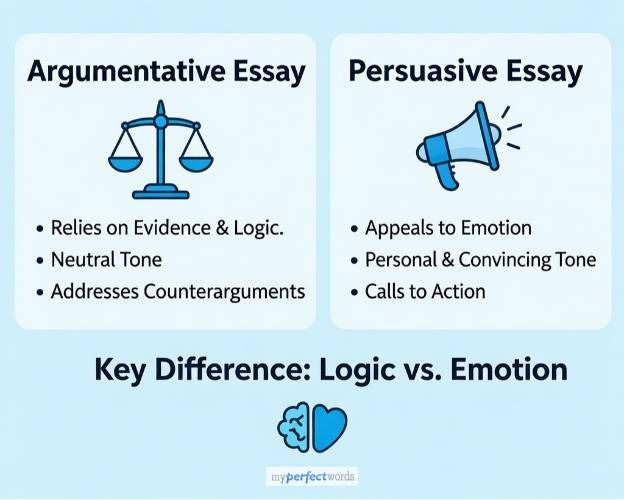
Key Differences: Argumentative vs Persuasive Comparison
Let's break this down in a way that makes the distinction crystal clear.
Element | Argumentative Essay | Persuasive Essay |
Purpose | Prove validity of a position using evidence | Convince reader to agree and take action |
Evidence | Research, data, statistics, expert quotes | Anecdotes, examples, emotional appeals, some facts |
Counterarguments | Required acknowledged and systematically refuted | Optional or briefly mentioned |
Tone | Objective, formal, third-person | Passionate, personal, first/second-person OK |
Structure | Claim, Evidence, Counterargument, Refutation | Claim, Reasons, Emotional Appeal, Call to Action |
Ending | Strong summary reinforcing evidence | Call to action telling readers what to do |
Purpose. An argumentative essay proves you're right through logic. A persuasive essay makes readers feel like you're right and motivates them to act. Both want to convince, but argumentative does it through your brain while persuasive goes for your heart.
Evidence. Argumentative essays lean heavily on research. You need peer-reviewed studies, credible statistics, and expert testimony. Persuasive essays can use facts, but they rely more on stories, examples, and emotional scenarios that make abstract concepts feel real and urgent.
Counterarguments. This is huge. In an argumentative essay, you must bring up opposing views and tear them down with better evidence. It shows you've considered all angles. In persuasive writing, you can skip counterarguments entirely or mention them just to dismiss them quickly.
Tone. Argumentative stays professional and detached you're analyzing, not advocating from personal experience. Persuasive gets passionate. You can say "I believe" or "you should" because you're making a human connection, not a purely logical one.
Think of it this way: argumentative essays use your brain (logic), persuasive essays use your heart (emotion).
How to Decode Your Assignment Prompt
| Here's the problem: your teacher assigns an essay, but the language is vague. One professor says "take a position." Another says "make your case." Another says "convince the reader." Are these all the same? Not even close. |
You need to become a prompt detective. Certain words signal which type of essay your teacher wants.
Key Words That Signal Argumentative:
- "Analyze both sides"
- "Acknowledge counterarguments"
- "Use credible sources"
- "Evidence-based"
- "Research required"
- "Cite scholarly sources"
- "Refute opposing views"
- "Support your claim with data"
If you see these phrases, you're writing an argumentative essay. Your teacher wants research, opposing viewpoints, and logical refutation.
Key Words That Signal Persuasive:
- "Convince readers"
- "Your opinion"
- "Make a case for"
- "Persuade your audience"
- "Call to action"
- "Take a stance"
- "Why you believe"
- "Convince me that"
These phrases mean persuasive. Your teacher wants passion, connection, and motivation.
Real Assignment Examples:
Example 1 (Argumentative):
"Write a 5-page essay analyzing the effects of social media on teen mental health. Use at least 5 scholarly sources. Acknowledge counterarguments and refute them with evidence."
Clear signals: "analyzing," "scholarly sources," "acknowledge counterarguments," "refute them with evidence." This is 100% argumentative.
Example 2 (Persuasive):
"Write an essay convincing your classmates to volunteer at the local animal shelter. Your goal is to inspire them to sign up."
Clear signals: "convincing," "inspire," implied call to action ("sign up"). This is persuasive.
Example 3 (Ambiguous):
"Take a position on school uniforms and defend it."
This could go either way. "Take a position" and "defend" could mean argumentative (with research and counterarguments) or persuasive (with emotional appeals). If you're unsure, ask your teacher: "Do you want me to include research and counterarguments, or is this more about my opinion?"
If your prompt mentions "research" or "counterarguments," you're writing an argumentative essay if it says "convince" or "your opinion," it's persuasive.
Need to see what a strong one looks like? Check out these argumentative essay examples to understand the format.
Same Topic, Two Approaches: Argumentative vs Persuasive Example Breakdown
Let's take the same exact topic and write it two different ways to show you exactly how these approaches differ in practice.
Topic: Should college athletes be paid?
Argumentative Approach
Thesis: College athletes should receive monetary compensation because they generate substantial revenue for universities while sacrificing personal time and risking career-ending injuries, making current NCAA regulations exploitative.
Body Paragraph Example:
College athletes generate billions in revenue for their universities and the NCAA. According to the NCAA's 2022 financial report, Division I athletics programs earned $18.9 billion in total revenue. Meanwhile, athletes receive scholarships that cover tuition and room and board but nothing beyond that. Critics argue that scholarships are sufficient compensation, claiming athletes already receive free education worth tens of thousands of dollars. However, this argument ignores that athletes' schedules often exceeding 40 hours per week between practices, games, and travel make holding part-time jobs nearly impossible. The National College Players Association found that 86% of college athletes live below the poverty line, unable to afford basic necessities despite the millions their performances generate.
Analysis: Notice the structure claim, data, counterargument acknowledged, refutation with more data. Everything is evidence-based. The tone stays objective and third-person. This is pure argumentative writing.
Persuasive Approach
Thesis: College athletes deserve to be paid for their hard work, dedication, and the immense value they bring to their schools.
Body Paragraph Example:
Imagine working 40 hours a week while maintaining a full course load. Now imagine doing it without getting paid a cent. That's the reality for college athletes across America. They wake up before dawn for practice, spend their afternoons in the weight room, and sacrifice weekends for games all while universities and coaches rake in millions from ticket sales, merchandise, and TV contracts. These aren't just players. They're students barely scraping by, unable to afford dinner out with friends or new clothes. They're living below the poverty line while their jerseys sell for $100 at the campus bookstore. Is this fair? Absolutely not. We need to demand that the NCAA change its policies now. Contact your university's athletic director. Sign petitions supporting athlete compensation. Make your voice heard. These athletes deserve better.
Analysis: Notice the shift emotional language ("Imagine working..."), second-person address ("you"), vivid scenarios, and a clear call to action at the end. This is pure persuasive writing.
Stuck on Your Essay Assignment? Our expert writers know exactly what your teacher wants. Delivered on time, even with 3-hour rush deadlines.
The Key Difference in Action
Same topic. Same position. Completely different execution.
The argumentative version builds a logical case step by step, anticipating objections and dismantling them with data. The persuasive version connects emotionally, paints a picture, and calls readers to act.
Both are effective but only when they match what your teacher wants.
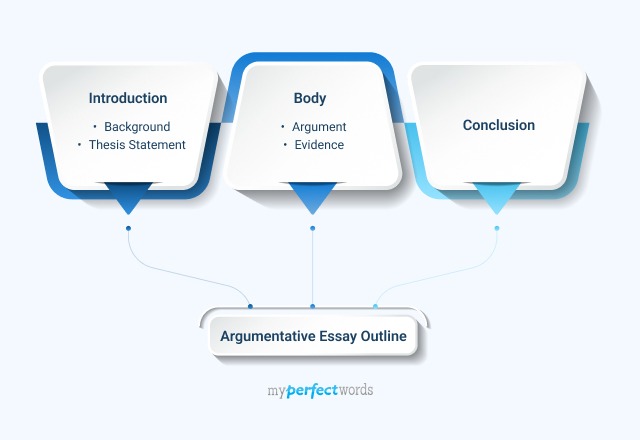
Understanding the framework helps you execute either approach correctly. Check comprehensive guidance on argumentative essay outline and structure.
Notice how the argumentative version says "According to NCAA data" while the persuasive version says "Imagine working 40 hours a week for free" that's the difference.
When to Use Argumentative or Persuasive (Decision Flowchart)
Still not sure which type to write? Use this decision tree:
Question 1: Does your assignment require research or cite sources?
YES = Write argumentative
NO = Go to Question 2
Question 2: Are you required to address opposing views or counterarguments?
YES = Write argumentative
NO = Go to Question 3
Question 3: Are you trying to inspire action or emotional response?
YES = Write persuasive
NO = Write argumentative (default for academic writing)
Additional Factors to Consider
Class type matters. English Composition and Research Writing courses typically expect argumentative essays. Creative Writing or Public Speaking might lean persuasive.
Assignment length can be a clue. Longer essays (5+ pages) usually require the depth that comes with argumentative research. Shorter essays might be persuasive.
Check your grading rubric. If it mentions "sources cited," "counterarguments," or "evidence," you're writing argumentative. If it mentions "engagement," "emotional appeal," or "call to action," you're writing persuasive.
When in Doubt: Ask Your Teacher
Seriously. Don't guess. Use this script:
| "Hi [Professor/Teacher Name], I want to make sure I understand the assignment correctly. For the essay on [topic], do you want me to include research sources and address counterarguments, or is this more about presenting my opinion and persuading the reader?" |
This shows you're thoughtful about the assignment and saves you from writing the wrong type.
Understanding when and how to use counter argument in argumentative essay writing is crucial. If your teacher gives you a rubric that mentions "sources cited" or "counterarguments addressed," you're writing an argumentative essay.
Common Argumentative vs Persuasive Essays Mistakes to Avoid
Let's talk about what not to do because these mistakes cost students points every single day.
For Argumentative Essays:
Being too emotional. You're building a logical case, not a manifesto. Save the passion for persuasive writing. Stick to evidence. Ignoring counterarguments completely. This is a dealbreaker. If you don't address opposing views, you haven't written an argumentative essay. Using weak or biased sources. Random blogs and opinion pieces won't cut it. You need scholarly journals, peer-reviewed studies, and credible news sources. Making claims without evidence. Every single claim needs backup. No evidence? Cut the claim. Using first-person. Saying "I think" or "I believe" weakens your argument. Keep it objective: "Research shows" or "Evidence suggests." |
For Persuasive Essays:
Lacking passion. If your persuasive essay reads like a research paper, you're doing it wrong. Connect emotionally with your readers. Not including a call to action. Persuasive essays should end with clear next steps. Tell readers exactly what you want them to do. Ignoring your audience's values. Connect with what your readers care about. A persuasive essay for college students looks different than one for parents or teachers. Using only logic without emotion. Facts help, but they won't move people to action on their own. Tell stories. Paint pictures. Make it personal. Forgetting to connect with the reader. Use "you" and "we." Make readers see themselves in your argument. |
The Worst Mistake: Writing One When You're Assigned the Other
Write a passionate, emotional argument when your teacher wanted cold, hard facts? You'll lose points even if your content is excellent. Write a dry, research-heavy essay when your teacher wanted conviction and action? Same result.
The biggest mistake? Writing a passionate, emotional argument when your teacher wanted cold, hard facts or vice versa. Mastering your argumentative essay thesis statement is crucial for setting up your entire argument.
Can an Essay Be Both Argumentative and Persuasive?
Short answer: sort of, but one approach should dominate.
Here's the thing even the most objective argumentative essay is trying to persuade you that the writer's position is correct. And even emotional persuasive essays can include some facts to strengthen their case.
| But the key is which approach dominates your essay. |
In practice:
- An argumentative essay might be 80% logic and research, with 20% persuasive elements (like a compelling introduction or strong conclusion)
- A persuasive essay might be 80% emotion and personal appeal, with 20% supporting facts
The difference is what drives your argument. Are you primarily building a case through evidence and refutation? That's argumentative. Are you primarily connecting with readers' emotions and values? That's persuasive.
The College Shift:
High school essays often lean more persuasive. Teachers want to see you develop a voice and take a stand. But in college, especially in research-based courses, the expectation shifts heavily toward argumentative writing. You'll need to master both, but college-level academic writing prioritizes evidence-based argumentation.
All argumentative essays are persuasive in a sense but not all persuasive essays are argumentative.
Knowing the different types of argument helps you choose the right approach for your assignment.
Conclusion
Argumentative and persuasive essays serve different purposes. Argumentative writing relies on research, evidence, and counterarguments to present an objective case, while persuasive writing appeals to emotion, values, and personal connection to influence the reader.
Both are effective, but only when used correctly. Understanding your assignment, identifying key terms, and following the rubric ensure you choose the right approach and structure your essay for success.
RUNNING OUT OF TIME? Get Expert Outline & Essay Writing Get a professional outline or complete essay tailored to your topic.

-20402.jpg)


-20437.png)