-20437.png)
What Makes a Thesis Statement "Argumentative"?
Before you can write a good thesis, you need to understand what makes it argumentative instead of just informative or descriptive. Here are the 3 must-haves:

Debatable (People Can Disagree)
Your thesis needs to be something people can actually disagree with. "Many high schools start classes early" is just a fact. "High schools should start classes no earlier than 8:30 a.m." is arguable-that's what you need.
Specific (Not Vague or Too Broad)
"Social media impacts teenagers" is too vague. "Instagram's design features encourage addictive behavior in teenagers by exploiting psychological triggers for validation" tells readers exactly what you'll argue.
Evidence-Based (Can Be Proven)
"I think homework is bad" is just opinion. "Homework exceeding 90 minutes per night decreases student performance and increases stress-related health issues" promises real evidence you can cite.
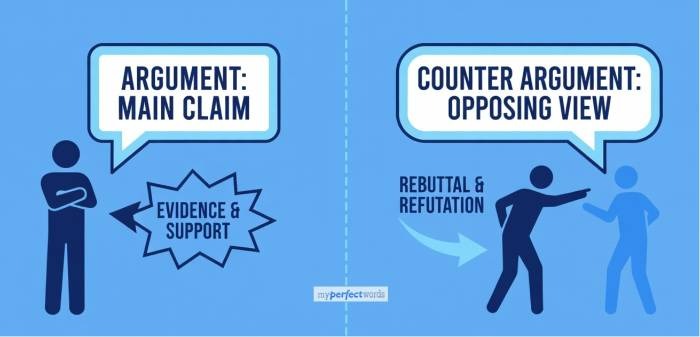
Your thesis presents your argument. Acknowledge the counterargument in argumentative essay in your intro before the thesis if needed, but keep the thesis focused on your position.
The Simple Formula for Writing Your Argumentative Essay Thesis
Here's the formula that works every time:
[Your Position] because [Reason 1], [Reason 2], and [Reason 3].
Example: School Uniforms
Position: "Public schools should require students to wear uniforms" Complete Thesis: "Public schools should require students to wear uniforms because uniforms reduce bullying based on clothing, decrease distractions in the classroom, and create a stronger sense of school community." See how each reason (bullying, distractions, community) becomes a body paragraph? That's the power of this formula. |
Shorter Formula Option
For shorter essays (3-4 pages), use: [Your Position] because [Main Reason].
Example:
| "Schools should ban sugary drinks from cafeterias because excessive sugar consumption contributes to childhood obesity and long-term health problems." |
Choose your topic wisely, as not all topics can be perfect for argumentative purposes. Check out our 350+ argumentative essay topics so you can write an excellent essay.
Writing Your Argumentative Essay Thesis From Scratch
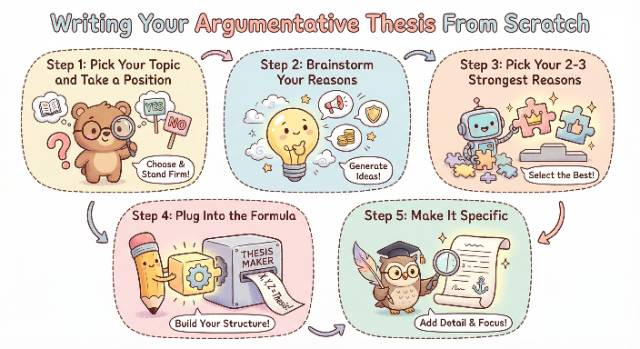
Step 1: Pick Your Topic and Take a Position
Figure out what you're arguing and which side you're on. Use direct language like "should," "must," or "needs to."
| Vague: "Social media" Clear position: "Instagram should add features to limit daily screen time" |
Step 2: Brainstorm Your Reasons
List every reason why your position is correct. For the Instagram example: mental health concerns, addiction design, sleep disruption, privacy, comparison culture, academic performance decline.
Step 3: Pick Your 2-3 Strongest Reasons
Choose reasons you can best support with evidence. For most essays, three reasons work perfectly.
| Selected: Mental health (strong research), addiction design (clear examples), sleep disruption (measurable impact) |
Step 4: Plug Into the Formula
Combine your position with your reasons: [Position] because [Reason 1], [Reason 2], and [Reason 3].
| Result: "Instagram should add features to limit daily screen time because excessive use contributes to anxiety and depression, the app's design creates addictive behavior patterns, and late-night scrolling disrupts sleep cycles critical for adolescent development." |
Step 5: Make It Specific
Add details using qualifiers and limit your scope.
| Before: "Schools should have better lunches." After: "Public middle schools should provide plant-based meal options daily because they accommodate diverse dietary needs, teach sustainable food choices, and align with nutritional guidelines." |
Remember: There are three types of argument, so choose the correct one so you can write your thesis correctly.
The 5-Question Argumentative Thesis Strength Test
Before you start writing your essay, test your thesis with these five questions. If you can't confidently say "yes" to all five, your thesis needs work.
Question 1: Can Someone Disagree With This?
| Weak (not debatable): "Shakespeare wrote many famous plays." Strong (debatable): "High schools should replace Shakespeare with contemporary diverse authors in required reading curricula." |
If it's just a fact, it's not a thesis for an argumentative essay.
Question 2: Is It Specific Enough?
| Weak (too vague): "Climate change is a problem." Strong (specific): "The U.S. government should invest $500 billion in renewable energy infrastructure over the next decade to reduce carbon emissions by 40%." |
Vague theses don't give you or your reader clear direction.
Question 3: Does It Include Your Reasoning?
| Weak (position only): "Standardized testing should be eliminated." Strong (position + reasoning): "Standardized testing should be eliminated because it measures test-taking skills rather than knowledge, creates achievement gaps based on economic status, and causes severe anxiety that impairs student performance." |
Your thesis should preview the main points of your essay.
Question 4: Can You Support It With Evidence?
| Weak (opinion only): "I think cats are better than dogs." Strong (evidence-based): "Cats make better pets than dogs for apartment dwellers because they require less space, are quieter, and can be left alone during work hours without separation anxiety." |
Make sure you can actually find credible sources to back up your claims.
Question 5: Is It One Clear Sentence?
| Weak (too complicated): "While some people think that social media is good because it connects people and helps businesses and spreads information, others think it's bad because of privacy concerns and mental health, but I think we need better regulation." Strong (clear and concise): "Social media platforms should face stricter government regulation because they exploit user data, manipulate user behavior through algorithmic design, and harm adolescent mental health." |
If your thesis takes three sentences to say, it's too complicated. Combine and simplify.
Common Argumentative Essay Thesis Statement Mistakes
Mistake 1: Writing a Question
"Should schools ban cell phones in classrooms?"
| Fix: "Schools should ban cell phones in classrooms because they reduce academic focus, increase cheating opportunities, and disrupt instruction." |
Mistake 2: Making an Announcement
"In this essay, I will discuss why college should be free."
| Fix: "Public universities should eliminate tuition because education is a public good, student debt cripples the economy, and free college increases social mobility." |
Mistake 3: Using First Person
"I believe that schools should start later."
| Fix: "High schools should start no earlier than 8:30 a.m. because adolescents have different sleep cycles, early start times decrease performance, and later start times reduce car accidents." |
Mistake 4: Being Too Broad
"Technology has changed society in many ways."
| Fix: "Social media platforms have increased political polarization by creating echo chambers that reinforce existing beliefs and suppress exposure to opposing viewpoints." |
Mistake 5: Stating a Fact
"Many students struggle with standardized tests."
| Fix: "Standardized tests should be replaced with portfolio-based assessment because they fail to measure critical thinking, disadvantage English learners, and create teaching focused on test prep." |
Mistake 6: Being Vague
"There are pros and cons to homework."
| Fix: "Elementary schools should eliminate homework for students in grades K-3 because young children benefit more from play, homework at this age doesn't improve performance, and it creates family stress." |
Struggling With Your Argumentative Essay? We'll Write It For You. From Thesis to Conclusion Your grade matters. Let us help you protect it.
Where Does Your Argumentative Essay Thesis Go?
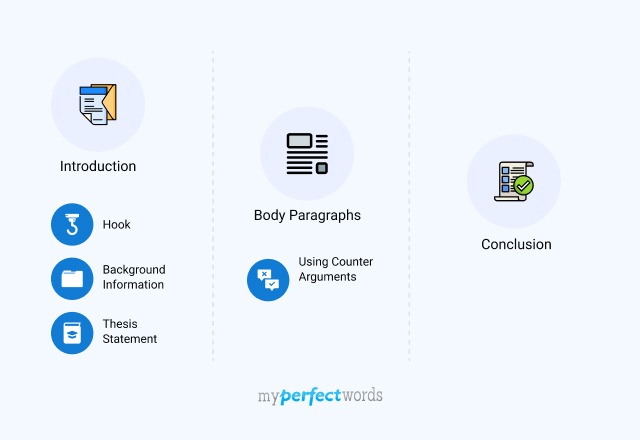
Your argumentative essay thesis statement belongs at the end of your introduction paragraph, usually as the last sentence.
Here's why: your introduction should build up to your thesis. You start with a hook to grab attention, give some background on the issue, maybe acknowledge the other side briefly, and then BAM-hit them with your thesis.
Example intro structure:
Hook: "Every morning, millions of teenagers in the U.S. drag themselves out of bed before sunrise for 7 a.m. classes."
Background: "Research shows that adolescent brains aren't wired to wake up that early, yet most high schools ignore the science."
Thesis (last sentence): "High schools should start no earlier than 8:30 a.m. because adolescents have different sleep cycles than adults, early start times decrease academic performance, and later start times reduce car accidents involving teen drivers."
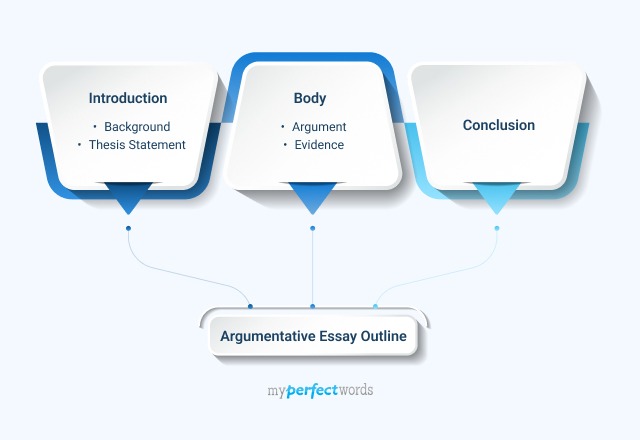
Once you have your thesis locked in, it guides everything else. Each reason becomes a body paragraph. Your argumentative essay outline follows naturally from your thesis structure.
How to Revise Your Argumentative Essay Thesis Statement
Most writers don't nail their thesis on the first try, and that's completely normal. Here's how to revise:

Start Broad, Get Specific
First Draft: "School lunches are bad."
Second Draft: "Schools should improve their lunch programs."
| Final Draft: "Public schools should provide nutritious, plant-based meal options daily because they accommodate diverse dietary needs, teach sustainable food choices, and meet updated nutritional guidelines." |
Write Your Essay First, Then Sharpen Your Thesis
Sometimes you don't know exactly what you're arguing until you've written it. That's fine. Write your essay with a working thesis, then go back and revise your thesis to match what you actually argued.
Your professor won't know you revised it after-they'll just see a tight, focused thesis that perfectly matches your body paragraphs.
Get Feedback
Read your thesis to a friend and ask: "Can you tell what I'm arguing and why?" If they're confused, your thesis isn't clear enough yet.
Don't forget to restate your thesis in the argumentative essay conclusion.
Argumentative Thesis Statement Examples Across Topics
Looking for inspiration? Here are strong thesis examples across different subjects:
Education Topics
School Start Times: "High schools should start no earlier than 8:30 a.m. because adolescent sleep patterns differ from adults, early start times harm academic performance, and later schedules reduce teen car accidents."
Homework Policies: "Elementary schools should eliminate homework for grades K-3 because young children learn better through play, homework doesn't improve performance at this age, and it creates unnecessary family stress."
Standardized Testing: "Standardized tests should be replaced with portfolio-based assessment because they measure test-taking skills rather than knowledge, disadvantage students from low-income backgrounds, and promote teaching to the test."
Technology Topics
Social Media Regulation: "Social media platforms should face stricter government regulation because they exploit user data for profit, manipulate user behavior through addictive design, and contribute to mental health crises among adolescents."
AI in Education: "Universities should ban AI writing tools like ChatGPT in coursework because they undermine critical thinking skills, make plagiarism detection impossible, and devalue authentic student learning."
Screen Time Limits: "Parents should limit children's recreational screen time to one hour daily because excessive screen exposure delays language development, reduces physical activity, and interferes with sleep quality."
Social Issues
Climate Policy: "The U.S. government should invest $500 billion in renewable energy infrastructure over the next decade because it will reduce carbon emissions by 40%, create millions of jobs, and decrease dependence on fossil fuels."
Healthcare Access: "The United States should adopt a universal healthcare system because it would reduce overall healthcare costs, improve health outcomes for underserved populations, and eliminate medical bankruptcy."
College Costs: "Public universities should eliminate tuition because education is a public good that benefits society, student debt harms the economy, and free college increases social mobility for low-income students."
Notice how each example follows the formula: clear position + specific reasons. That's what makes them work.
For more examples in context, check out these complete argumentative essay examples to see how thesis statements guide entire essays.
In Conclusion
Your argumentative essay thesis statement is your essay's roadmap. It tells readers your position and the reasons you'll prove it. Get it right, and the rest of your essay practically writes itself.
| Remember the formula: [Your Position] because [Reason 1], [Reason 2], and [Reason 3]. Make sure your thesis is debatable, specific, and supported by evidence. Test it with the 5 questions before you start writing. |
Your thesis will probably feel rough at first-and that's okay. Even great writers revise their thesis multiple times. Start with the formula, write your essay, then come back and sharpen your thesis based on what you actually argued. That's how the pros do it.
Now that you know the formula and what makes a thesis strong, you're ready to write one that'll impress your professor. You've got this.
Once you've mastered your thesis, learn from the argumentative essay guide from start to finish to complete your assignment with confidence.
TOPIC PICKED? Let's Go! We'll Handle the Rest Submit a Clear, Well-Organized Assignment You pick the topic. We do everything else.

-20402.jpg)