Dissertation Conclusion vs. Discussion: What's the Difference?
This is the question that trips up more students than any other. You've just spent weeks writing a discussion chapter. Now you need a conclusion, and the lines feel blurry.
Here's the clearest way to think about it: the discussion chapter zooms in. It interprets specific findings, compares them to existing literature, and works through the complexity result by result. The conclusion chapter zooms out. It answers the big question your dissertation set out to address, not the small ones.
The conclusion is shorter, more general, and doesn't introduce new analysis. It synthesises your work rather than digging into it further. Many students accidentally write a second discussion chapter and call it a conclusion. Examiners notice this, and it costs marks.
A practical test: if you're still explaining a specific result in depth, that's discussion territory. If you're connecting your findings back to your original research aim and explaining what it all means in the broader context, that's your conclusion.
"The conclusion zooms out where the discussion zooms in: it answers the big question your dissertation set out to address, not the small ones." |
For a full overview of how both chapters fit into your project, take a look at our dissertation structure guide.
How Long Should a Dissertation Conclusion Be?
Once you're clear on what it is and what it isn't, the next question is how much space to give it.
The standard guideline is 5–7% of your total word count. That gives you a clear target before you write a single sentence.
Here's what that looks like in practice:
Dissertation Length | Conclusion Length |
10,000 words | 500–700 words |
15,000 words | 750–1,050 words |
20,000 words | 1,000–1,400 words |
80,000 words (PhD) | 4,000–5,600 words |
For most undergraduate and master's dissertations, you're looking at two to five pages. Some universities combine the conclusion with the discussion chapter into a single final chapter, so check your guidelines before you start, because that changes everything.
Longer isn't better here. An over-padded conclusion suggests you didn't trust your own findings. Shorter isn't better either: if you're below 500 words for a 10,000-word dissertation, you're underselling your work.
"A good dissertation conclusion proves you understood your research, not that you could fill more pages." |
What to Include in a Dissertation Conclusion
This is the structural core of the chapter. Each component below has a specific job to do, and a real example sentence to show you what it looks like when it's written down.
1. Restate Your Research Purpose
Don't copy your introduction. Paraphrase your original research aim in one to two sentences to give your examiner an immediate anchor before you move into findings.
Example: "This dissertation set out to examine the relationship between remote work policies and employee productivity in UK-based SMEs."
2. Summarise Your Key Findings
This is not a re-run of your results chapter. It's a synthesis of what the findings collectively mean. Focus on the most important outcomes only, one to two sentences per finding, no more.
The approach differs slightly depending on your dissertation type:
For empirical dissertations: Connect your findings back to your hypotheses or research questions directly.
Example: "The findings indicate a statistically significant positive correlation between flexible scheduling and self-reported productivity scores."
For humanities dissertations: Summarise the central argument you've built across your chapters.
Example: "This study has demonstrated that Woolf's use of free indirect discourse functions not merely as a stylistic device but as a deliberate destabilisation of narrative authority."
3. Explain Your Research Contribution
What new knowledge does your dissertation add to the field? Even if your findings align with existing research, explain how your specific context, methodology, or sample adds value. Keep this grounded, don't over-claim.
Example: "This study contributes to the literature by providing empirical evidence in an under-researched sector, small businesses with under 50 employees, a gap the existing literature has largely overlooked."
4. Acknowledge Limitations
Be honest without being self-defeating. Name the limitation, briefly explain why it exists (time, access, scope), and note that it doesn't invalidate your findings. Two to three limitations are enough.
Example: "The primary limitation of this study is its reliance on self-reported data, which may be subject to social desirability bias."
Still Struggling With Your Conclusion? Let a professional dissertation writer handle it for you. Trusted by countless students since 2010.
5. Recommend Future Research
Based on your limitations and findings, what should researchers explore next? This shows intellectual maturity and forward-thinking. One to three specific suggestions is plenty.
Example: "Future research could address this limitation by adopting longitudinal data collection methods across a larger and more demographically diverse sample."
6. End with a Closing Statement
One to three sentences that bring the dissertation to a decisive close. Don't trail off. Leave the reader with a clear sense of your work's value. Avoid generic openers like "In conclusion, this study has shown..." and make a final, purposeful statement instead.
Example: "The evidence presented here suggests that flexible work arrangements are not a temporary response to crisis but a sustainable model for productivity in the modern workplace."
"Every element of your dissertation conclusion should connect back to the research question you raised at the start, nothing more, nothing less." |
Want more guidance on how each chapter connects? Our dissertation writing guide covers the full process from start to finish.
If you've reached this section and realised the chapter is beyond what you can manage before your deadline, that's exactly what our service is here for.
What NOT to Include in Your Dissertation Conclusion
Knowing what to leave out is just as important as knowing what to put in. Here's what doesn't belong:
New arguments, data, or analysis. If it wasn't discussed in earlier chapters, it doesn't belong here. The conclusion draws on what you've already built; it doesn't extend it.
A lengthy repetition of your introduction. You're synthesising, not recycling. Your examiner has already read your introduction.
A chapter-by-chapter summary. Writing "Chapter 1 showed X, Chapter 2 showed Y..." reads as padding, not insight. Connect your findings to your research aim instead.
Over-hedging your findings. Phrases like "While this study has some merit..." undermine your work right at the finish line. You've done the research, own it.
Generic opener phrases. Starting with "In conclusion..." or "To summarise..." wastes your first sentence. Start with substance.
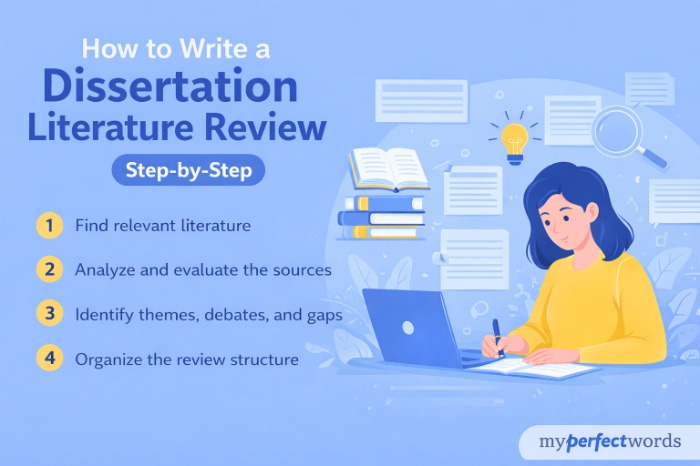
One more thing worth flagging: anything that belongs in your dissertation literature review or your dissertation methodology stays in those chapters. The conclusion is for synthesis, not a late-stage recap of your sources or methods.
"Your conclusion is the last impression your examiner takes away, don't let it be a summary of your own summary." |
Dissertation Conclusion Examples
Seeing the structure in action makes it easier to write. Below are two short annotated examples: one for an empirical dissertation and one for a humanities dissertation.
Empirical Dissertation Conclusion Example
Empirical dissertations are built around data and measurable results. The conclusion needs to connect your data back to the research question clearly and concisely.
[Research purpose] This dissertation set out to investigate the impact of remote working policies on employee productivity across UK-based SMEs. [Key findings] The results demonstrate a statistically significant positive correlation between flexible scheduling options and self-reported productivity, particularly among employees in roles with low task interdependence. [Contribution] This study contributes to the existing literature by focusing specifically on businesses with fewer than 50 employees, a sector that has been largely overlooked in prior research. [Limitations acknowledged] Reliance on self-reported productivity measures represents the study's primary limitation, as social desirability bias may have influenced responses. [Future research] Longitudinal studies using objective output metrics would offer a more precise measurement of this relationship. [Closing statement] The findings suggest that flexible work arrangements represent a durable, scalable model for the modern small business, not a temporary accommodation.
Humanities Dissertation Conclusion Example
Humanities dissertations are built around an argument. Your conclusion should confirm the central claim you've developed across chapters, not restate it mechanically.
[Research purpose] This dissertation set out to examine how Virginia Woolf uses narrative technique to challenge conventional representations of interiority. [Key findings] Close readings across three novels demonstrate that free indirect discourse functions as a deliberate destabilisation of narrative authority, resisting the reader's impulse to locate a single, stable consciousness. [Contribution] By focusing on the structural function of this technique rather than its psychological effects, this study offers a new framework for analysing Woolfian narration. [Limitations acknowledged] The analysis was limited to three novels, which means broader patterns across Woolf's complete body of work remain untested. [Future research] Applying this framework to Woolf's shorter fiction and essays could yield productive comparative insights. [Closing statement] Woolf's narration doesn't just represent thought: it performs the instability of thought itself.
"A strong dissertation conclusion doesn't just end your work; it makes the reader understand why your research mattered." |
For a detailed walkthrough of where the conclusion fits in relation to your opening chapter, see our guide on writing a dissertation introduction.
Ready to Submit a Conclusion That Works?
Our writers craft dissertation conclusions that satisfy even the toughest examiners.
- 100% human writers, zero AI content, guaranteed
- Literature reviews written by subject-specialist academics
- Checked by Originality.ai and Turnitin before delivery
- 3-hour rush available
Your finish line is closer than you think.
Order Now