Which Ending Technique Fits Your Speech?
Not every closing works for every speech. Here's a quick reference to help you find the right match fast.
Speech Type | Best Ending Technique(s) |
Class / Academic speech | Summary + Forward Look, Rhetorical Question, Rule of Three |
Advocacy / Persuasive speech | Call to Action, Powerful Statement, Rhetorical Question |
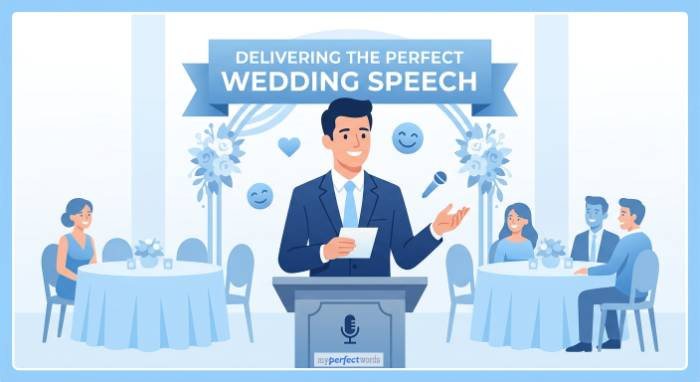
Wedding speech / toast | Personal Story, Callback to Opening, Inspiring Quote |
Work presentation | Summary + Forward Look, Call to Action |
Commencement / Graduation speech | Inspiring Quote, Rule of Three, Forward Look |
Summary, Rhetorical Question, Rule of Three |
When you're unsure, the Rule of Three is almost never the wrong choice. It's clean, rhythmic, and works across contexts. If you want to learn more about structuring the whole speech before you work on the ending, see our guide on speech format.
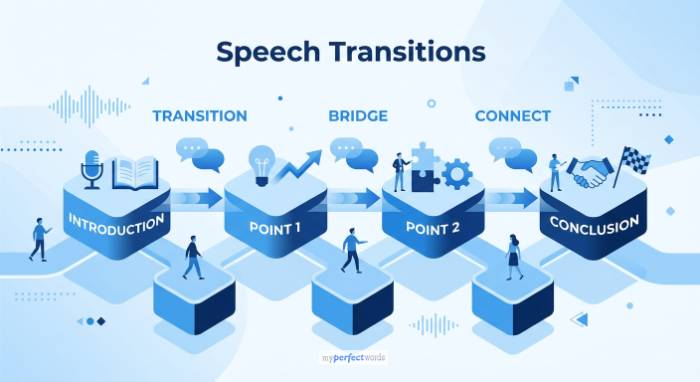
The conclusion is the third and final part of a standard structure.
Common Mistakes When Ending a Speech
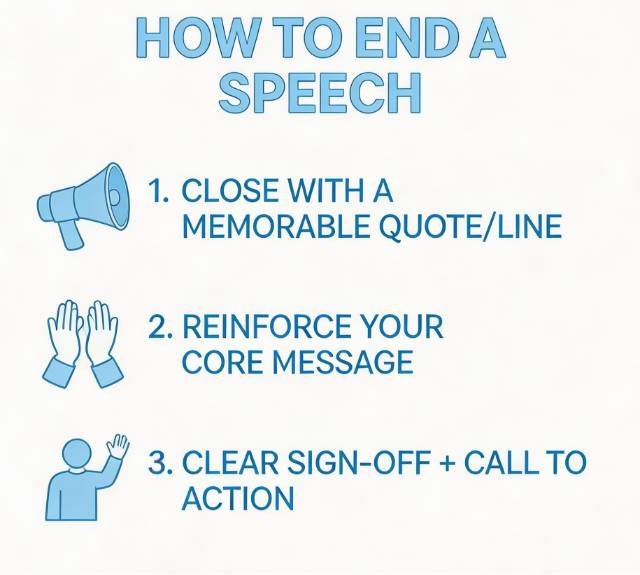
Knowing which technique to use is only half the job. The other half is knowing what to avoid. Most bad speech endings come down to the same handful of errors.
Saying "That's all I have" or "I'm done":
This signals unpreparedness, not closure. The audience needs to feel the ending, not just be informed of it.
Trailing off without a signal:
if the audience doesn't know you're finished, they won't know when to applaud. Use transition phrases to signal your speech is concluding before your actual final line.
Ending on "thank you":
Thanking your audience is polite. It's not a conclusion. Your last words should be your message, not your manners.
Adding new information in the conclusion:
Your closing is not where you introduce new arguments. If you find yourself saying "one more thing..." in the last 30 seconds, cut it.
Apologizing:
Phrases like "I know this ran long" or "sorry if I rushed through that" destroy the credibility you just spent your whole speech building. Never apologize in the closing.
Speeding up:
Nervous speakers often rush the ending. The opposite works better. Slow down. Pause before your final line. Let the silence add weight.
| The three words that kill more speech endings than any other? "That's all, folks." Don't end like a Looney Tunes cartoon. End with intention. |
How to Practice Your Speech Ending
The ending is the one part of your speech worth memorizing verbatim.
Start by writing your ending first, before the rest of the speech. When you know where you're landing, you can build the whole speech toward that destination.
Once you've written it, record yourself delivering just the ending. Play it back.
Does it sound like something you'd actually say?
Or does it sound like something you wrote?
If you can't tell the difference, you're in good shape. If it sounds like you're reading, rewrite it.
Practice the pause before your final line. Silence in the right moment is one of the most powerful tools in public speaking. A two-second pause before your last sentence signals to the audience that something important is coming.
Practice making eye contact at the close, not at your notes. The ending is the moment your audience needs to feel connected to you, not watching you read.
| Memorize your last three sentences. That's where eye contact, presence, and power come from. |
Example Speech Endings You Can Adapt
Here are five complete example endings for different contexts. Each one is short enough to read in 30-45 seconds. Use them as models or adapt them directly.
[Academic] Summary + Rhetorical Question
"We've looked at the evidence from three angles: the historical context, the current research, and the practical applications. The data is consistent. The conclusion is clear. The only question left is this: now that you know, what will you do with it?"
[Wedding Toast] Personal Story + Callback
"I've known Jamie for fifteen years. And in all that time, I've never once seen them look at anyone the way they look at Alex. Not once. I started tonight by saying that love is easy to spot when it's real. I think you've all just seen proof of that. To Jamie and Alex, may every room you walk into together feel exactly like this one."
[Work Presentation] Summary + Call to Action
"We covered the problem, the proposed solution, and the projected outcomes. The data supports moving forward. All that's left is a decision. I'm asking you to greenlight Phase 1 by end of this week so we can hit the Q3 deadline. I'm confident in this plan, and I'm ready to walk through any questions right now."
[Persuasive / Advocacy] Powerful Statement + Call to Action
"This isn't a funding problem. It's a priority problem. And priorities can change, but only when people demand it. So I'm asking you to do one thing when you leave today: make the call. Your representative's number is on the handout. It takes two minutes. The kids it helps will have a lifetime."
[Motivational] Rule of Three + Quote
"You came here uncertain. You leave here informed. Go forward prepared. As Winston Churchill said: 'Success is not final, failure is not fatal it is the courage to continue that counts.' You've already shown that courage by being in this room. Keep going."
For full examples across different speech styles, take a look at our speech examples library.
[Informative] Key Takeaway + Future Focus
"We’ve explored what this issue is, why it matters, and how it affects us today. The takeaway is simple: understanding leads to better decisions. As this topic continues to evolve, the question isn’t whether change will happen it’s whether we’ll be prepared for it."
[Graduation] Reflection + Forward-Looking Statement
"Today marks the end of one chapter, but not the end of learning. Everything you’ve gained here, the skills, the setbacks, the friendships goes with you. The future isn’t waiting for you to be ready. It’s waiting for you to begin."
[Demonstrative / Instructional] Recap + Confidence Builder
"We’ve walked through each step, addressed the common challenges, and practiced the solution. You now have the tools to do this on your own. The first attempt doesn’t have to be perfect, it just has to start."
[Ceremonial / Award] Appreciation + Meaning
"This award represents more than achievement. It reflects persistence, teamwork, and belief when results weren’t guaranteed. Tonight, we celebrate not just success but the effort behind it."
[Debate / Argumentative] Restated Claim + Challenge
"The evidence is consistent, the reasoning is sound, and the counterarguments fall short. If we value fairness, efficiency, and long-term impact, then this position isn’t just reasonable, it’s necessary."
[Farewell Speech] Shared Memory + Emotional Closure
"We won’t remember every task we completed, but we’ll remember how it felt to work side by side. Wherever we go next, a part of this place goes with us. Thank you for making it matter."
[Leadership / Vision] Vision + Invitation
"This isn’t about where we are today it’s about where we’re willing to go together. Progress starts with alignment, momentum starts with trust, and leadership starts now. I invite you to take that next step with me."
[Inspirational] Contrast + Empowerment
"You may have arrived here unsure. You leave here equipped. The difference between doubt and progress isn’t talent it’s action. Take the step."
If you're writing for a specific occasion, our guides on introduction speeches, acceptance speeches, and special occasion speeches have examples tailored to those contexts.
Conclusion
A strong speech ending is not an afterthought it is the moment your message becomes memorable. Whether you choose to summarize key points, ask a rhetorical question, share a story, or issue a call to action, your conclusion should reinforce your purpose and leave the audience with a clear takeaway.
The most effective endings feel intentional, confident, and aligned with the tone of the speech. When you plan your closing as carefully as your opening, you ensure your speech doesn’t simply end but lands.
Your Content Deserves a Powerful Ending
Let us write the whole thing so every word is working for you.
- Fast turnaround with no quality compromise
- 100% original
- written to your specifications
- Used and trusted by students and professionals alike
Join thousands of satisfied students
Get Started Now