


)
Planning Phase Mistakes (Before You Write)
The biggest research paper errors happen before you type a single word. These planning mistakes create problems that ripple through your entire paper. Catch them early, and the writing phase gets dramatically easier.
1. Starting Without a Clear Research Question
Jumping into a paper without a focused research question is like driving without a destination. You'll cover a lot of ground, but you won't end up anywhere useful.
A vague starting point leads to a paper that wanders. Your reader finishes and thinks, "Okay, but what was the point?" Professors see this constantly, and it's one of the fastest ways to lose marks.
Example (Before): "This paper is about social media and mental health." Example (After): "How does daily Instagram use of two or more hours affect anxiety levels in college students aged 18-22?" See the difference? The second version tells you exactly what to research, what evidence to look for, and what argument to build. |
How to avoid it:
Before writing anything, run your research question through three quick tests:
- Specificity test: Can you answer this question in a single paper, or would it take a whole book?
- Arguability test: Could a reasonable person disagree with your answer? If everyone agrees, it's a fact, not a research question.
- Evidence test: Can you actually find data or sources to support your answer?
| If your question fails any of these, narrow it down. If you're working on developing your research question, our guide on how to write a research question walks through the full process. |
2. Skipping the Preliminary Research Phase
Here's a scenario that happens every semester. A student picks a topic, writes 2,000 words over a weekend, and then discovers that three major studies completely contradict their thesis. Now they're starting over with two days left before the deadline.
Skipping preliminary research means you're building a house without checking the foundation. You might miss key context, duplicate arguments that have already been made, or pick a position that the evidence doesn't support.
How to avoid it
Spend 60 to 90 minutes on a source-gathering session before you commit to any angle. Skim abstracts, check reference lists, and look for gaps in the existing research. This small upfront investment saves hours of rewriting later.
Quick source count guide:
|
Quality matters more than quantity. One peer-reviewed study is worth more than five blog posts.
3. Choosing Too Broad or Too Narrow a Topic
Scope problems doom papers from the start. Go too broad, and your paper becomes a shallow overview that doesn't say anything meaningful. Go too narrow, and you can't find enough sources to support a full argument.
Too broad: "The history of democracy" (That's a multi-volume book, not a paper.) Just right: "How social media platforms influenced voter turnout among 18-24 year olds in the 2020 U.S. presidential election." |
How to avoid it
Use the Goldilocks principle. Start broad, then keep narrowing until you hit a topic that's specific enough to argue but broad enough to research. A good research paper topic should fit comfortably into your assigned word count without feeling stretched thin or crammed.
Topic scope self-check:
|
4. Ignoring Assignment Guidelines
This one sounds obvious, but it trips up students at every level. You'd be surprised how many papers lose points simply because the student didn't read the rubric carefully.
A psychology professor asks for APA format and 10 peer-reviewed sources. The student submits in MLA with 6 sources, three of which are websites. The content might be excellent, but those automatic deductions add up fast.
How to avoid it
Before you start any research, create a guidelines checklist. Pull every specific requirement from the assignment sheet: format style, minimum sources, required sections, page count, and due dates for drafts.
Things to clarify with your professor before starting
- Preferred citation style (APA, MLA, Chicago, or something else)
- Whether certain source types are required or excluded
- If there's a specific structure you need to follow
- Whether a thesis statement needs approval first
| If you're building your paper's framework, having a solid research paper outline helps you map every requirement into your structure from day one. |
Writing Phase Mistakes (During Drafting)
You've done the planning. Your question is focused, your sources are gathered, and you know what your professor expects. Now comes the part where most research paper errors actually show up on the page.
5. Writing a Weak or Vague Thesis Statement
Your thesis statement is the backbone of your entire paper. Every paragraph, every piece of evidence, every argument should connect back to it. When the thesis is vague or wishy-washy, the whole paper falls apart.
Example (Before): "This paper discusses climate change and its effects." Example (After): "Federal carbon tax policies are more effective at reducing industrial emissions than voluntary corporate sustainability programs, as demonstrated by data from the EU's carbon pricing initiatives." Now you have a clear argument, a comparison, and evidence you can point to. That's a thesis your reader can follow. |
How to avoid it
Use this simple formula: [Specific topic] + [Your position] + [Your reasoning/evidence] = strong thesis.
Thesis self-check
- Does it make a specific, arguable claim?
- Could someone write a paper arguing the opposite?
- Does it preview the evidence or logic you'll use?
- Can every section of your paper connect back to this statement?
| For a deep walkthrough on building stronger thesis statements, check out our guide on research paper thesis writing. |
6. Poor Organization and Lack of Flow
A research paper isn't just a collection of facts about a topic. It's an argument that builds logically from one point to the next. When the organization is off, even great research falls flat because the reader can't follow your reasoning.
What it looks like A paragraph about methodology shows up after the conclusion. A counterargument appears before you've even stated your position. Evidence gets dropped in without context. |
How to avoid it
Try the reverse outlining technique after you finish a draft. Go paragraph by paragraph and write one sentence summarizing each one. Then read just those sentences in order. Does the argument build? Does each point lead naturally to the next?
If two paragraphs cover the same idea, merge them. If a paragraph doesn't connect to the ones around it, it probably needs to move or get cut.
Transition alternatives that actually work
Instead of "Furthermore" or "Moreover" (which sound robotic), try connecting ideas naturally. "This pattern shows up in other contexts too." "But there's a catch." "The data tells a different story." These feel like a real person explaining their research.
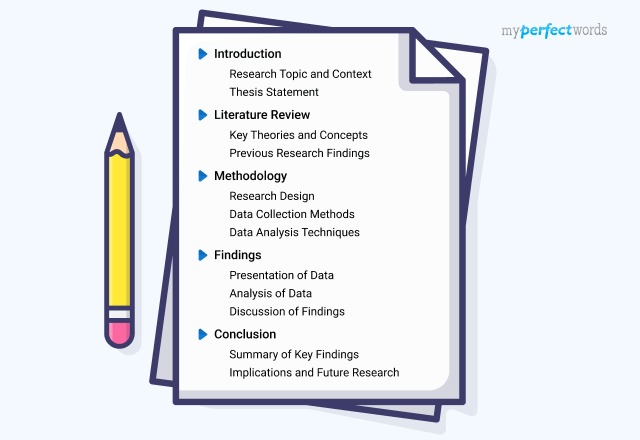
If you haven't mapped out your paper's structure yet, creating a detailed research outline before you draft can prevent organization issues from the start. |
7. Relying Too Heavily on Quotations
Your professor wants to hear your thinking, not a patchwork of other people's words. When 30 to 40% of your paper is direct quotes, it signals that you don't fully understand the material enough to explain it yourself.
Example (Quote-heavy) According to Smith (2023), "social media usage has increased dramatically among teenagers in the past decade." Jones (2022) states that "the correlation between screen time and anxiety is well-documented." Brown (2023) argues that "platforms must take responsibility for mental health outcomes." |
Three quotes stacked together with no analysis. The student is just presenting a reading list.
Example (Analysis-heavy) Teenage social media usage has surged over the past decade (Smith, 2023), and the connection between screen time and anxiety is now backed by substantial research (Jones, 2022). What makes this trend particularly concerning is the lack of platform accountability. While Brown (2023) pushes for corporate responsibility, current self-regulation efforts have produced minimal results, suggesting that external policy intervention may be necessary. |
Same sources, but now the student is driving the argument. The quotes support the analysis, not replace it.
How to avoid it
Follow the 80/20 rule. About 80% of your paper should be your own analysis and paraphrasing. Save direct quotes for moments when the exact wording matters, like definitions, famous arguments, or particularly striking phrasing.
8. Inadequate or Improper Citations
Citation errors range from mildly annoying to career-threatening. At the mild end, you lose points for wrong formatting. At the serious end, missing citations turn into accidental plagiarism.
Common citation mistakes by format
- APA: Forgetting the year in in-text citations, wrong hanging indent in reference list, using "&" vs "and" inconsistently
- MLA: Missing the works cited page, incorrect author name format, forgetting the medium of publication
- Chicago: Mixing footnote and author-date styles, incomplete bibliography entries
How to avoid it
Start tracking your sources from day one, not the night before the paper is due. Every time you read a source, log the full citation information immediately. It's much harder to track down a journal article's volume number at midnight than when you first find it.
Use a citation manager like Zotero, Mendeley, or even a simple spreadsheet. The five minutes you spend logging each source saves hours of frantic searching later.
| For a complete walkthrough on getting your references right, see our guide on how to cite a research paper. |
AVOID ALL 12 RESEARCH PAPER MISTAKES
Let Professional Writers Handle Your Research Paper From Start to Finish
Perfect citations, strong thesis, thorough proofreading, and 3-hour rush delivery available.
9. Grammar and Punctuation Errors
Grammatical mistakes in research papers do more than annoy your professor. They undermine your credibility. If you can't construct a clean sentence, your reader starts questioning whether your research is equally careless.
The most common grammar mistakes in research papers:
|
How to avoid it
Don't rely on spell-check alone. It catches typos but misses most grammar issues. Instead, try these three steps:
- Read your paper out loud. Your ear catches errors your eyes skip over.
- Read it backwards, sentence by sentence. This forces you to evaluate each sentence on its own.
- Have someone else read it. Fresh eyes spot what you've become blind to after ten revisions.
Revision Phase Mistakes (After Drafting)
You've finished your draft. The hard part is over, right? Not quite. The revision phase is where good papers become great ones, and where careless students throw away points they've already earned.
10. Submitting Without Thorough Proofreading
Turning in a first draft is like showing up to a job interview in pajamas. The substance might be there, but the presentation says you don't care.
Proofreading isn't just about catching typos. It's about clarity, consistency, and polish. A paper that reads cleanly tells your professor you take your work seriously.
How to avoid it
Use a multi-pass proofreading strategy. Don't try to catch everything in one read.
- Pass 1: Content. Does every paragraph support your thesis? Is anything missing?
- Pass 2: Clarity. Read each sentence. Is it clear? Could it be simpler?
- Pass 3: Grammar and mechanics. This is where you catch typos, comma issues, and formatting errors.
- Pass 4: Formatting. Citation style, margins, font, spacing, header levels.
Leave at least 24 hours between finishing your draft and starting your proofread. Distance from the text makes errors much easier to spot.
| If you want to go deeper into the revision process, our guide on how to learn how to edit research paper effectively covers the full step-by-step editing process. |
11. Weak Introduction and Conclusion
Your introduction is the first impression. Your conclusion is the last. When both fall flat, your professor starts and ends the reading experience feeling underwhelmed, no matter how strong the middle sections are.
Common introduction mistakes:
- Starting with a dictionary definition ("According to Merriam-Webster, research is...")
- Being too general ("Since the beginning of time, humans have...")
- Burying the thesis at the bottom of a long, unfocused paragraph
Common conclusion mistakes:
- Just restating the thesis word-for-word
- Introducing brand new information or arguments
- Ending with a vague, generic statement ("More research is needed.")
Example (Weak intro) "Social media is a very popular topic today. Many people use social media. This paper will discuss social media and mental health." Example (Strong intro) "A 2023 study found that college students who spend more than three hours daily on Instagram report anxiety levels 40% higher than their peers who limit usage to under one hour. As universities scramble to address the student mental health crisis, the role of social platforms in driving anxiety deserves closer examination." See how the second version pulls you in with a specific finding and sets up a clear direction? |
How to avoid it
Write your introduction last (or rewrite it after your draft is done). You'll have a much better sense of what your paper actually argues once you've written it.
| For specific strategies on opening and closing your paper, check out our guides on research paper introduction and research paper conclusion. |
12. Ignoring Feedback and Revision Opportunities
Many professors offer feedback on drafts, outlines, or thesis statements before the final due date. Writing centers offer free consultations. Peer review sessions give you a reader's perspective. And yet, a huge number of students skip all of these.
Ignoring available feedback is essentially turning down free grade insurance.
Example Two students submit the same assignment. Student A writes a draft, gets feedback from the writing center, revises based on their notes, and submits. Student B writes the paper the night before and submits the first draft. Student A's paper isn't perfect, but it's polished. Student B's paper has three structural issues and two citation errors that would have been caught in a five-minute review. |
How to avoid it
Build revision opportunities into your timeline from the start. If your paper is due Friday, have a draft ready by Tuesday. That gives you time to:
- Visit the writing center (most schools offer this for free)
- Send a draft to a classmate for peer review
- Schedule office hours with your professor
- Do your own multi-pass proofread
How to use feedback effectively
|
How Our Experts Help You Avoid These Mistakes
Sometimes the smartest move is getting professional support before mistakes happen. Our writers don't just write papers. They follow a process designed to prevent every error on this list.
- Clear research questions and strong thesis statements built into every paper from the start, so the foundation is solid before writing begins.
- Perfect citations in any format (APA, MLA, Chicago, Harvard, Turabian), checked manually, not just by software.
- Thorough grammar review and proofreading through multiple editing passes, catching errors that automated tools miss.
- Turnitin originality report included with every order, so you know your paper is both error-free and 100% original.
Submit Your Paper With Confidence
Professional writers ensure your research paper is error-free and properly formatted.
- Detailed assignment solutions
- Step-by-step concept explanations
- Free revisions if you spot any errors
- AI free
Tackle advanced research topics with confidence.
Place Order NowAvoiding Research Paper Mistakes Is a Skill You Can Build
Every mistake on this list is fixable. More importantly, every one of them is preventable. The students who consistently earn high marks on research papers aren't necessarily smarter. They've just learned to recognize these common traps and avoid them.
Here's your action plan: use the phase-based approach.
- During planning, lock in your research question, scope, and guidelines.
- During writing, focus on your thesis, organization, and citations.
- During revision, proofread in multiple passes and take advantage of every feedback opportunity available to you.
The more research papers you write, the more these skills become second nature. What may feel like a checklist at first, especially when learning common mistakes to avoid in research papers, gradually turns into an automatic, confident writing process by your third or fourth assignment.

-20615.png)

-20655.png)
-20737.png)
-9374.jpg)


-20592.png)
 (1))
-20591.png)

-20668.png)
-20612.png)
-20657.png)


-20577.png)
-20575.png)


-20578.png)



 (2))
 (1))
 (1))
 (1))
 (1))
 (1))
 (1))
-20419.png)
-20426.png)
-20431.png)
-20738.png)
-20739.png)
-20745.png)
-20755.png)