


 (1))
Understanding Essays in Academic Writing?
An essay is a focused piece of writing where you develop and defend your own argument about a specific topic. Think of it as your chance to say, "Here's what I think, and here's why."
Essays show up everywhere in academics. You'll start writing them in middle school, and they'll follow you through college. Most students write hundreds of essays before they ever touch a research paper. That's by design. Essays teach you how to organize your thoughts, build an argument, and write clearly.
There are several types of essays you'll encounter. Narrative essays tell a story. Persuasive essays convince the reader to agree with your position. Analytical essays break down a text or concept. Descriptive essays paint a picture with words. Each has a slightly different purpose, but they all share some core features.
Here's what makes an essay an essay:
- Shorter length: Most essays run between 500 and 1,500 words. A typical college essay is 3-5 pages.
- Personal voice is welcome: You can often use "I" and share your own perspective.
- Limited sources needed: Some essays don't require any outside sources at all. Others might ask for 2-5 at most.
- Simple structure: Introduction with a thesis statement, body paragraphs, and a conclusion. The classic 5-paragraph essay is the foundation most students learn first.
Your argument drives the paper. The focus is on what you think and how well you support it.
Essays dominate in high school and early college courses. Even in upper-level classes, shorter writing assignments often take essay form. If your professor asks for a "response paper" or a "reflection," you're almost certainly writing an essay.
You'll also see essays in standardized tests, scholarship applications, and admissions processes. They're the most common form of academic writing for a reason: they teach you to think critically and communicate clearly.
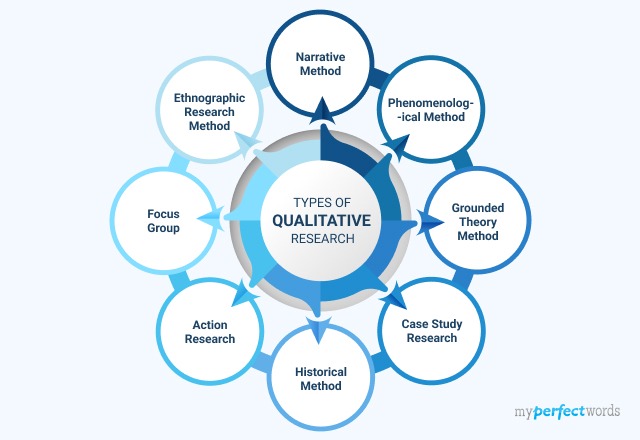
| When it comes to analytical writing, understanding different types of research can help you sharpen your approach. |
Understanding the Structure and Purpose of a Research Paper
A research paper is a longer, more structured academic assignment where you investigate a topic by gathering, analyzing, and synthesizing information from scholarly sources. Instead of sharing your opinion, you're contributing to an academic conversation that already exists.
Research papers start showing up in high school AP courses and become standard in college. By the time you reach junior or senior year, they're a major part of your coursework. In graduate school, they're practically all you write.
Here's what defines a research paper:
- Longer length: Research papers typically run 2,500 words or more. That's 8-10 pages minimum, and some stretch well beyond 20 pages.
- Objective, formal tone: Personal opinions take a back seat. You're presenting evidence and letting the data speak.
- Extensive sources required: Expect to cite 8-15 scholarly sources at a minimum for undergraduate papers. Graduate-level work often demands 20 or more.
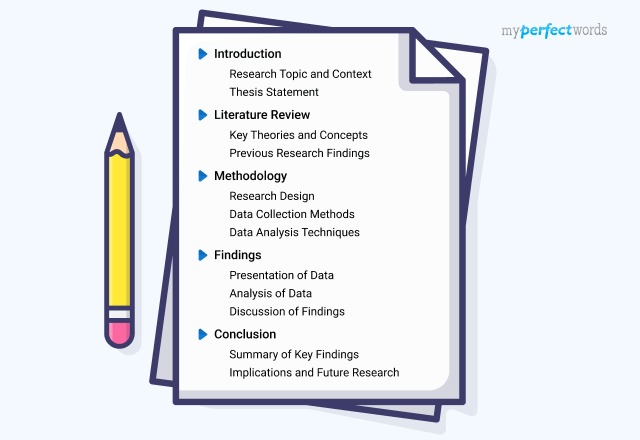
- Complex structure: Research papers have multiple sections that each serve a specific purpose.
- Focus on synthesis: You're not just reporting what others said. You're connecting findings, identifying patterns, and drawing conclusions from existing research.
- Original research (sometimes): Some research papers include surveys, experiments, or data collection you conducted yourself.
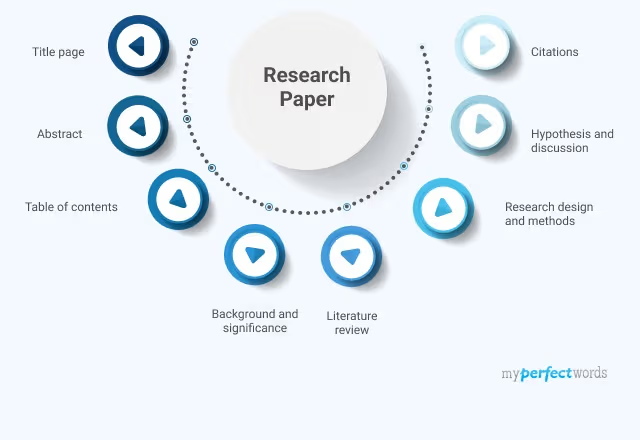
While an essay might have 3-5 body paragraphs, a research paper typically includes:
- Abstract
- Introduction with a research question
- Literature review
- Methodology (if applicable)
- Findings and analysis
- Discussion
- Conclusion
- References page
| That structure isn't optional. Each section plays a role, and skipping one signals to your professor that you don't understand the format. Getting your research paper introduction right is a skill that starts with essay writing fundamentals. |
Essay vs Research Paper: The Key Differences
Now that you know what each format looks like on its own, here's how they compare side by side.
| Feature | Essay | Research Paper |
| Primary Purpose | Express and support your viewpoint | Investigate and synthesize existing research |
| Typical Length | 500-1,500 words (2-5 pages) | 2,500-5,000+ words (8-20 pages) |
| Source Requirements | 0-5 sources | 8-15+ scholarly sources required |
| Structure | Simple (intro, 3-5 body paragraphs, conclusion) | Complex (includes abstract, lit review, methodology, discussion) |
| Voice | Can be personal, subjective | Must be objective, third-person |
| Research Depth | Surface-level or personal knowledge | Extensive, scholarly investigation |
| Citation Style | May not require citations | Mandatory (APA, MLA, Chicago) |
| Time to Complete | 2-5 hours | 10-40+ hours |
| Thesis vs Hypothesis | Thesis statement (your argument) | Research question or hypothesis (to investigate) |
| Audience | General academic audience | Specialized scholarly audience |
That table gives you a quick picture. But some of these differences deserve a closer look.
Length and Depth
This is the most obvious difference. An essay about social media's impact on students might be 1,200 words. A research paper on the same topic? You're looking at 3,500 words minimum, and probably more.
But it's not just about word count. A longer paper demands deeper thinking. You can't fill 10 pages with surface-level observations. You need data, expert opinions, and thorough analysis to sustain that length.
Source Requirements
Essays lean on your own analysis. You might reference a few articles or books, but the paper is built on your ideas. Research papers flip that dynamic. Your ideas matter, but they need to be grounded in what other researchers have already found.
| An essay might use 2-3 sources to back up a claim. A research paper weaves together 8-15+ scholarly sources into a coherent argument. Knowing how to find sources for a research paper is a skill that separates strong research papers from weak ones. |
Structure Complexity
Essay structure is straightforward: make your point, support it, wrap it up. Research paper structure is more like building a house. Each section has a specific function, and they all connect.
| Your research paper outline becomes your blueprint, and skipping the planning stage usually leads to a disorganized paper. |
Writing Style and Tone
In an essay, you might write: "I believe social media has a negative impact on students because..."
In a research paper, that same idea becomes: "Recent studies indicate a correlation between social media usage and decreased academic performance among college students (Smith, 2024; Johnson, 2023)."
The shift from personal to evidence-based writing is one of the biggest adjustments students face.
Purpose and Goal
An essay says: "Here's what I think, and here's my reasoning."
A research paper says: "Here's what the evidence shows, here's how the studies connect, and here's what it all means."
Both require critical thinking. But essays are about persuasion and personal analysis, while research papers are about investigation and synthesis.
Time Investment
You can draft a decent essay in a single afternoon. A research paper? Not a chance. Between finding sources, reading them, taking notes, outlining, drafting, and revising, you're looking at 2-3 weeks of work.
| Knowing how to cite a research paper properly saves time during the final stages. |
How to Tell If Your Assignment Is an Essay or Research Paper
Not sure what your professor wants? Use this 5-question test.
Question 1: What does the assignment call it?
Words like "essay," "paper," "response," or "reflection" usually mean an essay. Words like "research paper," "term paper," or "research project" point to a research paper. This sounds obvious, but it's the fastest way to know.
Question 2: How many pages are required?
If it's 1-5 pages, you're likely writing an essay. If it's 8 pages or more, it's almost certainly a research paper. The 5-7 page range is a gray zone. Check the other criteria to decide.
Question 3: Are sources specified?
"No sources required" or "use 2-3 sources" means essay. "Minimum 8 scholarly sources" or "peer-reviewed journals required" means research paper. The source requirement is one of the clearest signals.
Question 4: Does it require a methodology or literature review?
If yes, it's a research paper. Period. Essays never require these sections.
Question 5: What does the grading rubric emphasize?
Rubric focuses on "original argument," "clear thesis," and "persuasive writing"? That's an essay. Rubric mentions "thorough research," "synthesis of sources," and "scholarly evidence"? Research paper.
The Gray Area
Some assignments land right between the two formats. Annotated bibliographies, literature reviews, and position papers can share characteristics of both. When in doubt, ask your professor. It takes 30 seconds to send an email and could save you hours of work going in the wrong direction.
Assignment Language Decoder
Here's a quick reference for common assignment names:
- "Response paper" = Usually an essay
- "Term paper" = Usually a research paper
- "Position paper" = Could be either
- "Research essay" = Leans toward research paper
- "Analytical paper" = Usually an essay
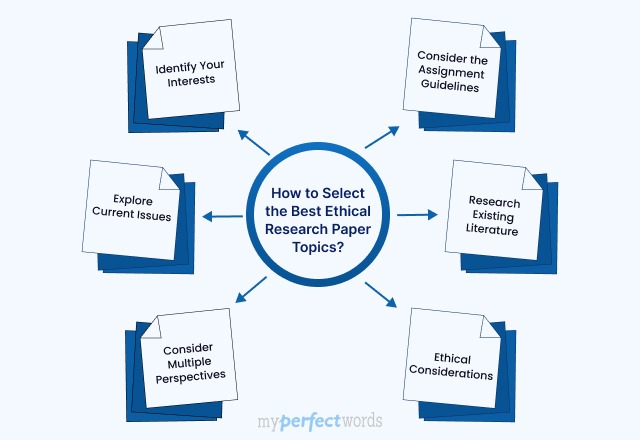
| If you're exploring research paper topics and want to make sure you're on the right track, start by confirming the assignment format first. |
STRUGGLING WITH YOUR RESEARCH PAPER OR ESSAY?
Get Professional Writing Help From Experienced Academic Writers
100% human-written, properly formatted papers with free Turnitin report and 3-hour rush delivery
Essay vs Research Paper: Same Topic, Different Approaches
The best way to see the difference is to look at the same topic handled both ways.
Topic: "The Impact of Social Media on College Students"
As a 5-Paragraph Essay (1,200 words)
Here's what the structure looks like:
- Introduction with thesis: "Social media negatively impacts college students' mental health, academic performance, and real-world social skills."
- Body Paragraph 1: Mental health effects, with 1-2 examples or personal observations.
- Body Paragraph 2: Academic performance impact, with anecdotal evidence or a quick stat.
- Body Paragraph 3: Social skills degradation, with a real-world scenario.
- Conclusion: Restate thesis and leave the reader with something to think about.
- Sources: 2-3 articles, or none if it's a personal essay.
The whole thing fits in about 4 double-spaced pages. You could write it in an afternoon.
| If you're working on a psychology-focused version of this topic, you might also want to explore psychology research paper topics for more specific angles. |
As a Research Paper (3,500 words)
Same topic, completely different scope:
- Abstract: Summary of research question, methodology, and key findings (150 words).
- Introduction with research question: "How does social media usage correlate with academic performance and mental health outcomes among college students?"
- Literature review: Summary and analysis of 10-12 existing studies on this topic.
- Methodology: Description of a survey given to 200 college students.
- Results: Statistical analysis of the survey data.
- Discussion: What the findings mean in context of existing research.
- Conclusion: Implications, limitations, and recommendations for future study.
- References: 15 scholarly sources cited throughout.
This takes weeks, not hours. And the finished product is a contribution to academic knowledge, not just a personal take on the topic.
The key difference? The essay explores the writer's perspective with light support. The research paper investigates the question through systematic research and data analysis.
| For more examples of what a completed research paper looks like, check out our blog on research paper examples. |
The Threshold: When Does an Essay Become a Research Paper?
Sometimes you start writing an essay and realize it's turning into something bigger. Here's how to recognize the shift.
Length threshold:
- Under 2,000 words? Usually stays an essay.
- Between 2,000 and 3,000 words? You're in the transition zone.
- Over 3,000 words? You probably need research paper structure.
Source threshold:
- 1-5 sources? Essay territory.
- 6-8 sources? Transition zone.
- 9 or more sources? You're writing a research paper.
Complexity threshold:
Your essay has probably become a research paper if:
- You need subsections within body paragraphs.
- You're synthesizing multiple conflicting studies.
- You have enough material for a literature review.
- Your argument requires explaining your methodology.
- You're citing more than you're explaining.
What triggers the shift:
- Your instructor explicitly requires "scholarly sources only."
- The assignment asks for "original research" or "primary sources."
- You need to review "existing literature" on the topic.
- Multiple theoretical frameworks must be compared.
- Statistical analysis or data interpretation is required.
If you started writing an essay but realize you're actually building a research paper, don't panic. Reorganize your content into proper research paper sections rather than trying to force it into an essay format.
| Explore our tips on how to edit a research paper to smooth out the transition. |
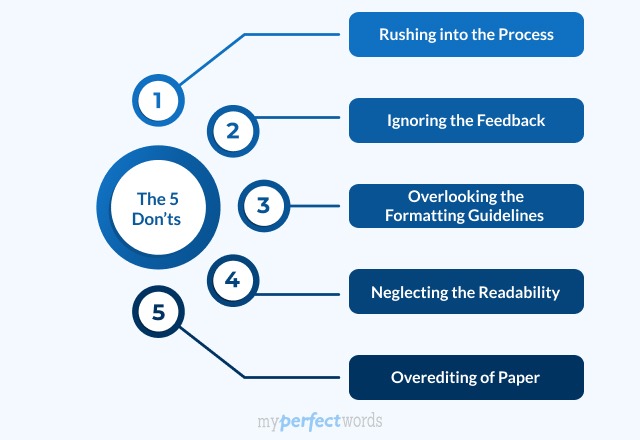
Common Mistakes When Confusing Essays and Research Papers
Students mix up these formats all the time. Here are the biggest mistakes and how to avoid them.
Mistake #1: Treating a Research Paper Like an Essay
This is the most common error. You write from personal opinion instead of a research synthesis. You use only 2-3 sources when 10+ are required. You skip the literature review entirely. The result? Your paper reads like an inflated essay, and your grade reflects it.
Mistake #2: Over-complicating an Essay
The opposite problem. You add an unnecessary methodology section to a 3-page essay. You include a formal abstract when nobody asked for one. You use overly technical language when a conversational tone would be fine. All that extra structure wastes your time and can actually hurt readability.
Mistake #3: Wrong Citation Approach
For essays, students sometimes forget to cite even their minimal sources. For research papers, the issue is usually an inconsistent citation style or missing in-text citations. Either way, you're risking plagiarism flags and point deductions. If citations feel confusing, a guide on common research paper mistakes can help you spot problems before you submit.
Mistake #4: Mismatched Tone
Using "I think" and "in my opinion" in a research paper signals that you don't understand the format. Being too formal and detached in a personal essay makes your writing feel stiff and disconnected. Match your tone to the assignment.
Mistake #5: Wrong Time Management
Allocating 2 days for a research paper that needs 2-3 weeks is a recipe for disaster. Spending 2 weeks on a 3-page essay is a waste of your time. Know what you're writing, and plan accordingly.
How to avoid all of these:
- Read the assignment sheet carefully, more than once.
- Check the grading rubric before you start writing.
- Look at any provided examples.
- Ask your professor if anything is unclear.
- Start early enough to adjust if you've misjudged the format.
| If you want a systematic way to avoid these issues, use a research paper checklist before you submit. |
Research Paper or Essay: Which One Do You Need?
The answer depends on where you are in your academic career and what subject you're studying.
By Academic Level
- High school is primarily essay territory. You'll write dozens of essays before you encounter a real research paper. The exception is AP and honors classes, where your first research papers (typically 5-8 pages with 5-7 sources) show up junior or senior year.
- Undergraduate college mixes both formats. Freshman and sophomore courses lean heavily on essays. By junior and senior year, research papers become the standard. Your capstone project or senior thesis is essentially an extended research paper, sometimes running 20-40 pages.
- Graduate school is almost exclusively research papers. Essays are rare and typically reserved for seminar discussion responses. Your thesis or dissertation is the ultimate research paper, sometimes book-length.
By Subject Area
- Humanities and social sciences use both formats heavily. You'll write analytical essays about literature, historical events, and social phenomena. Research papers come into play for deeper investigations, literature reviews, and original research projects. If you're studying history, history research paper topics can help you find the right focus.
- STEM fields rely less on traditional essays. Lab reports serve as a hybrid format, and research papers are standard for upper-level courses. You won't write many opinion-based essays in a chemistry or engineering program.
- Business and professional programs use case study essays, market analysis research papers, and white papers (which are basically professional research papers). Business research paper topics are a good starting point if you're working in this area.
Final Thoughts: Mastering Both Essays and Research Papers
The core difference comes down to this: essays are about your argument and perspective, while research papers are about investigating a question through scholarly evidence. That's the distinction that drives every other difference, from length and structure to tone and source requirements.
If you're still early in college and essays feel more familiar, that's normal. You'll get more comfortable with research papers as you progress through your coursework. The skills you build writing essays, like forming a clear thesis, organizing your thoughts, and supporting claims with evidence, transfer directly into research paper writing.
The biggest takeaway? Always clarify what your professor expects before you start writing. Check the assignment sheet, review the rubric, and ask questions if anything is unclear. It's always better to spend 30 seconds confirming the format than to discover you've written the wrong type of paper after you've already submitted it.
| And getting the beginning right is half the battle, which is where knowing how to start a research paper pays off. |
Need Help Writing Your Essay or Research Paper?
Our expert writers deliver top-quality academic papers tailored to your requirements.
- Professional writers with advanced degrees in your subject
- Guaranteed plagiarism-free work with Turnitin proof
- On-time delivery, even with tight 3-hour deadlines
- Unlimited revisions until you're 100% satisfied
Join thousands of students who get the grades they deserve with MyPerfectWords.
Get Started Now
-20615.png)

-20655.png)
-20737.png)
-9374.jpg)


-20592.png)
 (1))
-20591.png)

-20668.png)
-20612.png)
-20657.png)


-20577.png)
-20575.png)


-20578.png)



 (2))
)
 (1))
 (1))
 (1))
 (1))
 (1))
-20419.png)
-20426.png)
-20431.png)
-20738.png)
-20739.png)
-20745.png)
-20755.png)