


-20431.png)
Why You Need a Research Paper Checklist
Here's the thing about research papers: they have a lot of moving parts. You're juggling structure, argument, evidence, formatting, citations, and your professor's specific requirements all at once. That's a recipe for missed details.
A checklist for research paper projects solves that problem by giving you a system. Instead of relying on memory at 2am, you work through each checkpoint one at a time. You catch formatting errors before your professor does. You confirm every citation matches your bibliography. You verify that your argument actually addresses the prompt.
Professional researchers use checklists too. It's not about intelligence or ability. It's about having too many variables to track mentally. A checklist turns "I think I covered everything" into "I know I did."
Pre-Writing Checklist: Before You Start Writing
Every strong research paper starts before the writing does. These checkpoints make sure you're building on solid ground.
Assignment Requirements Review
- Read the assignment sheet completely:
Go through not just the topic, but length requirements, format, citation style, and due date.
- Note all specific requirements:
Note the required number of sources, types of sources allowed, specific sections requested.
- Clarify any confusion with your professor:
Asking now saves rewriting later. Professors expect questions and appreciate them.
If you're still refining your research question, our guide on how to write a research question can help.
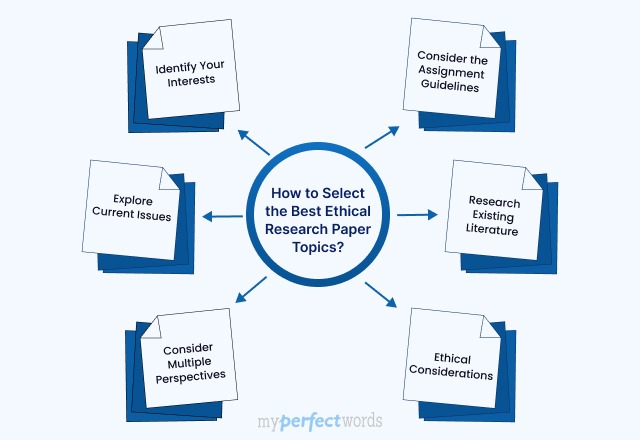
Topic Selection and Approval
- Your topic fits the assignment scope:
Your topic is not so broad that you can't cover it, not so narrow that you can't find sources.
- Sufficient research sources exist:
Do a quick database search before committing.
- Topic approved by professor (if required):
Don't skip this step if it's part of the assignment.
If you're stuck at this stage, our guide on how to start a research paper walks through the process.
Research Planning
- Identify the types of sources you need:
Explore scholarly articles, primary sources, government data, or a mix.
- Locate and evaluate credible sources:
If you're unsure what counts as credible, check our article on how to find sources for a research paper.
- Organize notes with source information:
Record author, title, publication, date, and page numbers as you go.
- Create a preliminary bibliography:
Building this now saves hours later.
Thesis Development
- Your thesis is clear and arguable:
It takes a specific position, not just states a fact.
- Your thesis addresses the assignment prompt directly:
Re-read the prompt and compare.
- Your thesis is focused enough to cover in your word count:
If you can't support it with your available sources, narrow it down.
For more on crafting a strong thesis, see our research paper thesis guide.
Outline Creation
Main points organized to support your thesis:
Each section should advance your argument.
Logical structure from introduction through conclusion:
Your paper should build logical arguments.
Evidence identified for each main point:
Know which sources support which claims before you write, and cite accordingly.
Need help structuring your paper? Our research paper outline guide has templates you can use.
Drafting Checklist: While Writing Your Research Paper
Check these items as you write each section. Catching problems during drafting is always easier than fixing them after.
Title and Title Page
- Title is clear and specific:
It should tell readers exactly what your paper covers. See our research paper title guide for tips.
- Title page follows required format:
You should follow the required formatting style like APA, MLA, Chicago, etc.
- All required information is present:
Your name, course number, professor's name, date, and institution as needed.
Abstract (If Required)
- Summarizes your research purpose, methods, and findings:
This section is a snapshot of your entire paper.
- Stays within the word limit:
Typically 150 to 250 words.
- Written after completing the paper:
Don't write it first, or you'll have to rewrite it.
Learn more in our guide on how to write an abstract.
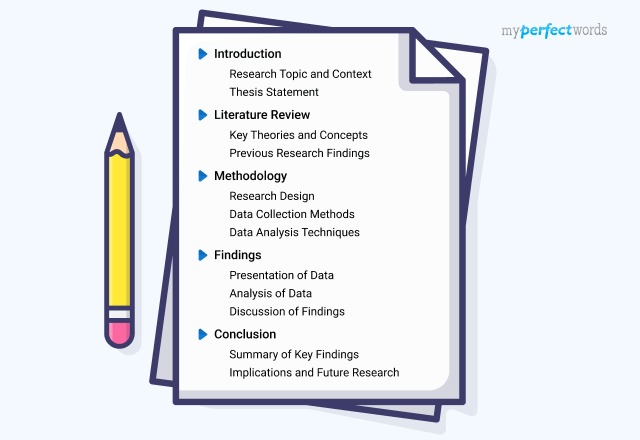
Introduction
- Open with an engaging hook:
A surprising statistic, a compelling question, or a relevant anecdote.
- Provides necessary background context:
Introduction should be enough for your reader to understand the topic.
- Present your thesis statement clearly:
The last sentence of the introduction should have a thesis statement.
- Previews your main points:
It gives readers a roadmap of what's coming.
For detailed guidance, check our research paper introduction article.
Body Paragraphs
- Each paragraph starts with a clear topic sentence:
One main idea per paragraph.
- Claims are supported with evidence from your sources:
There should be no unsupported assertions.
- In-text citations included for all borrowed material:
Every quote, paraphrase, and idea from a source needs a citation.
- Transitions connect paragraphs logically:
Your reader should never wonder "why is this here?"
- Every paragraph connects back to your thesis:
If it doesn't support your argument, cut it.
Evidence and Citations
- All direct quotes have in-text citations:
Missing even one can be flagged as plagiarism.
- All paraphrases are cited:
Putting it in your own words doesn't mean you skip the citation.
- Correct citation style used consistently:
Your paper should consistently follow one citation style. (APA, MLA, Chicago, etc.)
- Page numbers included where required:
Direct quotes always need them.
Our guide on how to cite a research paper covers formatting for every major style.
Conclusion
- Thesis restated in fresh language:
Don't copy and paste from your introduction.
- Main points summarized:
Remind readers of your strongest evidence.
- No new information introduced:
The conclusion isn't the place for new arguments.
- Ends with a meaningful closing thought:
It should include significance, implications, or a call to action.
More on this in our research paper conclusion guide.
Bibliography / Works Cited
- Entries follow your citation style precisely:
Ensure capitalization, italics, and punctuation because all matter.
- Entries are alphabetized correctly:
By author's last name (in most styles).
- Formatting is consistent across all entries:
Double-check hanging indents.
STRUGGLING TO MEET RESEARCH PAPER STANDARDS?
Get Perfectly Formatted, Thoroughly Researched Papers That Pass Every Quality Check
100% original research, expert formatting, advanced-degree writers, and 3-hour rush delivery
Formatting Checklist: Meeting Style Requirements
This is where students lose the most "easy" points. Formatting mistakes are completely preventable with a quick check.
Style Guide Compliance
- Citation Style:
Correct style guide used (APA 7th, MLA 9th, Chicago 17th, etc.)
- Font and size requirements:
Times New Roman 12pt is standard for most, but always check.
- Line spacing set correctly:
Most styles require double-spacing throughout.
- Margins:
Margins set to specifications, typically 1 inch on all sides.
Page Elements
- Headers and footers:
Ensure they match assignment specifications.
- Title page formatting:
It should be formatted correctly for your citation style.
Citation Format
- In-text citations:
Follow your style guide exactly, (Author, Year) for APA vs. (Author Page) for MLA.
- Bibliography:
All entries are formatted precisely, with italics, periods, and commas all in the right places.
- Hanging indents applied to bibliography entries:
Ensure second and subsequent lines are indented.
- All required elements included:
Citations include author, title, publication, date, DOI/URL as needed.
Proofreading Checklist: Catching Final Errors
After content and formatting, do one final pass for surface-level errors. Read slowly. Read out loud if possible.
Grammar and Mechanics
- No sentence fragments or run-on sentences
- Subject-verb agreement is correct throughout
- Pronoun references are clear; every "it," "they," or "this" points to something specific.
- Verb tenses are consistent.
Spelling and Typos
- Spell-check has been run
- Commonly confused words checked, their/there/they're, affect/effect, then/than.
- Proper nouns, spelled correctly, author names, institutions, and theories.
The Read-Aloud Test
- Read your paper aloud from start to finish
- Listen for awkward phrasing
- Check for missing or extra words
- Verify that ideas flow naturally
Research Paper Checklist: Before You Hit Submit
You're almost there. This research paper checklist before submitting catches the last-minute details that cost students grades every semester.
Assignment Requirements (Final Verification)
- Paper meets minimum/maximum length requirement:
Check word count or page count, whichever was specified.
- All required sections are included:
Your paper has an abstract, an appendix, an annotated bibliography, whatever was asked for.
- Assignment prompt fully addressed:
Re-read the prompt one final time and confirm.
- Specified format followed:
Some professors want specific section labels or heading structures; make sure you have followed them.
File and Submission Format
- Saved in the required file format:
Docx, .pdf, or whatever your professor specified, save accordingly.
- File named according to instructions:
Check instructions for file name, "LastName_ResearchPaper_ENG101.docx" or similar.
- Submission platform confirmed:
Canvas, Blackboard, Turnitin, email, or hard copy.
- Uploaded to the correct assignment link:
Double-check the link before clicking submit.
Plagiarism Check
- Use a Detection Tool:
Many universities run through a plagiarism detection tool, such as Turnitin.
- Review any flagged sections:
A high similarity score doesn't always mean plagiarism, but check each flag.
- All sources properly cited:
If something's flagged, make sure the citation is there.
- Paraphrasing is genuinely in your own words:
Too-close paraphrasing can still get flagged.
Final Confirmation
Save a copy for your records:
Always keep a backup.
All required attachments included:
Outlines, drafts, peer reviews, whatever was required alongside the paper.
Not sure what's expected? See our guide on how long a research paper should be.
Research Paper Checklist by Academic Level
Not every research paper has the same expectations. Your checklist priorities shift depending on where you are in your academic career.
High school:
These research papers tend to focus on basic structure, proper citations, and thesis development. The most common issues at this level are source quality (using Wikipedia instead of scholarly sources), inconsistent citations, and weak thesis statements.
Undergraduate:
These research papers raise the bar to critical analysis, sophisticated source integration, and complex argumentation. Professors expect you to do more than report information. They want to see you engage with it, question it, and build on it. Common issues here include shallow analysis, an inconsistent academic voice, and over-reliance on a few sources.
Graduate:
Research papers at this level require original contributions to your field, a strong theoretical framework, and rigorous methodology. The standards jump significantly. Scope management, scholarly rigor, and meeting publication-level expectations are the typical challenges.
How to Use This Research Paper Checklist
Don't save this checklist for the end. That's the biggest mistake students make. Here's how to get the most out of it:
Follow the Stages in Order
Work through each stage in order. Pre-writing comes first for a reason. Skipping ahead means backtracking later.
Check Off Items as You Go
Check items off as you complete them, not all at once after you're "done." If you make major changes during revision, go back and re-check the drafting stage. Keep this checklist open on a second monitor or print it out.
Customize the Checklist to Your Assignment
You can also adapt it. If your professor requires an annotated bibliography instead of a standard works cited page, add that checkpoint. If your assignment doesn't require an abstract, skip that item. Make it yours.
To learn about other preventable errors, see our article on research paper mistakes.
Conclusion
Sometimes the checklist itself reveals the problem. You go through each stage and realize the fixes needed are bigger than you expected, or you simply don't have the time to address them all.
That's a normal part of academic life. Deadlines stack up. Formatting requirements are confusing. Citation styles feel like a different language. Complex research and analysis take longer than planned.
If you're running short on time, struggling with an unfamiliar citation style, or need expert-level research and analysis, professional help can be the difference between a mediocre grade and an excellent one. At our service, every paper is written by human writers with advanced degrees, and every order includes a Turnitin report confirming 0% AI content and original work.
You can also check out research paper examples to see what polished work looks like.
Let Experts Handle Your Research Paper
Why stress over checklists when you can get guaranteed A-grade work?
- Every checklist item verified by professional editors
- PhD writers with expertise in your subject
- Free Turnitin report with every order
- Unlimited revisions until you're 100% satisfied
Countless students trust us with their academic success every year.
Get Started Now
-20615.png)

-20655.png)
-20737.png)
-9374.jpg)


-20592.png)
 (1))
-20591.png)

-20668.png)
-20612.png)
-20657.png)


-20577.png)
-20575.png)


-20578.png)



 (2))
)
 (1))
 (1))
 (1))
 (1))
 (1))
 (1))
-20419.png)
-20426.png)
-20738.png)
-20739.png)
-20745.png)
-20755.png)