


-20739.png)
What Is the Standard Research Proposal Format?
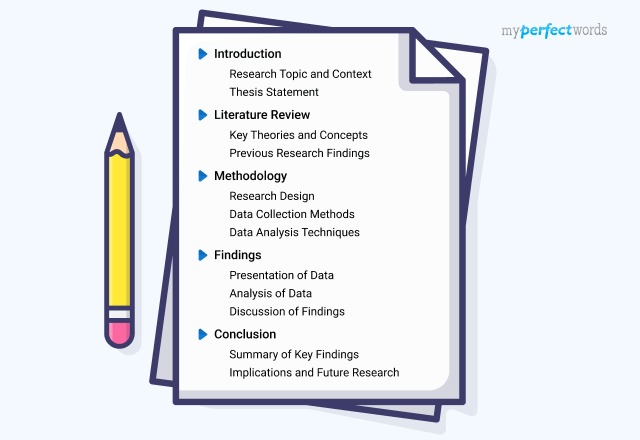
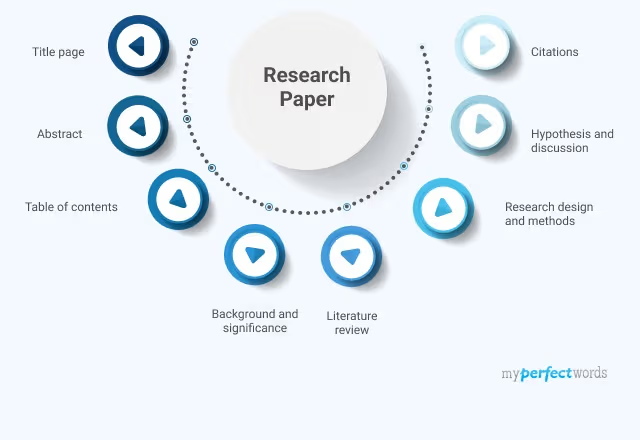
The standard research proposal format applies across most academic disciplines and levels, though you'll find some variation depending on where you're submitting and what field you're in. At its core, the format follows a predictable sequence:
- Title Page
- Abstract (required for some proposals, optional for others)
- Introduction
- Literature Review
- Research Methodology
- Expected Outcomes or Results
- Timeline
- Budget (if applicable)
- References
One thing to nail down before you start: many institutions have their own specific templates. Your department's format always takes priority over general guidelines, so check with your advisor or graduate office before you build your proposal around a generic structure.
| A well-formatted research proposal follows a predictable structure because each section answers a different question your reader is asking before they say yes. |
Research Proposal Format: Section-by-Section Breakdown
This is the part most articles skip over: specific guidance for each section, including what it should do, what it should include, and how long it should be.
Title Page
Word count: 1 page (not counted in body word count)
Your title page includes your proposed research title, your name and institutional affiliation, your supervisor's name if applicable, and the submission date. Keep the format clean and follow your institution's specific requirements.
The title itself matters more than people realize. It should be specific and descriptive, not a vague placeholder like "A Study on Climate Change", but something descriptive like "The Effect of Urban Tree Canopy Loss on Ground-Level Ozone Concentrations in Mid-Size American Cities."
| Your title page is the first impression. A clear, specific title signals that you know exactly what you're researching. |
Abstract (When Required)
Word count: 150–300 words
Not every proposal requires an abstract. Undergraduate proposals often skip it entirely. PhD proposals and grant submissions almost always require one.
When required, the abstract is a single paragraph that summarizes your research question, your proposed methodology, and your expected contribution. Write it last. It's much easier to summarize a proposal you've already built than to write the summary first.
Introduction
Word count: 300–500 words
Your introduction makes the case for why this research is necessary. It covers your research problem or question, why it matters, the gap your research fills, and what your study aims to achieve. Think of it as a pitch, not a background dump.
In humanities disciplines, the introduction often carries more rhetorical weight than in the sciences, where the argument you're entering and your positioning within it gets established here. In sciences, the introduction tends to be more concise, with the methodology doing the heavy lifting.
Literature Review
Word count: 400–700 words
The literature review shows that you know the existing research, that you've identified a genuine gap, and that your study builds on prior work in a meaningful way.
The most common mistake here is treating it like an annotated bibliography, listing sources one by one instead of synthesizing them by theme or argument. You're not summarizing papers; you're building a case for why your research is the logical next step. Think of each paragraph as making a point about the state of the field, not as a slot for "what this author said."
| Discipline note: In the sciences, the literature review often blends into the introduction and stays fairly brief. In humanities and social sciences, it frequently stands alone as the longest section, since establishing your position within a scholarly conversation carries significant weight. |
Research Methodology
Word count: 400–600 words
This is usually the section that gets the most scrutiny, because it's where reviewers assess whether your plan is actually feasible.
Your methodology section covers your research design (qualitative, quantitative, or mixed methods), your data collection methods, your sampling strategy, the instruments or tools you'll use, and your analysis approach. The key is specificity. Saying "I'll conduct interviews" isn't enough. Say how many, with whom, how you'll recruit participants, and how you'll analyze the data. Reviewers have seen enough proposals to spot vague plans that won't survive contact with reality.
For proposals involving human subjects, you'll also want to address ethical considerations here: consent procedures, data privacy, and any potential risks to participants. In social sciences especially, reviewers look for evidence that you've thought through these obligations before you start.
| For guidance on writing this section well, peer-reviewed guidance on research proposal structure from the medical literature offers transferable principles on methodology specificity. |
Expected Outcomes or Results
Word count: 150–250 words
This section is not a results section. You haven't done the research yet. Frame everything as "this study is expected to show..." or "the findings are anticipated to contribute..." rather than presenting findings as if they've already happened.
Explain what you expect to find, what contribution it will make to the field, and why that contribution matters. Keep this grounded. Overstating expected results is a common red flag for reviewers.
Timeline
Word count: 100–200 words (often presented as a table or numbered list)
Break your research into phases: literature review, data collection, analysis, writing, revision, submission. Assign realistic timeframes to each. Reviewers have seen enough proposals to know when a timeline is wishful thinking, so be honest about how long each phase will take.
| A table format often works better here than prose, since it's easier to scan and immediately shows whether your plan is realistic. |
Budget (If Required)
Word count: 100–200 words (or a table)
The budget section is only required for grant proposals and funded research programs. Standard academic department proposals typically don't need one.
When required, provide a line-item breakdown of projected costs: materials, travel, participant incentives, software licenses, transcription services, and justify each expense. Generic budget items without justification are a common reason grant proposals get pushed back.
References
Word count: Varies (not counted in body word count)
List every source cited in your proposal. Follow the citation format your institution or funder requires. In social sciences, that's usually APA. In humanities, it's often MLA or Chicago. In sciences and medicine, field-specific styles like AMA or Vancouver may be required. When in doubt, ask your advisor.
How Does the Format Change by Academic Level?
Undergraduate proposals
These tend to be 3–5 pages. The literature review is lighter, the methodology is simpler, and the expectations around theoretical framing are lower. You're demonstrating that you can identify a manageable research question and design a reasonable plan to answer it.
Masters proposals
These are typically 5–15 pages and require a more rigorous literature review. Reviewers expect you to engage seriously with existing scholarship and show that your methodology is sound. The balance between sections is fairly even.
PhD proposals
These are the most demanding, often running 15–30 or more pages. The methodology section needs to be detailed enough that a reader could replicate your approach. The literature review is substantial and positions you firmly within a scholarly conversation. Some PhD proposals also require a separate theoretical framework section that doesn't appear at undergraduate or masters level.
| The sections of a research proposal stay the same from undergrad to PhD. What changes is how deep you go in each one. |
Does the Format Change by Discipline?
Yes, and significantly in some cases.
Sciences
Sciences put the most weight on methodology. The literature review is often brief, and hypotheses must be clearly stated in testable terms. Your methodology needs to demonstrate rigor, replicability, and a clear path from data to conclusions. Reviewers in scientific fields expect to see your data collection and analysis procedures described in enough detail that someone could follow your steps. The writing style tends to be more direct and economical than in other disciplines.
Humanities
Humanities typically feature the literature review as the longest and most developed section. Your critical positioning, the argument you're entering, and your analytical framework carry more weight than a detailed procedures list. You're expected to show where your work sits in relation to existing scholarship and why that position matters. The writing itself is expected to be polished and argue a position, not just describe a plan.
Social Sciences
Social sciences tend to balance a strong literature review with rigorous methodology. Ethical considerations (consent, privacy,, potential harm to participants) often appear as their own section rather than being folded into the methodology. Reviewers expect both scholarly engagement with existing research and a clearly justified research design.
| Citation format: APA is most common in social sciences and psychology. Sciences may use APA, AMA, or discipline-specific styles. Humanities typically use MLA or Chicago. Always verify what your institution or funder requires, since general conventions don't override specific requirements. |
| If you're ready to start drafting, how to write a research proposal walks you through each stage step by step. |
Don't Have Time to Get the Format Right?
Our expert writers handle every section, formatted exactly as your institution requires.
Clear, concise, and impactful research proposals written by experts.
Research Proposal Format Template (Quick Reference)
Section | If Required | Approximate Word Count |
Title Page | Always | 1 page |
Abstract | PhD/grants only | 150–300 words |
Introduction | Always | 300–500 words |
Literature Review | Always | 400–700 words |
Research Methodology | Always | 400–600 words |
Expected Outcomes | Always | 150–250 words |
Timeline | Usually | 100–200 words |
Budget | Grant proposals only | 100–200 words |
References | Always | Varies |
Here is a research proposal template
| If you want to see what each section looks like in practice, check out research proposal examples to see annotated samples. |
Common Research Proposal Format Mistakes
Knowing the sections isn't enough if you fill them in the wrong way. These are the mistakes that show up most often.
- Writing the abstract first: The abstract summarizes everything, which means you can't write it well until the rest of the proposal exists. Draft it last.
- Using a vague title: "A Study on Climate Change" tells reviewers nothing. Make your title specific enough that someone who hasn't read the proposal already understands the scope and angle.
- Treating the literature review as a list: Summarizing sources one by one instead of synthesizing them by theme or argument is one of the most common errors in student proposals. Your job is to build a case, not recite a bibliography.
- Under-specifying the methodology: Reviewers need enough detail to assess whether your plan is actually doable. If you can't explain exactly how you'll collect and analyze data, the methodology section will raise more questions than it answers.
- Ignoring word count guidance: Going too short looks thin. Going too long looks like you don't know what the section is for. Both hurt your proposal.
- Using the wrong citation style: APA, MLA, Chicago, AMA: the choice matters and varies by discipline. Check before you start formatting your references.
- Not checking your department's specific requirements first: General format guidance is a starting point, not a final answer. Your institution's guidelines override everything else.
| The most common format mistake isn't missing a section. It's writing a section in a way that misses the point of what that section is supposed to achieve. |
| If you're unsure whether what you're writing is a proposal or a paper, research proposal vs research paper breaks down the key differences. |
Conclusion
Format isn't the hardest part of writing a research proposal. But getting it wrong, whether that's missing a required section, under-specifying your methodology, or using the wrong citation style, can sink an otherwise solid proposal before anyone reads far enough to see your research question.
Use the section breakdown in this article as your working reference. Check your institution's specific requirements before you finalize anything. And if you're unsure whether your format matches what your committee or funder expects, ask before you submit, not after.
Get the structure right, and your research gets a fair hearing. That's the whole point.
Ready to Hand This Off to an Expert?
MyPerfectWords delivers research proposals formatted to your exact institutional requirements.
- Writers with advanced degrees in your specific discipline
- Structured to match your department's proposal format guidelines
- PhD-level proposal writing available
- Turnitin report with every order
Turn your research idea into a clear, compelling proposal with expert help.
Get Research Proposal Help
-20615.png)

-20655.png)
-20737.png)
-9374.jpg)


-20592.png)
 (1))
-20591.png)

-20668.png)
-20612.png)
-20657.png)


-20577.png)
-20575.png)


-20578.png)



 (2))
)
 (1))
 (1))
 (1))
 (1))
 (1))
 (1))
-20419.png)
-20426.png)
-20431.png)
-20738.png)
-20745.png)
-20755.png)