


-20738.png)
What Is a Research Proposal? (And What It Needs to Do)
A research proposal is your case for why a piece of research is worth doing, and why you're capable of doing it. That sounds simple, but it's where most students go wrong. They spend the whole proposal describing their topic instead of arguing for it.
Your reviewers, whether that's a supervisor, a PhD committee, or a funding panel, already know your topic exists. What they want to know is: what specific gap are you going to fill, how are you going to fill it, and will your approach actually work?
Students write proposals for several reasons: graduate school applications, dissertation or thesis approval, independent research funding, and undergraduate research programs. The format varies slightly, but the purpose is always the same.
| Want to see how a complete literature review fits into a full proposal? Check out our research proposal examples. |
"A research proposal is less about explaining your topic and more about convincing your reader that your research is worth doing."
Before You Write: 3 Things to Decide First
This is the section no competitor covers, and it's the most important one. Students who skip straight to filling in sections produce proposals that get rejected not because they're badly written, but because the thinking underneath them is shaky.
Before you write a single word of your proposal, nail down these three things.
Narrow your topic.
Broad topics make weak proposals. If your topic could apply to hundreds of different studies, reviewers can't evaluate whether your approach is appropriate. Specificity signals that you've actually thought this through.
Compare: "AI in education" versus "how AI tutoring tools affect retention rates in undergraduate STEM courses." The second one tells a reviewer exactly what you're studying, at what level, in what field. That's what you're aiming for.
Frame your research question.
One clear, answerable question is better than three vague ones. Your research question is the spine of your entire proposal; every section connects back to it.
A weak research question: "What are the effects of social media on students?" (Too broad. Effects on what? Which students? Over what period?)
A strong research question: "How does daily Instagram use affect academic self-efficacy in first-year university students?" (Specific. Measurable. Answerable.)
Know your audience.
Are you writing for a supervisor, a PhD committee, or a funding body? A supervisor wants to see that you've read the literature and have a feasible plan. A PhD committee wants to see scholarly rigor and a clear contribution to the field. A funding body wants to know the practical value of your findings. Each expects a different emphasis, so know who you're writing for before you start.
"The most common reason a research proposal fails isn't poor writing; it's a research question that's too broad to answer."
How to Write a Research Proposal Step by Step
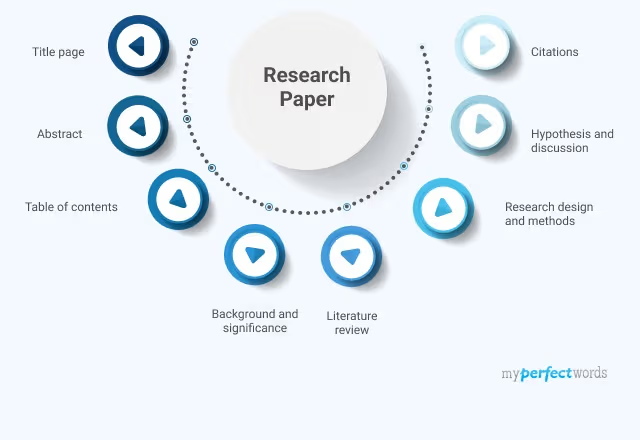
Here's the full process, section by section. Each step covers what to write, what reviewers are looking for, and the mistakes most students make.
Step 1: Write Your Title
Your title should be specific, not clever. Reviewers need to understand immediately what you're studying, not guess at it.
A good title names your topic, your method or approach, and your scope.
Think: "The Effect of [Variable] on [Outcome] in [Population/Context]."
A common mistake:
Titles so broad they could apply to a hundred different studies. "A Study of Climate Change and Policy" tells a reviewer almost nothing. "Policy Responses to Coastal Flooding Risk in Low-Income Urban Communities in the UK, 2010–2020" tells them everything.
Write a working title first and finalize it after you've completed the rest of the proposal.
Step 2: Write the Abstract
The abstract is a 150–300 word summary of your entire proposal: your research question, why it matters, your method, and what you hope to find.
Write it last, it's a summary, not an introduction. Students who write the abstract first almost always end up with something vague, because they haven't yet worked out what they actually want to say.
What to include:
Research question, significance, research design, expected findings or contributions. That's it.
Step 3: Write the Introduction
Your introduction does two things: it establishes that your topic matters right now, and it argues that there's a specific gap in existing knowledge that your research will fill.
Start with the context: why is this topic important? What's happening in the field, the world, or the literature that makes this research timely? Then narrow down to the specific gap your study addresses, and end with your research question or hypothesis stated clearly.
The most common mistake:
Too much background, not enough argument. Students write three paragraphs explaining what the topic is, then one sentence about why they're studying it. Flip that ratio.
"Your introduction is your argument for why this research needs to happen, and why you're the right person to do it."
Step 4: Conduct and Write Your Literature Review
The literature review isn't a summary of everything that's ever been written on your topic. It's a curated argument that establishes what's been studied, what's been found, and what's still missing; the gap your research fills.
You're not trying to prove you've read a lot. You're showing that you understand the scholarly conversation well enough to identify where it stops and where your research picks up.
Group your sources thematically, not chronologically. Synthesize what they say and where they agree or disagree; don't just list them one after another.
Common mistake:
Treating the literature review as an annotated bibliography. Listing sources without connecting them to your research question is one of the fastest ways to weaken your proposal.
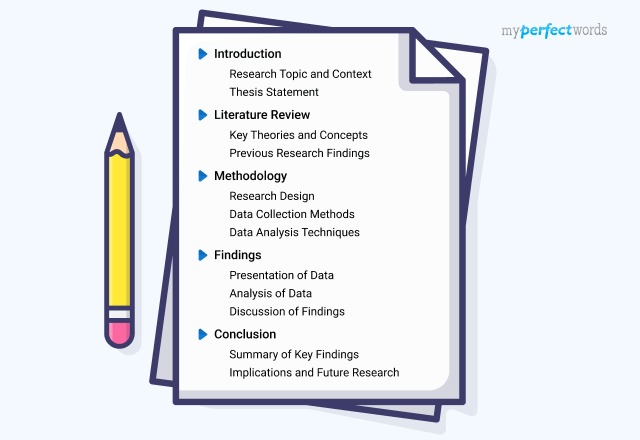
| For help with formatting and structuring the different sections, see our guide to research proposal format. |
Step 5: Define Your Research Questions and Objectives
State your primary research question clearly; the one question your whole study is designed to answer.
Then list 2–4 specific objectives that break it down into measurable components. Objectives are the steps you'll take to answer the question. They should be concrete and distinct from each other.
Example:
- Primary question: How does mentorship frequency affect PhD completion rates in STEM programs?
- Objective 1: Identify current mentorship models in UK STEM doctoral programs
- Objective 2: Measure the correlation between mentorship frequency and time-to-completion
- Objective 3: Identify structural barriers to regular mentorship
Common mistake:
Objectives that overlap, or objectives that are so broad they're essentially restatements of the question.
Step 6: Describe Your Methodology
This section needs to do two things: explain what you'll do, and justify why you'll do it that way.
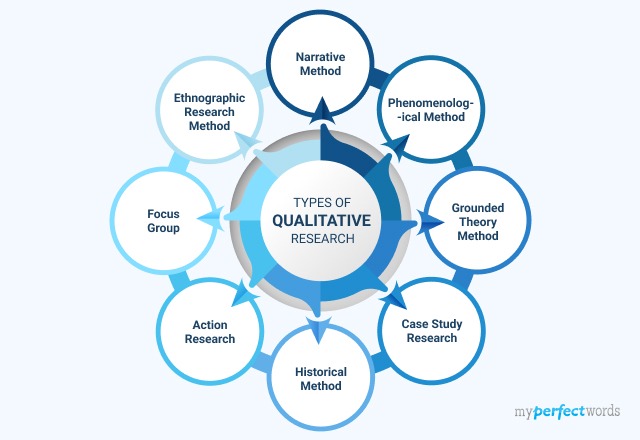
Cover your research design (qualitative, quantitative, or mixed methods), your data collection method (surveys, interviews, archival analysis, experiments), and your analysis approach. For each choice, explain why it's the right fit for your research question.
If your study involves human participants, address ethical considerations here: how you'll obtain consent, how you'll protect confidentiality, and whether ethics board approval is needed.
Common mistake:
Describing your methodology without justifying it. Saying "I will conduct interviews" is not enough. Explaining why interviews are better suited than surveys for understanding the lived experience of your participants is what reviewers want to see.
Step 7: Outline Your Expected Results and Contributions
What do you expect to find? What will it mean for the field if you find it?
You don't need certainty here. You're proposing, not reporting. What you need to show is that you've thought through the possible outcomes and that each one would be meaningful.
Be careful not to overclaim. Saying your research will "revolutionize the field" or "definitively prove" something signals that you don't fully understand how research works. Saying your findings will "contribute to" or "extend" a specific debate is both accurate and credible.
"You don't need to know the answer before you start; you need to show why the answer matters."
Step 8: Add Your Timeline and References
A timeline shows reviewers that your project is feasible; that you've thought through the stages and that the scope matches the time and resources available.
Break it into milestones: ethics approval (if needed), data collection, data analysis, first draft, final submission. For a PhD proposal, this might span years. For a master's dissertation, it might span months.
References:
Include every source cited in your proposal, formatted according to the style guide your institution or funder specifies (APA, MLA, Chicago, Harvard). Inconsistent or missing references are a red flag.
Common mistake:
Treating the timeline as a box-ticking exercise. Reviewers use it to assess whether your project is actually doable in the given timeframe. A realistic timeline builds credibility.
Struggling With Your Research Proposal?
Our expert writers handle every section: from your research question to your methodology.
Join students who've trusted MyPerfectWords
How Long Should a Research Proposal Be?
It depends on what you're writing it for. Here's a general guide:
Level | Typical Length |
Undergraduate | 500–1,000 words |
Master's | 1,000–2,000 words |
PhD | 2,000–3,500 words |
Grant/Funding | Varies: check guidelines |
These are starting points, not rules. Always check your institution's or funder's specific requirements before you start writing; some programs have strict page limits or word counts, and going over or under can work against you.
"Length matters less than clarity; a tight 1,500-word proposal will beat a rambling 3,000-word one every time."
Tips for Writing a Strong Research Proposal
A technically correct proposal won't get you far if it's hard to read. Here are the things that separate good proposals from great ones.
Keep your writing clear and direct.
Jargon doesn't signal expertise; it signals that you're not confident enough to explain things plainly. Write the way you'd explain your project to a smart colleague who doesn't work in your exact subfield.
Write your abstract last.
You'll know what you actually want to say after you've written everything else.
Make your research question the thread running through every section.
Your introduction argues for it. Your literature review builds toward it. Your methodology is designed to answer it. Your contributions follow from it. If any section feels disconnected, it's probably because you've drifted away from your core question.
Get feedback before you submit.
A supervisor, a writing centre, or a peer who hasn't read your proposal before can spot gaps and assumptions you've stopped noticing. The closer you are to it, the harder it is to see what's missing.
Be specific about your methodology.
Vague methodology is one of the clearest signs that a proposal hasn't been fully thought through. The more precisely you can describe what you'll do and why, the more credible your proposal becomes.
Show you've read the literature.
Your goal is to demonstrate you know the key debates and where your research fits; not to prove you've read every paper published in the last decade.
Proofread for structure, not just language.
A well-organized proposal signals clear thinking. Make sure your sections are in the right order, that each one does its job, and that the whole thing builds a coherent argument.
Conclusion
Writing a research proposal feels overwhelming until you break it down. You're not trying to write a perfect document on the first pass; you're trying to answer three questions clearly: what are you studying, why does it matter, and how will you do it?
Start with your research question. Everything else, your introduction, your literature review, your methodology, builds outward from that one thing. Get the question right and the rest of the proposal has a spine to hang from.
If you're stuck, go back to basics: narrow your topic, frame your question, know your audience. The students who get approved aren't the ones who wrote the most; they're the ones who argued most clearly for why their research is worth doing.
Ready to Get Your Proposal Done Right?
Skip the stress and get a professionally written research proposal delivered fast.
- PhD-level writers available
- Rush delivery available: as fast as 3 hours
- Fully human-written and AI-detection safe
- Free revisions until you're satisfied
Subject your proposal with confidence
Get Research Proposal Help
-20615.png)

-20655.png)
-20737.png)
-9374.jpg)


-20592.png)
 (1))
-20591.png)

-20668.png)
-20612.png)
-20657.png)


-20577.png)
-20575.png)


-20578.png)



 (2))
)
 (1))
 (1))
 (1))
 (1))
 (1))
 (1))
-20419.png)
-20426.png)
-20431.png)
-20739.png)
-20745.png)
-20755.png)