


-20745.png)
What Makes a Research Proposal Example Useful (vs. Just a Template)?
There's an important difference between a template and an example that often gets overlooked.
A template tells you what sections to include. An example shows you what those sections actually look like when written. Knowing that you need a "methodology section" doesn't help you write one. Seeing a methodology section, in your discipline, at your level, does.
Good examples are discipline-relevant and annotated. You can see the thinking, not just the output. When you read an annotated example, you start to understand why the author made particular choices: why they framed the gap that way, why they cited those particular sources, why the methodology is justified before it's described.
Three things to look for when evaluating any research proposal example:
- Does it establish a clear gap in the existing literature?
- Does the methodology match the research question?
- Does it sound like it was written by someone who actually knows the subject?
| "The difference between a template and an example is the difference between a map and a photograph: one tells you what's there, the other shows you." |
Research Proposal Example #1: Undergraduate/Master's Level (Humanities)
Discipline: Literature / Cultural Studies
Academic Level: Undergraduate dissertation or MA thesis proposal
Context: This example is for a 3,000–5,000 word research project. The language is formal but accessible. The structure follows standard humanities proposal conventions.
Title: The Representation of Migration in Contemporary British Fiction (2010–2024)
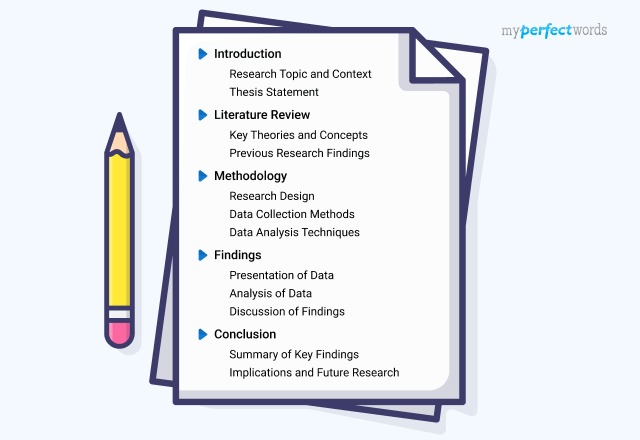
Introduction / Background
Proposal text:
The past decade has seen a significant expansion in British fiction engaging with themes of migration, displacement, and cultural belonging. Writers such as Mohsin Hamid, Bernardine Evaristo, and Xiaolu Guo have repositioned migration not merely as subject matter but as a formal and structural concern, shaping narrative voice, temporality, and reader positioning. Despite this proliferation of texts, literary scholarship has tended to address migration fiction through the lens of postcolonial theory or national identity, with less attention paid to the affective and experiential dimensions of belonging as they emerge at the level of form. This project examines how formal choices in contemporary British migration fiction, specifically narrative voice and temporal structure, work to construct belonging as a lived and contested experience rather than a fixed cultural category.
Why this works: The introduction does three things efficiently. It establishes the territory (migration in contemporary British fiction), identifies a genuine gap (existing scholarship prioritizes postcolonial/national identity frameworks over formal/affective approaches), and positions this specific project within that gap. Notice the scope limitation: "2010–2024" prevents the project from sprawling across decades and signals methodological discipline. The named authors are specific and credible, not just "many writers."
Research Question and Objectives
Proposal text:
This project addresses the following research question: How do formal choices in contemporary British migration fiction, specifically narrative voice and temporal structure, work to construct migration as an experience of belonging and alienation?
The project has three objectives:
- To analyse how first-person and second-person narration in selected texts creates intimacy, distance, or complicity with migrant subjectivities.
- To examine how non-linear temporality and fragmented chronology function as formal responses to displacement.
- To evaluate how these formal strategies compare across at least four texts published between 2010 and 2024.
Why this works: The research question is specific and answerable: it could be the title of a journal article. Notice the two-part structure: it names the formal elements under investigation (narrative voice, temporal structure) and the conceptual outcome (belonging/alienation). The three objectives are numbered, distinct, and each maps onto a concrete analytical task. None of them overlap. This signals to an assessor that the student has genuinely planned the work.
Literature Review
Proposal text:
Scholarship on migration in British fiction has developed in two primary directions. The first, rooted in postcolonial criticism (Bhabha, 1994; Gilroy, 2004), has examined how migrant writers negotiate cultural hybridity and belonging within national literary canons. The second strand, drawing on world literature frameworks (Walkowitz, 2015; Damrosch, 2003), has explored how migration fiction circulates globally and complicates assumptions about national literary identity. What this body of work has given less sustained attention to is the formal and narratological dimension of migration writing: how the experience of migration shapes not just what is written about, but how it is written. Recent work by Stef Craps (2013) on cosmopolitan memory and by Pilar Cuder-Domínguez (2019) on British-Asian fiction gestures toward this formal dimension, but neither offers a sustained narratological analysis of the texts produced in the post-Brexit decade.
Why this works: This review doesn't try to summarize every piece of scholarship. Instead, it organises existing work into two strands, credits them appropriately, and then identifies the gap they leave. The final sentence is precise: it names two scholars whose work comes closest to the project's territory and explains why this project still needs to exist. That specificity signals genuine familiarity with the field, not a surface-level scan.
Methodology
Proposal text:
This project employs close reading and comparative narrative analysis as its primary methods. Four texts will be selected from British migration fiction published between 2010 and 2024, representing a range of national origins (South Asian, East Asian, Middle Eastern) and narrative forms (first-person, second-person, fragmented). Close reading will focus on passages in which belonging or displacement are explicitly or implicitly constructed through narrative choice. Comparative analysis will identify patterns and divergences across the corpus. Quantitative methods are not appropriate here, as the project's interest is in the quality and texture of formal choices, not their frequency. No primary data collection involving human subjects is required.
Why this works: The methodology directly answers the research question. Since the question is about narrative voice and temporality, the method is narrative analysis, and that logical alignment is exactly what assessors look for. The author also does something most students forget: they justify why they're NOT using other methods. That sentence about quantitative methods shows methodological maturity. The final sentence about human subjects shows awareness of ethics requirements, which matters even when the answer is "not applicable."
Expected Outcomes and Significance
Proposal text:
This project expects to show that formal choices in British migration fiction of the post-Brexit period are not merely aesthetic but constitute a field of meaning in which belonging is actively constructed and contested. The contribution to scholarship is modest but specific: by applying narratological frameworks to a corpus of recent texts, this project will add to a growing body of work on the relationship between migration and literary form, and may have implications for how we read formally experimental migration writing more broadly. The findings will be relevant to scholars working at the intersection of postcolonial literary studies and narrative theory.
Why this works: The student doesn't claim their project will change the field. That restraint is a signal of academic maturity. The contribution is framed as "modest but specific," which is exactly what an undergraduate or master's project should be. The final sentence identifies who this work is for, which demonstrates disciplinary awareness.
What Makes This Example Strong:
- Clear gap identified within existing scholarship (not just "this topic is interesting")
- Research question is specific, answerable, and maps directly to methodology
- Literature review organizes the field rather than listing sources
- Methodology justifies itself and addresses what it doesn't do
- Expected outcomes are appropriately scaled to project level
Research Proposal Example #2: Master's/PhD Level (Social Sciences)
Discipline: Sociology / Education
Academic Level: MA or early PhD proposal
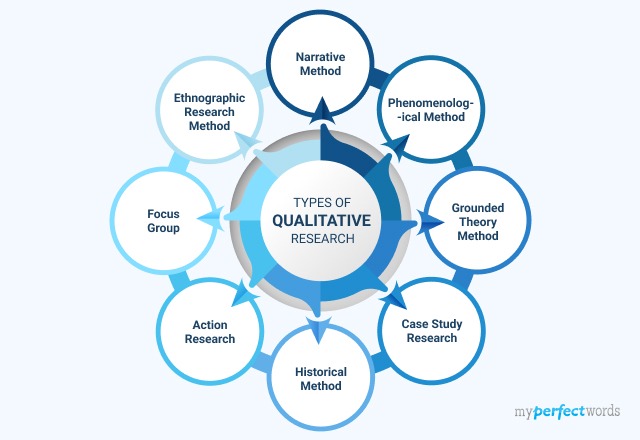
Context: This example targets institutional approval for a research project with a qualitative methodology. It's longer and more detailed than an undergraduate proposal, and includes a theoretical framework section that's expected at graduate level but often omitted by students.
Struggling to Write Your Own Proposal?
Our expert writers handle the research, structure, and writing.
Rush delivery available. Your proposal, written right.
Research Proposal Example #3: PhD Level (STEM)
Discipline: Environmental Science / Biology
Academic Level: PhD funding proposal or PhD programme application
Context: PhD proposals in STEM fields are more technical and often include preliminary data. This example shows how to balance scientific rigour with accessibility for a mixed committee audience. Note that STEM proposals frequently open with an abstract, something social science and humanities proposals rarely require.
| If you're still working on the writing process itself, our guide on how to write a research proposal walks you through each step. |
How These Examples Differ by Academic Level
One of the most common questions students ask is whether a PhD proposal is just a longer undergraduate proposal.
| "The biggest differences between academic levels aren't the sections: it's the depth of engagement with existing literature and the sophistication of the methodology." |
Here's how those differences break down:
Feature | Undergraduate | Master's | PhD |
Length | 500–1,500 words | 1,500–3,000 words | 2,000–5,000+ words |
Literature review | Brief overview, 5–15 sources | Systematic, 20–40 sources | Comprehensive, 40–80+ sources |
Theoretical framework | Rarely required | Sometimes required | Usually required |
Methodology detail | Basic description | Methods + justification | Full justification + alternatives addressed |
Ethics section | Sometimes required | Usually required | Always required |
Budget section | Never | Rarely | Only for funding proposals |
Expected outcomes | Brief | Moderate | Specific contribution to scholarship/policy |
Preliminary data | Never | Rarely | Sometimes required (STEM especially) |
Your institution may have specific requirements that differ from these norms. Always check your department's guidelines before you write.
| For a full breakdown of each section, see our research proposal format guide. |
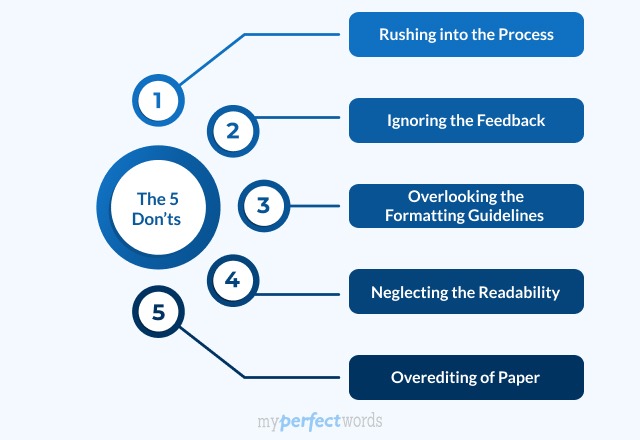
Common Mistakes Students Make (That These Examples Avoid)
Even students who've read multiple "how to" guides still submit proposals with the same recurring errors. Here's what to watch for before you submit.
Vague or unanswerable research questions
"What is the effect of social media on mental health?" is not a research question: it's a topic. A research question specifies the population, the context, the aspect being examined, and the conceptual lens. Compare Example 1's question: "How do formal choices in contemporary British migration fiction, specifically narrative voice and temporal structure, work to construct migration as an experience of belonging and alienation?"
A literature review that summarizes sources without identifying gaps
An assessor doesn't need to know what ten scholars said. They need to know what no one has adequately addressed and why that gap matters. Listing sources is not a literature review. Organising the field and identifying where knowledge is insufficient is.
Methodology that doesn't match the research question
If your question asks "how" and "why," your methodology should be qualitative. If your question asks "how many" or "to what degree," it should be quantitative or mixed. The alignment between question and method is one of the first things assessors check.
Missing ethical considerations at graduate level
If your project involves human participants (interviews, surveys, observation), you need an ethics section. Many students treat this as optional. It isn't.
Writing a theoretical framework without knowing why it's needed
Listing two famous theories and saying they're "relevant" is not a theoretical framework. A framework explains what conceptual tools you're using to analyse your data and why those tools (and not others) are appropriate.
Overclaiming expected outcomes
An undergraduate dissertation won't transform the field. A master's project won't settle a decades-long debate. Scale your expected contribution to your project's scope. Modesty backed by specificity is more credible than bold claims without a clear pathway to achieving them.
| "Most rejected proposals fail not because the topic is bad: they fail because the methodology doesn't convincingly show how the question will actually be answered." |
Conclusion
Reading a finished proposal is one of the fastest ways to understand what yours needs to do. You can read a hundred guides about "establishing a research gap" and still not know what that looks like on the page until you see it done.
The examples are meant to show you the thinking: why the gap is framed that way, why the methodology is justified before it's described, why the expected outcomes are modest and specific rather than bold and vague. That thinking is what separates proposals that get approved from ones that get sent back for revision.
Use them as benchmarks. Compare your own draft section by section. If your introduction doesn't identify a gap as clearly as these do, that's where to focus. If your methodology doesn't explain why you chose your approach, that's the fix.
If you're confused about the difference between what you're writing and what your supervisor actually wants you to submit, our research proposal vs research paper guide clears up the distinction.
Ready to Get Your Research Proposal Done?
Hand it to a professional and stop stressing about getting it right.
- Expert writers matched to your subject area and academic level
- Every proposal checked through Originality.ai and Turnitin before delivery
- Deadline-safe: rush orders delivered in as fast as 3 hours
- Free revisions
No AI. No shortcuts. Just a well-written proposal.
Get Research Proposal Help
-20615.png)

-20655.png)
-20737.png)
-9374.jpg)


-20592.png)
 (1))
-20591.png)

-20668.png)
-20612.png)
-20657.png)


-20577.png)
-20575.png)


-20578.png)



 (2))
)
 (1))
 (1))
 (1))
 (1))
 (1))
 (1))
-20419.png)
-20426.png)
-20431.png)
-20738.png)
-20739.png)
-20755.png)